The Further Mis-Adventures of Cliff Booth Reunites Veteran Actor Nicholas Hammond with the Cinematic Worlds of Quentin Tarantino and David Fincher

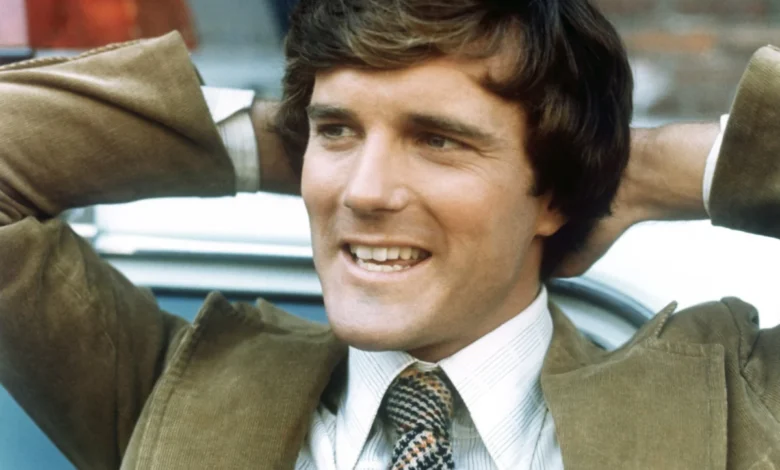
The cinematic universe crafted by Quentin Tarantino continues to expand in unexpected ways, most notably through the latest neo-noir feature, The Further Mis-Adventures of Cliff Booth. Directed by David Fincher from an original screenplay by Tarantino, the film serves as a spiritual successor and companion piece to the 2019 blockbuster Once Upon a Time in Hollywood. While both filmmakers have maintained that the new project is designed to stand on its own merits—drawing stylistic comparisons to 1970s atmospheric classics such as Night Moves and The Long Goodbye—it remains rich with Easter eggs and narrative threads specifically tailored for dedicated fans.
Among the most celebrated elements of this expansion is the subtle return of peripheral characters from the fictional television pilot Lancer, which played a pivotal structural role in the middle act of the predecessor film. Veteran actor Nicholas Hammond reprises his role as real-life actor-director Sam Wanamaker, appearing alongside Timothy Olyphant, who returns as co-star James Stacy. For Hammond, whose career spans more than six decades across stage, television, and film, stepping back into the meticulously reconstructed 1970s Los Angeles landscape represented a welcome return to a collaborative ecosystem defined by an intense reverence for entertainment history.
The Resurrection of a Script and the Fincher Partnership
The journey of The Further Mis-Adventures of Cliff Booth to the screen was far from linear. Initially, industry speculation suggested that Tarantino intended to direct the script himself following the commercial and critical success of Once Upon a Time in Hollywood, which grossed over $374 million worldwide and earned 10 Academy Award nominations, winning two. However, as Tarantino’s well-documented self-imposed retirement from feature filmmaking approached, the project’s future grew uncertain.
Hammond recalled that the first indication of the film’s revival came through unexpected channels more than a year prior to its official announcement. Crew members from Tarantino’s regular production unit, with whom Hammond had established a rapport during the filming of the 2019 feature, reached out with veiled hints.
"Quentin has his team, and it’s the same crew that works on all his films," Hammond explained. "I’d gotten to know them on Once Upon a Time in Hollywood, and a couple of the guys from the crew sent me emails saying, ‘Hey, it’s great we’re going to be working together again.’ Everyone had an ironclad NDA, so no one could tell me anything about the film, but that was my one little clue. Then, of course, when Quentin dropped out, and it looked like the movie was not happening, I thought, ‘There goes that chance.’"
The production was ultimately salvaged when Brad Pitt, eager to further explore the laid-back, enigmatic persona of stuntman Cliff Booth, intervened by presenting the screenplay to his longtime collaborator, acclaimed director David Fincher. The transition from Tarantino’s directorial chair to Fincher’s meticulous, atmospheric lens gave the project a distinct noir texture while preserving the vernacular and historical specificity of the universe.

For Hammond and Olyphant, their involvement was understood from the outset to be a carefully orchestrated cameo—a rewarding nod for observant viewers.
"Timothy and I knew that we were coming in basically as an Easter egg," Hammond noted. "It was a tiny scene, and we knew that, but we were just thrilled that we were asked to come back, that Quentin thought it would be cool to have those characters back in the movie again. Let’s face it, he can get any actor he wants in the world to do anything, so it was an honor and a joy even though it’s a tiny little moment in the film."
Celebrating the Journeyman Actor in Hollywood
Beyond the surface-level nostalgia, Hammond’s portrayal of Sam Wanamaker functions as a broader meta-commentary on the realities of the entertainment industry. Throughout film history, the spotlight has predominantly favored A-list movie stars, frequently obscuring the immense labor of journeyman actors, episodic television directors, and character actors whose careers are defined by steady, unglamorous work.
Hammond reflected on the precarious nature of professional longevity in Los Angeles, noting that stardom is frequently a confluence of talent, timing, and sheer fortune rather than a direct measurement of capability.
"Your career ebbs and flows," Hammond said. "You do a lot of small roles on television or small roles in movies, and then you get your own series, or then you get a big movie, and that’s the life of most actors in Hollywood. Even people like Leonardo and Brad say they have tons of friends who were as good as them when they were all starting out, but so much of it depends on if the right role comes along at the right moment."
This perspective aligns closely with Tarantino’s well-known cinematic ethos, which frequently resurrects and celebrates the careers of veteran performers—such as Michael Madsen, Robert Forster, and Bruce Dern—providing them with platform-defining roles later in their lives. Hammond observed that Tarantino possesses an encyclopedic retention of television and film history, noting that the writer-director’s appreciation for character actors stems from a genuine lifelong consumption of the medium.
"Most people think that if you’re good, you’re going to become a star," Hammond remarked. "Quentin realizes there are a hell of a lot of very good actors out there who don’t become stars—that there are so many stars that have to align in the universe for that to happen. He admires and celebrates actors like Michael Madsen and Bruce Dern who have been journeyman actors their entire lives with moments of success, or flares of global recognition."

A Storied Career Across Decades
For Hammond himself, those rare alignments of the universe occurred multiple times across a prolific career that began in his childhood. Having achieved early international recognition as a teenager playing Friedrich Von Trapp in Robert Wise’s 1965 musical masterpiece The Sound of Music—a film that remains a cornerstone of global cinematic culture—Hammond later cemented his place in pop culture history by portraying Peter Parker in the CBS television series The Amazing Spider-Man from 1977 to 1979.
The enduring cultural impact of these projects remains a constant presence in his daily life. Reflecting on the legacy of The Sound of Music nearly six decades after its premiere, Hammond shared an encounter during a recent flight to Sydney.
"I was on a plane yesterday flying to Sydney, and a stewardess crouched down next to my seat and said, ‘Nicholas, I just have to let you know that my family watches The Sound of Music every year,’" Hammond recalled. "’When my grandmother was ready to pass away, she said the last thing she wanted was for all of us to gather around the TV together as a family and watch that movie.’ I don’t care how rich you are or how many movies you’ve been in, how many actors get a chance to be in a movie that has that kind of effect on people?"
This foundational familiarity with the eras depicted in Tarantino’s scripts allowed Hammond to assess the historical accuracy of the productions firsthand. Having worked extensively in episodic television throughout the 1970s—appearing in programs ranging from Gunsmoke and The Waltons to The Brady Bunch—Hammond verified that Tarantino’s recreation of the period is virtually unparalleled in contemporary cinema.
"There are very few people who could capture the 1970s as accurately as Quentin does," Hammond stated. "It’s his era. He grew up watching me as Peter Parker in Spider-Man, and he watched all the episodes of Gunsmoke I did, and all the episodes of The Waltons and The Brady Bunch. There’s not a show I was on that he didn’t see and know about."
Honoring Sam Wanamaker’s Real-World Legacy
When preparing to portray Sam Wanamaker in Once Upon a Time in Hollywood, Hammond approached the assignment with rigorous historical research, ensuring that the comedic and structural requirements of the screenplay never overshadowed the genuine dignity of the real-world artist. Wanamaker was not merely a television director, but a towering theatrical figure best known for his tireless campaign to reconstruct Shakespeare’s Globe Theatre in London.
"One of my fears when we were doing the film is I did not want Zoe Wanamaker to think we were making fun of her father, because we definitely weren’t," Hammond said. "He was a very serious actor and a serious theater person."

To aid in this preparation, Tarantino’s production office provided Hammond with archival material detailing Wanamaker’s extensive directorial and acting portfolio. This research deepened Hammond’s personal admiration for the historical figure, particularly regarding the grueling political and logistical battles required to rebuild the Globe.
"Quentin’s office sent me a stack of DVDs of movies that Wanamaker had directed, and movies that he had appeared in," Hammond noted. "I got quite familiar with him. The Globe Theatre exists in England today solely because of him. If it weren’t for Sam Wanamaker petitioning and raising money and basically forcing the British government to authorize the building, the Globe wouldn’t be there. They wanted to build public housing there, and he managed to get a groundswell of support. And now, of course, it’s a huge tourist attraction, and in his honor the smaller studio theater within the building is called the Sam Wanamaker Theater."
Broader Implications and Future Outlook
The seamless integration of archival television actors into high-profile modern productions highlights a shifting paradigm in Hollywood, where cinematic universes increasingly rely on deep narrative continuity and meta-textual casting to reward dedicated cinephiles. By employing actors who lived and worked within the specific historical epochs being dramatized, filmmakers like Tarantino and Fincher achieve an authentic texture that CGI and digital recreation alone cannot replicate.
For Hammond, participating in such significant projects—ranging from Peter Brook’s 1963 film adaptation of Lord of the Flies to The Sound of Music and the cinematic collaborations with Tarantino—reinforces a lifelong dedication to the craft of acting over the trappings of celebrity. Standing on a soundstage or walking through a theater stage door continues to evoke the same sense of belonging he felt as a child actor.
Rejecting the concept of retirement, Hammond looks to late-career role models such as his former Sound of Music co-star Christopher Plummer, who continued delivering acclaimed performances well into his later years.
"I absolutely love being an actor, and I love being on stage. I’ve done a great deal of stage work, and I’m always asked, ‘Which do you like better?’ And the answer always is, whatever I’m doing right then," Hammond said. "When I walk into the stage door of a theater, I get exactly the same charge of excitement that I do walking onto a sound stage at a studio. I just feel like I’m home. I feel these are my people. These are the people that I’ve always been the happiest being with since I was 10 years old, and I that will never change."
He added: "I’ll do this as long as I possibly can. I’m of the Christopher Plummer philosophy that way. The word retirement doesn’t really exist. What would I do? Give up the thing I love the most in the world to play golf? I’m not doing that."
Related posts: