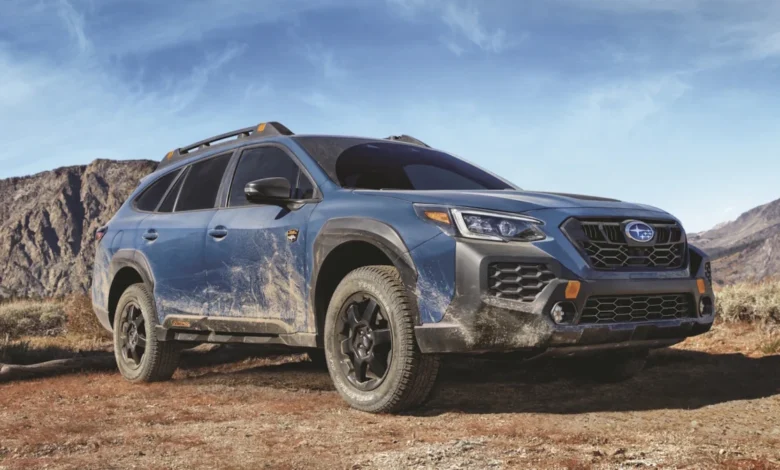
Few vehicles have shaped the rugged crossover landscape quite like the Subaru Outback. Long before the modern crossover craze dominated American highways, Subaru bridged the gap between traditional station wagons and capable all-wheel-drive utility vehicles. While nameplates like the Crosstrek and Forester currently lead Subaru’s U.S. sales figures, the Outback remains a cornerstone of the brand’s American lineup. Its rich history spans nearly three decades across multiple distinct eras, evolving from a rugged trim level of the Legacy into a standalone automotive icon.
With seven generations of vehicles now bearing the Outback badge—including the newly introduced 2026 redesign—used car shoppers face a complex landscape when trying to find a reliable pre-owned model. To demystify this vast marketplace, automotive researchers frequently turn to comprehensive data from major consumer advocacy and industry analytics organizations. By synthesizing reliability ratings from Consumer Reports (CR), owner complaint records from the National Highway Traffic Safety Administration (NHTSA), and initial quality scores from J.D. Power, a clear picture emerges regarding which model years stand the test of time and which ones are better left on the dealer lot.
Data-Driven Methodology: How Outback Generations Stack Up
Evaluating the dependability of a vehicle line that has been in continuous production since the mid-1990s requires a structured, multi-source approach. For this comprehensive analysis, researchers skipped the first-generation models (1995–1999) due to their advanced age—vehicles that are now over 25 years old and frequently classified as classics, sitting well outside the window of standard used-car reliability tracking. Similarly, the newly launched seventh-generation Outback, debuting for the 2026 model year, was set aside because it is simply too new to generate meaningful long-term dependability metrics, holding an average predicted reliability tag and minimal complaint volume.
This leaves five distinct generations of the Subaru Outback—spanning from the year 2000 through 2025—that carry enough historical data to warrant a thorough investigation. When averaging Consumer Reports’ multi-year reliability metrics across these eras, the results offer both reassurance and unexpected surprises. The sixth-generation Outback (2020–2025) captures the top spot overall, propelled by strong recent model-year scores. Surprisingly, the second-generation models (2000–2004) secure the second-highest average ranking, proving that older machinery can sometimes outpace middle-aged counterparts. Meanwhile, the third, fourth, and fifth generations display varying degrees of mechanical volatility, forcing used-car buyers to exercise extreme selectivity.
Sixth-Generation Subaru Outback (2020–2025): Modern Comfort Meets Early Growing Pains
At first glance, it is easy to assume that the sixth-generation Outback dominates reliability charts simply due to its relative newness. However, a deeper dive into the data reveals a more nuanced narrative. Across its six-model-year run, this generation claims the highest average reliability score among all evaluated eras, driven largely by stellar performance in its later years.
Models produced between 2023 and 2025 earned coveted above-average reliability rankings from Consumer Reports—a notable achievement, as these represent the only Outback model years in history to secure scores consistently above the industry baseline. Furthermore, this generation earned widespread praise from consumers and automotive critics alike for exceptional long-distance seat comfort and refined cabin ergonomics.
Yet, a closer examination of the timeline reveals that the early years of the sixth generation experienced typical post-redesign growing pains. The 2020 through 2022 models acted as reliability laggards, with the debut 2020 model year dipping into below-average territory. This is corroborated by NHTSA records, where the 2020 Outback accumulated over 900 consumer complaints—making it one of the highest complaint volumes for any single model year in the vehicle’s modern history. The 2022 model year followed closely behind with 465 complaints. J.D. Power data mirrors this trend, showing early scores of 71 out of 100 for the 2020 and 2021 editions before rebounding to 79 and 81 for the 2023 and 2025 iterations, respectively.
An analysis of NHTSA complaint categories for the sixth generation highlights specific focal points for prospective buyers. Body and exterior trim issues rank as the primary grievance among owners, followed closely by electrical system glitches and malfunctions within the vehicle’s advanced driver-assistance systems (EyeSight). For shoppers targeting a late-model used Outback, focusing exclusively on the 2023 to 2025 model years minimizes exposure to these early production hurdles.
Second-Generation Subaru Outback (2000–2004): The Surprising Veteran Contender
Ranking immediately behind the newest generation in overall average reliability is the second-generation Outback, produced from 2000 to 2004. While purists recognize this era as essentially a raised Legacy wagon with enhanced ground clearance and a taller greenhouse, its formal transition into a standalone marketing line allows for isolated statistical tracking.
Across Consumer Reports’ index, all five model years in this generation secured solid average ratings, with the 2000 and 2004 editions coming within a hair’s breadth of above-average status. Despite their advanced age—with many units now crossing the classic-car threshold—these vehicles frequently boast lower complaint volumes in federal databases than many younger counterparts. Models from 2003 and 2004 accumulated fewer than 100 NHTSA complaints each, a metric matched only by the newest iterations of the vehicle. The 2001 model year also maintained low grievance numbers, while the 2000 edition stood as an outlier with 215 logged complaints.
Despite strong overall marks, second-generation ownership comes with a well-documented caveat familiar to any enthusiast of older Subarus: head gasket integrity. For the 2000 through 2009 model years, Subaru’s flat-four engines became notoriously associated with external head gasket leaks as vehicles crossed the 100,000-mile mark. NHTSA data confirms this, showing that powerplant issues formed the primary grievance for models spanning 2002 to 2004, while over half of the engine complaints for the 2000 model year specifically cited failing head gaskets. Consequently, financial analysts and mechanics advise used car buyers to approach the 2000 model year with extreme caution, and to mandate a rigorous pre-purchase mechanical inspection checking for coolant leaks and gasket integrity on any second-generation prospect.
Fifth-Generation Subaru Outback (2015–2019): A Middle-Tier Mixed Bag
Occupying the middle of the historical reliability spectrum, the fifth-generation Outback presents a classic case of generational inconsistency. While its composite score averages out to typical industry performance, individual model years vary wildly, making a blanket recommendation impossible for bargain-seeking shoppers browsing the 10-to-12-year-old market.
Consumer Reports flagged the 2018 and 2019 model years specifically for below-average reliability, while the 2017 edition suffered from high owner complaint volumes. Conversely, the 2015 and 2016 model years maintained steady average reliability scores, positioning them as the safest entry points for this generation. J.D. Power offered a slightly divergent perspective, scoring the 2018 edition at 81 out of 100 for quality and reliability—one of the highest marks of the era—while rating the 2015 model at a generation-low 76.
Federal safety data further penalizes the twilight of this generation. The 2019 Outback accumulated over 1,000 complaints with the NHTSA, the highest single-year complaint volume in the entire history of the Outback nameplate. This statistical anomaly is particularly unusual, as automotive defects typically peak during the first year following a complete vehicle redesign rather than its final production year. The 2017 model year followed closely with over 900 reports, and 2018 recorded upwards of 800. Across all fifth-generation years, electrical system anomalies remained a persistent trouble spot, while the 2015 model saw body and exterior trim issues leading its grievance count.
Fourth-Generation Subaru Outback (2010–2014): Growing Pains and Transmission Transitions
The fourth-generation Outback (2010–2014) requires prospective used car buyers to exercise significant discrimination. This era barely achieves an overall "average" reliability ranking from Consumer Reports, a status propped up almost entirely by the 2012 and 2014 model years. The 2010, 2011, and 2013 editions sit firmly in the below-average category. Industry analysts attribute these struggles to major engineering changes introduced for this generation, including an all-new platform that significantly expanded cabin space and stretched the vehicle’s wheelbase.
NHTSA records align closely with consumer testing findings. The 2011 model year led the generation with over 650 complaints, closely trailed by the 2010 edition. While the 2012 through 2014 models saw lower totals—dropping below 200 complaints each—they introduced a new mechanical concern. Beginning in 2010, Subaru integrated its continuously variable transmission (CVT) into the Outback lineup for the first time. Predictably, transmission and drivetrain issues dominated owner complaints between 2010 and 2012 as the technology matured.
By 2013, engine complaints rose to the forefront, though the final 2014 model year emerged as the most stable candidate of the generation, boasting reduced powertrain grievances. However, buyers of 2014 models must verify that mandatory safety recalls have been executed, specifically regarding widespread Takata airbag inflator replacements affecting the front passenger restraint systems.
Third-Generation Subaru Outback (2005–2009): Persistent Mechanical Liabilities
Sitting firmly at the bottom of the long-term reliability hierarchy is the third-generation Outback (2005–2009). Unlike other generations where buyers can cherry-pick specific standout years, every single model year in this era received a below-average reliability rating from Consumer Reports.
While J.D. Power ratings for the 2008 and 2009 editions showed initial promise with scores of 81 out of 100, these metrics reflect only the first three years of vehicle ownership. They failed to capture the long-term mechanical degradation that frequently plagued these vehicles past the 100,000-mile threshold. NHTSA data reinforces this pessimistic outlook, identifying engine trouble as a primary grievance across nearly every year of the generation. The infamous Subaru head gasket vulnerability continued to plague third-generation blocks, resulting in widespread mechanical failures.
Complaint volumes for this era were moderate, with the 2007 (130 complaints) and 2009 (112 complaints) models showing lower reporting rates, while 2005 (273), 2006 (281), and 2008 (230) saw elevated activity. In addition to powertrain anxieties, third-generation Outbacks were heavily impacted by the industry-wide Takata airbag safety recalls, requiring careful verification of completed service history for any pre-owned unit under consideration.
Implications for Used Car Buyers
The extensive data compiled across three decades of Subaru Outback production underscores a vital lesson for pre-owned vehicle acquisition: age and generation alone do not dictate dependability. While late-model sixth-generation units (2023–2025) offer the highest statistical security, diligent shoppers can find dependable transportation in older eras—such as the 2002–2004 or 2014 model years—provided they account for known mechanical vulnerabilities like CVT maturation and head gasket integrity. Armed with comprehensive consumer reports and federal complaint data, buyers can successfully navigate the vast Outback marketplace, avoiding historical trouble spots while securing a capable, long-lasting all-wheel-drive companion.