The intersection of automotive passion and final farewells has long fascinated both car enthusiasts and cultural anthropologists alike. While most people leave behind traditional testaments, real estate, or family heirlooms, a distinct subculture of motorists has chosen a different path: departing the mortal coil behind the wheel of their favorite machines. From rare Italian sports cars to classic American muscle and fiberglass sports cars from Detroit, the practice of burying individuals inside their automobiles represents a striking synthesis of personal identity, status symbol, and unorthodox legacy. Though rare, these high-profile automotive interments have captivated the public imagination for decades, raising logistical, legal, and cultural questions that modern cemeteries and funeral homes continue to navigate.
The Evolution of the Automotive Final Ride
Automobiles have served as extensions of their owners’ personalities since the dawn of the internal combustion engine. For many enthusiasts, the garage houses not merely transportation, but the culmination of a lifetime’s labor, joy, and mechanical devotion. It is perhaps unsurprising, then, that a select few individuals have sought to make their final parking spot permanent.
While hypothetical conversations regarding post-mortem vehicle deployment are common among car club members and enthusiasts, executing such a plan requires navigating a maze of bureaucratic hurdles, municipal zoning laws, cemetery regulations, and engineering feats. Entombing a motor vehicle demands vastly more space, specialized machinery, and environmental preparation than a standard casket. Despite these obstacles, notable historical precedents have established that with sufficient planning—and often legal intervention—an automobile burial can indeed become a reality.
The Case of George Swanson: A C4 Corvette Farewell
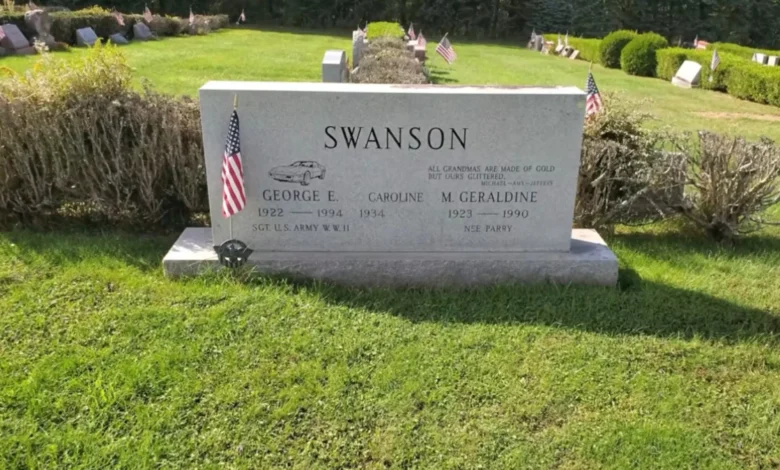
One of the most widely cited examples of automotive internment involves George Swanson, whose passing in 1994 led to a logistical spectacle outside of Pittsburgh, Pennsylvania. Swanson possessed an unyielding devotion to his white 1984 Chevrolet Corvette, a vehicle from the C4 generation that holds a polarizing yet significant place in automotive history. When Swanson stipulated in his final wishes that he desired to be buried inside his pristine sports car, he anticipated a straightforward process.
Reality, however, proved considerably more complicated. Swanson had originally secured arrangements at a local cemetery, only for administrators to attempt to rescind the agreement following his death. Faced with resistance from cemetery officials, Swanson’s family retained legal counsel to enforce the deceased’s explicit instructions.
The logistical requirements of the burial were unprecedented for the facility. To accommodate the dimensions of the C4 Corvette, Swanson’s estate was forced to purchase twelve individual burial plots. The interment required a heavy-duty crane to carefully lower the entire vehicle—with Swanson inside—into the massive subterranean vault.
Family members participated in the unique ceremony with fittingly automotive tributes. Swanson’s wife, Caroline, transported his ashes to the gravesite in her own Chevrolet Corvette before scattering them onto the driver’s seat of her late husband’s vehicle. To set the appropriate atmosphere, Englebert Humperdinck’s recording of "Release Me" played from the car’s cassette player as the vehicle descended into the earth. This extraordinary event not only fulfilled Swanson’s vision of going out in style but also served as a watershed moment for modern alternative funerary practices.
Pioneers of the Trend: Sandra West and the 1964 Ferrari
While Swanson’s Corvette burial remains a legendary piece of automotive folklore, he was not the chronological pioneer of modern car burials. That distinction is widely attributed to Sandra West, a wealthy socialite and oil heiress from Texas, whose 1977 funeral cemented a bizarre precedent in mortuary history.
Upon her death, West directed that she be laid to rest behind the wheel of her beloved 1964 Ferrari—frequently identified by automotive historians as a rare Ferrari 330 America. According to contemporary reports, West was seated comfortably in the driver’s seat, attired in an Italian lace nightgown.
The execution of West’s final wish at the Alamo Masonic Cemetery in San Antonio required meticulous planning. The Ferrari, with West inside, was positioned inside a massive wooden crate. A crane lowered the substantial package into an oversized grave. To thwart potential grave robbers, vandals, and curious onlookers drawn by the sensational nature of the burial, the entire wooden container and vehicle were subsequently encased in a thick shell of poured concrete. The event drew massive media attention, establishing a high-water mark for eccentric wealth display and automotive devotion.
Diversity in Automotive Interments: From Muscle Cars to Gangster Lore
The phenomenon of automotive burial is not exclusively reserved for high-end European exotics or fiberglass sports cars. Everyday working-class vehicles have also served as final resting places, reflecting deep personal connections forged over decades of ownership.
A prominent example occurred in 2009 with the passing of Lonnie Holloway at the age of 90. Holloway elected to spend eternity inside his 1973 Pontiac Catalina—a vehicle he had purchased to celebrate his retirement. For Holloway, the car symbolized independence and the culmination of his working life. In addition to occupying the driver’s seat for his final journey, Holloway chose to include his personal gun collection within the vehicle, a gesture intended to permanently remove the firearms from circulation.
Conversely, cultural touchstones sometimes blur the line between actual vehicle burials and elaborate theatrical homages. Fans of blues-rock icon Stevie Ray Vaughan and Chicago music lore are often familiar with the legend of Willie the Wimp, the son of a prominent Chicago figure who received a legendary send-off. While popular culture frequently mischaracterizes the event as a literal car burial, the reality involved a custom-built casket meticulously fabricated to replicate a Cadillac limousine, complete with functional lights and authentic trim. This "casket-mobile" demonstrated the enduring cultural power of automotive styling in funerary rites, even when physical mechanical components were absent.
Logistical, Environmental, and Legal Hurdles
The transition from a standard hardwood or metal casket to a motor vehicle introduces a complex array of regulatory challenges. Modern cemeteries operate under strict state and local ordinances designed to maintain ground stability, manage water drainage, and ensure aesthetic uniformity.
Environmental compliance represents a primary concern for local health authorities. Automobiles contain numerous hazardous fluids and materials, including motor oil, transmission fluid, coolant, gasoline residues, lead-acid batteries, and synthetic plastics that do not naturally biodegrade. Before any vehicle can be approved for subterranean placement, mortuary experts and environmental agencies must ensure the car is thoroughly drained, cleaned, and environmentally remediated to prevent soil and groundwater contamination.
Furthermore, the spatial footprint of an automobile requires an extraordinary amount of cemetery real estate. Standard burial plots measure approximately three by eight feet, whereas a typical mid-size car or sports car requires a footprint equivalent to multiple standard plots—often necessitating specialized family plots or private acreage. The structural integrity of the grave site is another critical factor; heavy vehicles require reinforced concrete vaults to prevent the earth above from collapsing as the automobile’s tires deflate and its internal components eventually degrade.
The Evolving Perspective of the Funeral Industry
In decades past, unconventional requests such as automobile burials were routinely dismissed by conservative funeral directors and cemetery boards. However, the contemporary death-care industry has grown increasingly accommodating to personalized, non-traditional memorials. Modern funeral homes and memorial parks increasingly recognize that honoring a deceased person’s unique passions—whether through customized urns, themed memorial services, or extraordinary final resting places—provides deep comfort to grieving families.
Industry analysts note a broader cultural shift toward personalization in end-of-life planning. As baby boomers and subsequent generations age, traditional solemnity is frequently giving way to celebrations of life that highlight a person’s hobbies, career achievements, and defining interests. For an avid automotive enthusiast, spending eternity surrounded by the steel, glass, and leather of a cherished vehicle represents the ultimate expression of identity.
Broader Implications and Cultural Legacy
The enduring fascination with car burials extends far beyond morbid curiosity. It speaks to the profound emotional bond humans form with their possessions, particularly automobiles, which serve as vessels of memory, freedom, and personal achievement.
While the vast majority of motorists will ultimately opt for traditional cremation or casket burial, the small subset of individuals who choose to be laid to rest in vehicles highlights the limitless boundaries of human expression. As long as people maintain a deep, romanticized connection to the open road and the machines that drive them, the concept of the final automotive ride will remain a captivating chapter in cultural history—a testament to passions that outlive even the drivers themselves.