The global robotics landscape is undergoing a quiet seismic shift, driven not by traditional Western pioneers like Boston Dynamics, but by agile manufacturing upstarts originating in China. At the vanguard of this movement is Unitree, a company that has dramatically upended the economics of legged robotics. By introducing quadrupeds and humanoids at a fraction of the historical cost, Unitree has effectively democratized advanced robotic research while igniting intense debate among Western policymakers regarding supply chain security and national technological sovereignty.
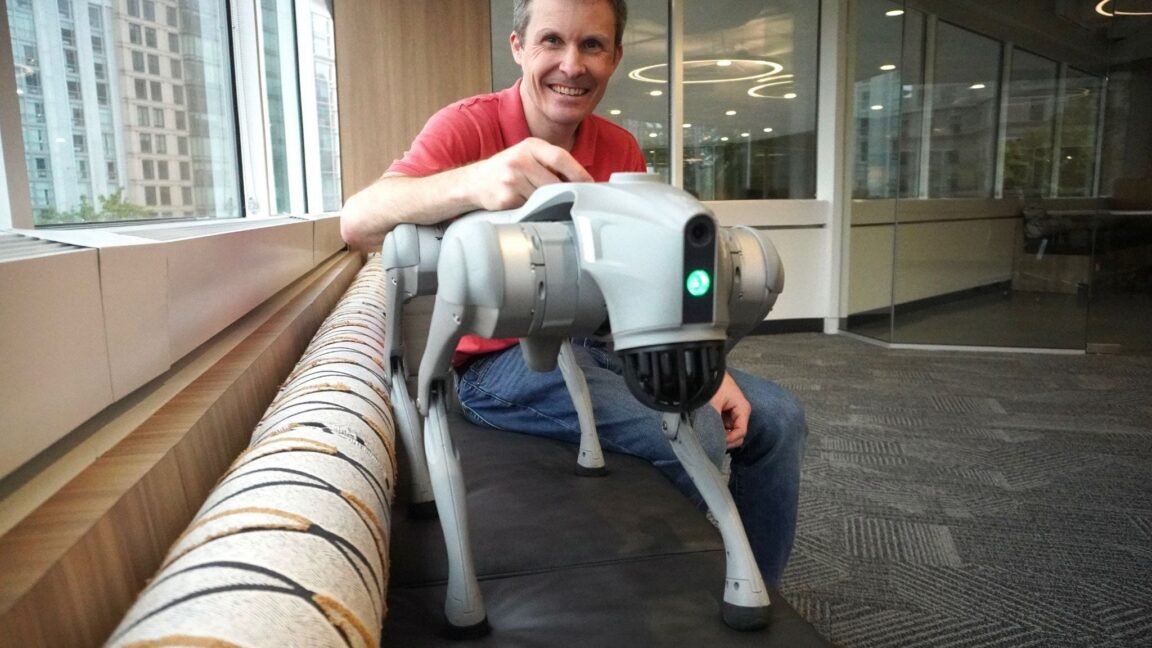
The Rise of Affordable Quadruped Robotics
For decades, quadrupedal locomotion was confined to elite academic laboratories and heavily funded defense projects. Early industrial prototypes, such as Boston Dynamics’ BigDog and WildCat, relied on internal combustion engines and hydraulic systems. While mechanically impressive, these systems were excessively heavy, loud, and polluting, rendering them impractical for everyday commercial or consumer deployment.
The industry standard shifted toward electric actuators with the unveiling of Boston Dynamics’ Spot in 2016, though commercial availability did not follow until 2020, with a baseline price starting around $75,000. This high financial barrier kept quadruped robots out of reach for independent researchers, small businesses, and general consumers.
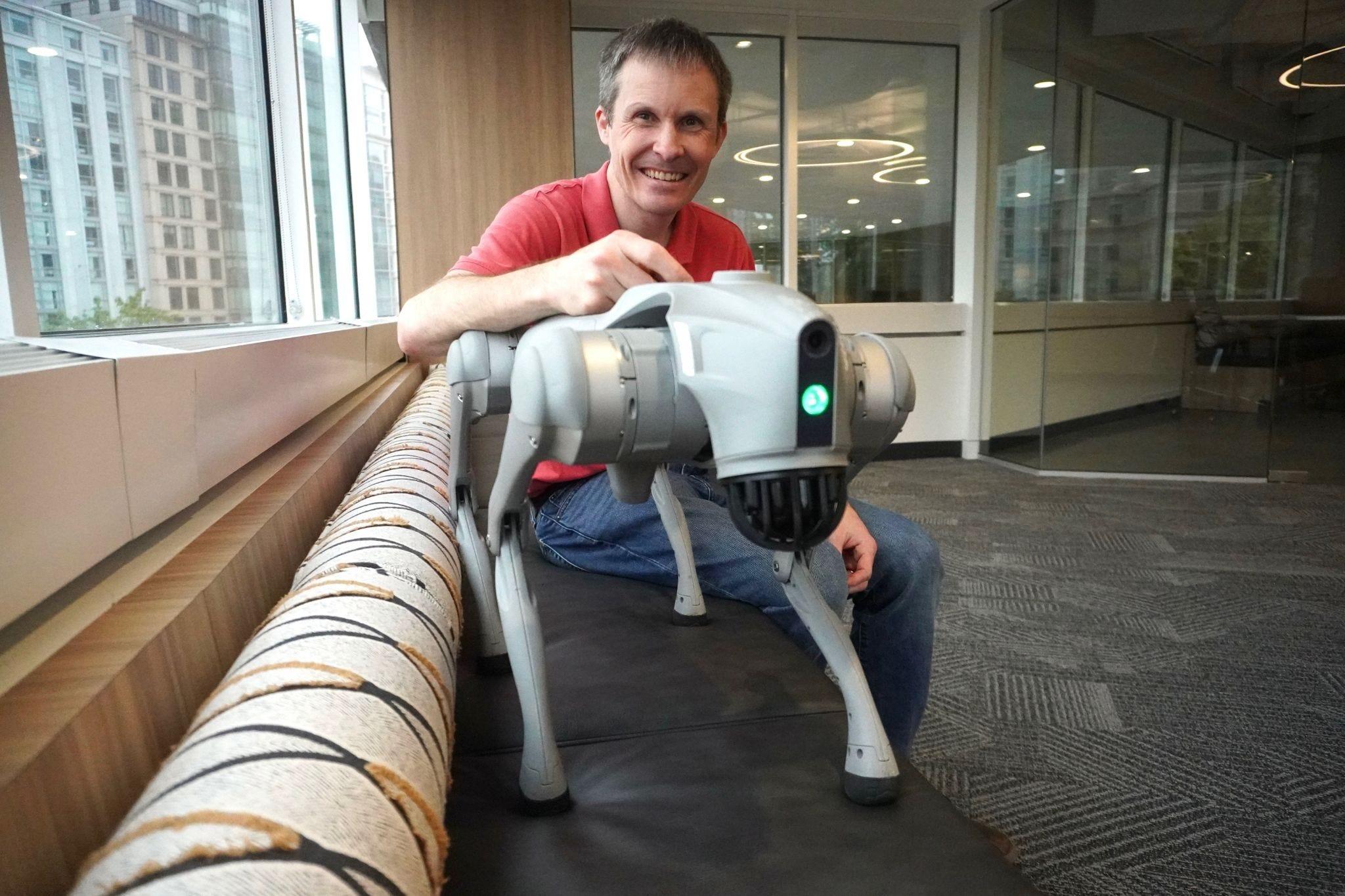
Entering this nascent market in May 2016, Unitree founder Wang Xingxing sought to design smaller, simpler electric quadrupeds inspired by foundational research in the field. Beginning with research-focused models like the Laikago in 2017 and AlienGo in 2019, the company systematically drove down production costs. The introduction of the Go1 line in 2021 lowered the entry price to $2,700, which was further slashed with the 2023 release of the Go2, featuring configurations starting at $1,600 and topping out around $2,800 for the Pro model.
Decoding Unitree’s Cost-Reduction Strategy
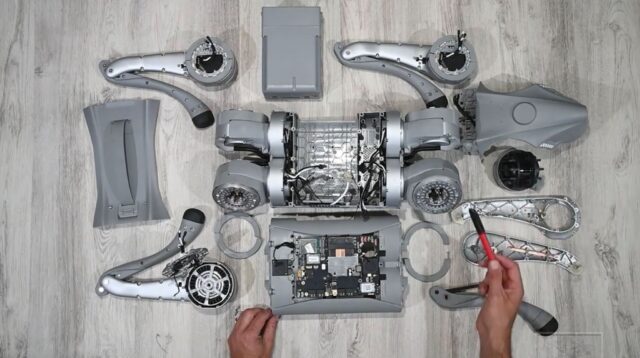
Analysts examining disassembled units, such as an extensive teardown conducted by engineering firm Simplexity, have revealed the manufacturing innovations that enable Unitree’s disruptive pricing. Rather than utilizing expensive, high-ratio harmonic reducers—such as the 51:1 gear ratios found in legacy industrial systems—Unitree employs simpler, lower-ratio gearboxes combined with larger, more powerful in-house motors.

This design choice yields a dual benefit: it reduces mechanical complexity and component costs while increasing backdriveability, allowing the robot’s software to dynamically compensate for physical resistance. Furthermore, Unitree maximizes standardization by utilizing identical motors across all four limbs, significantly cutting down on part counts and streamlining assembly.
According to industry evaluations by firms like SemiAnalysis, Unitree produces motors internally at a fraction of the cost of Western equivalents. This vertical integration, bolstered by a supportive domestic policy environment in China that includes tax incentives and institutional procurement, has established a powerful manufacturing flywheel. As production volumes scale, unit costs fall further, generating capital for subsequent research and development.

From Robot Dogs to Humanoid Dominance
Having secured a dominant position in the quadruped market, Unitree leveraged its supply chain and actuator expertise to enter the humanoid robotics sector. The company debuted its H1 humanoid in 2023, followed by the more advanced and competitively priced G1 in 2024. While consumer-grade versions of the G1 start at roughly $13,500—and research EDU variants retail near $50,000—these prices represent a steep discount compared to historical humanoid development costs.
Financial filings associated with Unitree’s August IPO on the Shanghai stock market underscore this rapid market capture. Between 2024 and 2025, Unitree’s quadruped revenue tripled from approximately $34 million to $104 million. Concurrently, humanoid revenue surged eightfold, expanding from $16 million to $129 million and accounting for over half of the company’s total revenue by 2025. Following its public debut, where shares surged before stabilizing, the company commanded a valuation of $34 billion, reflecting strong market confidence in its growth trajectory.
Operational Realities and Technical Limitations
Despite commercial success, experts and early adopters note that consumer-grade hardware still exhibits significant operational limitations. Reviewers and roboticists highlight that affordable quadrupeds frequently suffer from software bugs, thermal management issues during heavy usage or steep inclines, and a lack of practical, out-of-the-box utility for average households. Unlike wheeled delivery robots or aerial surveying drones, legged units lacking manipulator arms often struggle to find concrete everyday applications beyond academic research, industrial inspection, and entertainment.
Nevertheless, industry analysts draw direct comparisons between Unitree’s current trajectory and DJI’s historical dominance in the global consumer drone market. Much like early DJI platforms, which lacked advanced features but successfully established market dominance through aggressive pricing and vertical integration, Unitree is positioning itself as an indispensable hardware supplier on a global scale.

Geopolitical Implications and Regulatory Responses
The rapid rise of Chinese robotics hardware has prompted defensive maneuvers among Western policymakers concerned with industrial competitiveness and data security. In mid-2026, a bipartisan group in the United States House of Representatives introduced targeted legislation seeking to restrict the importation of specific Chinese robotic systems, explicitly citing Unitree in official communications. Shortly thereafter, the Federal Communications Commission (FCC) implemented broad new regulatory frameworks addressing foreign-made hardware to protect domestic infrastructure.
These measures mirror trade actions taken previously in sectors like electric vehicles, where Chinese manufacturers face steep regulatory hurdles in the United States while continuing to capture significant market share across Europe, Asia, and Latin America. Economic analysts warn that while import bans may temporarily protect domestic startups, they also risk isolating the United States from rapid advancements in cost-effective hardware manufacturing, potentially turning domestic robotics research into a secondary market as international standards are established elsewhere.