Beyond the Baseline: How IBM’s AI Infrastructure is Redefining the Modern Grand Slam Experience

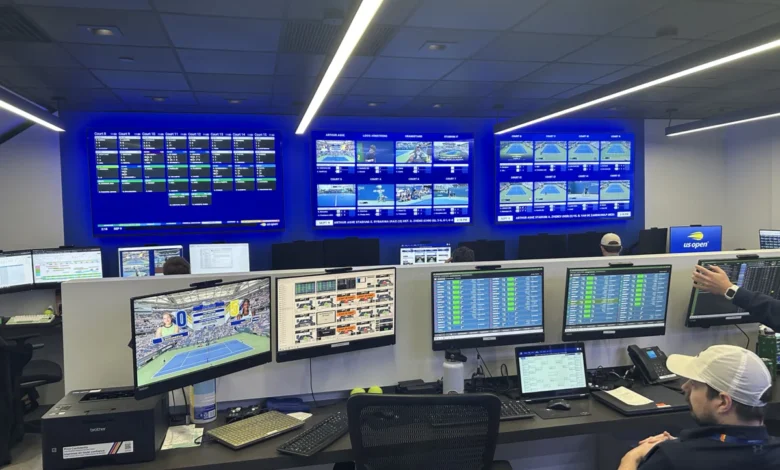
The U.S. Open has long served as a prestigious stage for global brands to showcase their influence through luxury hospitality and high-visibility signage. However, beneath the veneer of corporate branding and celebrity-filled suites lies a sophisticated, high-stakes technology operation that functions as the backbone of the entire tournament. IBM, a long-standing partner of the United States Tennis Association (USTA), has moved far beyond the role of a traditional sponsor. Today, the century-old tech giant acts as the invisible architect of the fan experience, utilizing artificial intelligence to process, analyze, and disseminate data for a global audience of millions. By transforming the U.S. Open into a living laboratory for AI integration, IBM is setting a new standard for how major sporting events leverage technology to bridge the gap between physical stadiums and digital spectators.
The Scale of the Operation: Processing a Mountain of Data
To the casual observer, interacting with the U.S. Open digital ecosystem appears deceptively simple. A fan opens an app, checks a score, or watches a highlight. Yet, the backend reality is a complex, high-velocity orchestration of data. During the 2025 tournament, more than 14 million unique devices engaged with U.S. Open digital platforms, resulting in 47 million visits—a 19% year-over-year increase that underscores the growing demand for digital connectivity in sports.
Managing this surge requires a symbiotic relationship between AI and human oversight. The primary challenge for the USTA is the compression of massive, complex data streams into user-friendly insights. A prime example of this is the "Serve Quality" metric. This feature utilizes computer vision to track 21 distinct data points on a player’s body and racquet, sampling these points 50 times per second. Throughout a single match, this generates approximately 4.6 million data points; over the course of the entire two-week Grand Slam, the volume exceeds 1.2 billion data points. AI models are trained to synthesize this raw input, distinguishing between a successful serve and a fault with near-instantaneous speed, ensuring that fans receive accurate, real-time statistics that were previously impossible to calculate at such a scale.
Chronology of a Digital Transformation
The integration of advanced tech into the U.S. Open did not happen overnight. It is the result of a multi-decade evolution that has shifted the tournament from a broadcast-centric event to a data-centric enterprise. In the early 2000s, IBM’s role was largely limited to infrastructure—ensuring the stability of internal networks and basic score-reporting systems. By the 2010s, the focus transitioned to mobile app development and cloud-based hosting.
The turning point occurred around 2020, as the COVID-19 pandemic necessitated a shift toward remote, high-quality digital engagement. With fans barred from the stands, the USTA relied heavily on IBM’s infrastructure to keep the tournament’s global audience connected. This period accelerated the adoption of AI-driven content production. Today, the partnership has entered a new phase: the "Generative Era." With the introduction of AI-powered match chat bots and automated editorial tools, IBM is no longer just hosting the U.S. Open; it is actively curating the narrative of the event.
Infrastructure and Security: The Invisible Shield
While the front-end features delight fans, the behind-the-scenes infrastructure management is perhaps IBM’s most critical contribution. The USTA is, by design, an organization that must scale from a few hundred employees to a massive operation during the three-week window of the U.S. Open. This creates significant operational volatility. By leveraging IBM’s hybrid cloud solutions, the USTA can dynamically scale its server capacity, ensuring that the digital platforms remain stable even during the most high-traffic, high-stakes championship moments.
Security remains the most pressing concern for such a high-profile target. As a major global event, the U.S. Open is a frequent target for cyberattacks, ranging from simple DDoS attempts to sophisticated data breaches. IBM’s security operations center processes nearly 500 million suspicious requests during the tournament. By utilizing AI agents that can categorize and prioritize threats in real-time, IBM allows the USTA’s security team to focus on legitimate risks, providing a layer of protection that would be humanly impossible to maintain manually.

The Human-AI Synergy: Enhancing Editorial Capacity
The impact of AI on the USTA’s internal workflow has been transformative. The editorial team, which remains relatively small, has faced increasing pressure to produce content that rivals major media outlets. To meet this demand, the USTA has deployed bespoke AI tools that generate match summaries and highlights. These summaries are not fully automated; rather, they serve as a "first draft" that human editors review and polish. According to reports from the USTA, this collaborative workflow has increased the organization’s overall content production capacity by 300%. This is a crucial finding for business leaders: AI is not replacing the editorial team, but rather acting as a force multiplier, allowing a small group of professionals to execute at the scale of a global newsroom.
Consumer Reception and the Future of Sports Tech
Skepticism toward AI has been a recurring theme in public discourse, yet sports fans appear to be an exception. According to the IBM 2026 Sports Survey, 80% of fans believe that AI-powered experiences—such as real-time analytics, personalized highlights, and live translation—add significant value to their viewing experience. Among tennis enthusiasts, 64% explicitly trust AI-generated content.
This trust is tethered to the fact that sports consumption is becoming increasingly fragmented. With stadium capacities remaining static and the global fan base expanding, digital platforms are the only way for many to participate. The 2026 survey found that 91% of fans use a sports app while watching a live event. This "second-screen" behavior indicates that the digital experience is no longer a supplement to the match; it is an integral part of the match itself.
Cultivating the Next Generation of Innovation
IBM’s interest in the U.S. Open is not merely a service contract; it is a strategic investment in the future of the sports-tech industry. The launch of the USTA Connect Innovation Challenge and the IBM Sports Tech Startup Challenge signals a desire to foster an ecosystem of startups capable of solving the next generation of sports-related problems.
By providing startups with access to proprietary U.S. Open data sets, the USTA and IBM are essentially building an R&D lab that operates in the open. The goal is to identify and nurture solutions that can be integrated into future tournaments. This approach ensures that the U.S. Open remains at the cutting edge of technological adoption, preventing the stagnation that often affects long-running sporting institutions.
Implications for the Broader Business Landscape
The partnership between IBM and the USTA provides a blueprint for how businesses can successfully navigate the integration of AI. First, it demonstrates that AI should be implemented to solve specific, high-friction operational challenges—such as scaling content or securing infrastructure—rather than as a gimmick. Second, it highlights the importance of the "human-in-the-loop" model, where AI handles the heavy lifting of data processing while human professionals maintain final control over narrative and strategy.
As we look toward the future of professional sports, it is clear that the divide between the physical event and the digital experience will continue to shrink. For entrepreneurs and tech leaders, the U.S. Open offers a compelling case study: success in the modern era requires the ability to treat every interaction as a data point, and every challenge as an opportunity for technological optimization. In this new arena, the most successful organizations will be those that can successfully blend the human element with the immense, unseen power of machine intelligence.