Popular Children’s Entertainer Ms. Rachel Pledges $1 Million to Palestinian Aid Following Macklemore Tour Controversy

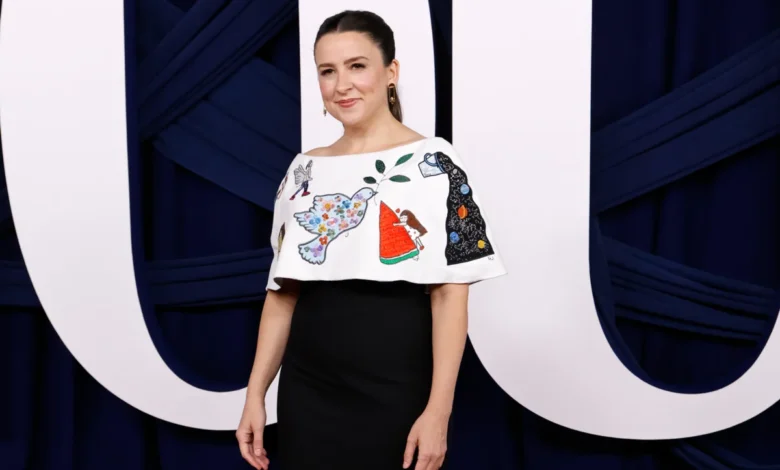
The intersection of mainstream entertainment, high-profile concert tours, and geopolitical activism has once again taken center stage, highlighted by a significant philanthropic commitment from viral children’s entertainer Rachel Accurso, widely known as Ms. Rachel. In a public statement issued via Instagram, Accurso announced a $1 million donation to the Palestine Children’s Relief Fund. This financial commitment directly mirrors a matching $1 million pledge made earlier by rapper Macklemore, whose recent removal from Ed Sheeran’s global stadium tour has ignited a fierce industry-wide debate regarding artistic freedom, corporate sponsorship, and celebrity advocacy in times of international conflict.
The unfolding controversy underscores the mounting pressure public figures face when navigating humanitarian crises. As geopolitical tensions continue to draw polarized reactions across the globe, the entertainment industry finds itself increasingly divided over the boundaries of political speech during live performances. Accurso’s intervention not only injects vital humanitarian aid into a devastated region but also broadens the discourse, pulling the children’s entertainment sector directly into a dialogue typically reserved for adult-oriented popular culture.
Chronology of the Controversy
The sequence of events leading to Accurso’s donation unfolded rapidly across several major metropolitan venues and digital platforms, culminating in a widespread boycott by supporting musical acts.
The catalyst occurred during the opening nights of Ed Sheeran’s Loop Tour at MetLife Stadium in East Rutherford, New Jersey. On September 4 and 5, Macklemore took the stage as a supporting act. During his performance on the initial night, the rapper shouted "Free Palestine" and delivered a passionate monologue addressing the mounting civilian casualties, displacement, and humanitarian devastation occurring in Gaza and the West Bank.
Following these performances, Macklemore was abruptly dropped from the remaining eight dates of the tour. Reports soon emerged indicating that the decision was driven by external pressure. Specifically, New England Patriots owner Robert Kraft—whose stadium holdings and business interests intersect heavily with major entertainment venues—reportedly intervened, refusing to allow Macklemore to perform at Gillette Stadium and subsequently lobbying other venue owners to follow suit. Investigative reports by major financial and cultural publications confirmed that venue stakeholders engaged in high-stakes discussions to address the tour’s viability in light of the rapper’s remarks.
Faced with the prospect of canceling the remainder of the massive stadium tour entirely, headliner Ed Sheeran ultimately acquiesced to the venue owners’ demands, leading to Macklemore’s official removal. The decision prompted an immediate ripple effect throughout the tour’s lineup. Supporting acts including Finneas, pop singer Lukas Graham, folk band Beoga, and singer-songwriter Aaron Rowe collectively withdrew from the tour in solidarity with Macklemore and in protest of what they characterized as artist suppression.
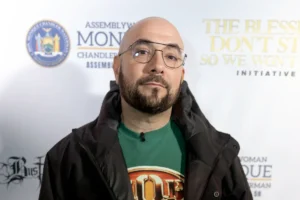
In response to his removal, Macklemore announced on Wednesday that he would redirect $1 million of his earnings from the tour to six distinct humanitarian organizations: the Palestine Children’s Relief Fund, HEAL Palestine, Gaza Soup Kitchen, Medical Aid for Palestinians, the United Nations Relief and Works Agency USA (UNRWA USA), and Anera.
By Thursday, Rachel Accurso stepped forward to match the rapper’s pledge dollar-for-dollar, issuing a direct challenge to her wealthy peers in the entertainment industry to follow suit and speak out against the ongoing crisis.
Humanitarian Background and Supporting Data
The organizations slated to receive funds from the pledges operate in environments characterized by extreme operational challenges, acute supply shortages, and systemic infrastructure destruction. According to reports from various international humanitarian bodies, the conflict in Gaza has exacted an unprecedented toll on the non-combatant population, with children bearing a disproportionate share of the suffering.
Rachel Accurso highlighted these grim statistics in her public address, noting that over 20,000 Palestinian children have been reported killed since the escalation of hostilities, with thousands more injured, orphaned, or displaced. Organizations such as the Palestine Children’s Relief Fund (PCRF) provide critical medical care, specialized surgeries, mental health support, and humanitarian aid to youths who lack access to basic necessities.
The broader humanitarian landscape in Gaza remains precarious. The United Nations and affiliated relief agencies have repeatedly warned of widespread food insecurity, collapsing healthcare systems, and the near-total destruction of educational facilities. By directing funds toward organizations specializing in immediate medical interventions, nutritional support, and emergency relief, the high-profile donations aim to bridge significant gaps left by stalled diplomatic efforts and restricted aid corridors.
Official Responses and Stakeholder Positions
The collision of art, commerce, and geopolitics elicited distinct, carefully managed responses from the primary figures involved, reflecting the complex pressures facing modern performers.
Ed Sheeran addressed the controversy through a formal public statement, shedding light on the logistical and philosophical dilemmas he faced as the tour’s headliner. Sheeran defended his historical avoidance of political commentary on stage, explaining that his primary audience consists of young people and families from diverse cultural and political backgrounds.
"There is a reason I do not use my professional platform for politics — my audience includes young people, often children, of all backgrounds," Sheeran stated. "Those who come to my shows do not expect a political forum. I respect Macklemore’s strength of purpose to stand up and shout for what he believes. However, there is room for multiple approaches to the same end: peace."
Sheeran emphasized that he attempted to mediate between venue stakeholders and his supporting act, but ultimately faced an ultimatum that threatened the livelihoods of hundreds of touring crew members and the completion of the concert series.
Macklemore, conversely, framed his actions around a moral imperative that supersedes commercial considerations. In his announcement detailing the distribution of his $1 million pledge, the rapper emphasized the universal value of human life.
"Whatever we disagree about, perhaps we can agree on this: Palestinian lives are worth protecting," Macklemore wrote. "A Palestinian life is no less valuable than any other life on this earth."
Accurso adopted an equally uncompromising stance. Known for her digital educational platform aimed at toddlers and preschoolers, Accurso has increasingly leveraged her massive online footprint to advocate for humanitarian causes, including opposition to family separation policies at the U.S. border and fundraising campaigns for children affected by famine in Sudan.
Addressing potential career repercussions, Accurso dismissed concerns regarding lost partnerships or diminished viewership. "You’re gonna lose this partnership. You’re gonna lose views. That doesn’t faze me because the kids gave me the platform. I’m going to stand with them no matter what," she remarked in a recent interview. "People on the ground in Gaza are risking their lives all the time to help kids. I can do it from Manhattan."
Broader Impact and Implications for the Entertainment Industry
The public fallout from the Loop Tour controversy illustrates a fundamental shift in how cultural institutions and artists negotiate the boundaries of free expression. Historically, major concert tours operated under a strict division between entertainment and political discourse, designed to maximize broad commercial appeal and minimize controversy for corporate sponsors and venue operators.
However, the proliferation of social media has empowered artists to bypass traditional gatekeepers and connect directly with audiences regarding global affairs. This dynamic places unprecedented leverage—and risk—on performers who choose to utilize their platforms for political advocacy.
Legal and industry analysts note that while venue owners retain the contractual right to curate performers based on safety, insurance, and operational considerations, coordinated blacklisting or political vetting sets a complex precedent. The departure of supporting acts from Sheeran’s tour demonstrates that solidarity among artists is becoming a potent mechanism for pushing back against perceived censorship.
Furthermore, the involvement of figures outside the traditional touring ecosystem—such as children’s media creators—signals that advocacy is no longer siloed within politically adjacent genres like hip-hop or folk music. As creators like Accurso integrate global humanitarianism into brands traditionally insulated from hard politics, the traditional parameters of celebrity philanthropy are undergoing a profound reevaluation.
Ultimately, the convergence of Macklemore’s tour exclusion, Sheeran’s operational compromise, and Accurso’s multi-million-dollar philanthropic response highlights an entertainment landscape where silence is increasingly difficult to maintain, and where the financial and professional costs of activism are met with equally resolute commitments from artists determined to make their voices heard.