Cookie Monster Transforms Chappell Roan’s Pop Hit Hot To Go Into The Ultimate Sesame Street Potty Training Anthem Got To Go

For more than half a century, Sesame Street has maintained a peerless reputation for bridging the gap between early childhood education and contemporary popular culture. Since its premiere in November 1969, the groundbreaking children’s television program produced by Sesame Workshop has consistently enlisted legendary musical guests to reimagine their signature hits for multi-generational audiences. From Stevie Wonder’s seminal appearances in the early 1970s to Tony Bennett retrofitting his timeless classic "Fly Me to the Moon" into an interplanetary adventure for the show’s intrepid worm character Slimy—rechristened appropriately as "Slimy to the Moon"—the series has always treated its young demographic with profound musical sophistication.
This rich lineage of cultural collaboration boasts countless unforgettable moments. Hip-hop pioneers the Fugees contributed the powerful inclusion anthem "Just Happy to Be Me," while blues icon B.B. King delivered a soulful, definitive ode to the letter B, cementing an indelible cross-generational musical bridge. The show’s writers and producers have frequently paired musical legends with linguistic concepts, most notably when Smokey Robinson found himself playfully pursued by the letter "U" for a rendition of "U Really Got a Hold on Me." Opera legend Marilyn Horne famously donned a tiara adorned with a bouncing cookie to trill an elaborate orchestral arrangement of "C Is for Cookie" on a meticulously crafted mock-Egyptian set.
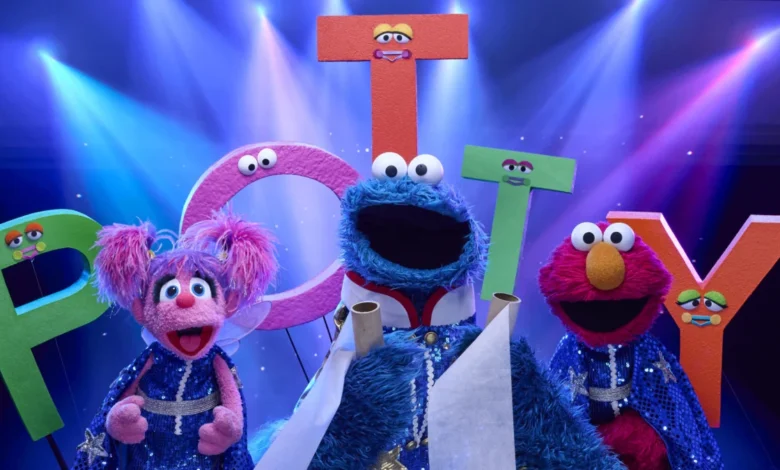
Now, nearly 57 years after the program first revolutionized educational broadcasting, this enduring tradition of pedagogical musicality and wry humor continues unabated. In a newly released video segment that has quickly captured the attention of mainstream culture and early childhood educators alike, Sesame Street has transformed Chappell Roan’s explosive modern pop phenomenon "Hot to Go!" into an educational potty-training anthem titled "Got to Go." Fronted by the inimitable, gravelly vocals of the Cookie Monster—supported by fellow Muppets Elmo and Abby Cadabby—the clever adaptation proves that the series’ creative team remains remarkably attuned to the pulse of contemporary pop culture.
A Note-For-Note Parody With Educational Intent
The newly unveiled segment is a note-for-note musical reproduction of Roan’s infectious track, capturing the high-energy cadence and danceable synth-pop production that propelled the original song to global prominence. While the human-driven choreography of the original music video famously features the artist and her dancers performing distinct hand gestures to spell out the title’s letters, the Sesame Street adaptation offers a charmingly literal pedagogical twist. Instead of human dancers spelling out words, singing, animated letters take center stage to spell out the crucial instructional word: P-O-T-T-Y.
True to character, Cookie Monster anchors the performance with his trademark, endearing broken English and enthusiastic delivery. The lyrics deftly guide young viewers through the often-challenging physiological awareness required during early childhood development:
"Stop and listen to me body / It’s saying that it’s time for potty,
There’s a growing feeling in my tummy, that me gotta go pee, me gotta go pee…
There they go again, now me legs are grooving / There might be a mess if me don’t get movin’…"
The chorus culminates in a joyful, instructional sing-along:
"P-O-T-T-Y, woah-oh, your body knows when you’ve got to go…"
Adding an extra layer of imaginative whimsy, the segment cleverly opens with anthropomorphic versions of numbers one and two, gently normalizing fundamental bodily functions for the preschool demographic. The seamless blending of Roan’s infectious pop melodies with vital life-skill acquisition highlights the enduring genius of Sesame Street’s curriculum design.
The Evolution of Musical Parodies on Children’s Television
The integration of current pop hits into educational television represents a calculated strategy by Sesame Workshop to engage both children and their millennial or Generation Z parents. By selecting songs that dominate contemporary radio and streaming platforms, the show creates a shared media experience for families.
Over the decades, the series has frequently parodied chart-topping hits to address everything from the alphabet and emotional regulation to hygiene and health. Past viral hits have included "Share It Maybe" (a parody of Carly Rae Jepsen’s "Call Me Maybe"), "Me Want It (Cookie Monster Style)" (recalling Psy’s global sensation "Gangnam Style"), and "Elmo’s Got a Brand New Toy" (paying homage to James Brown).
These musical interventions are backed by extensive educational research. Developmental psychologists have long noted that rhythm, rhyme, and repetition significantly enhance memory retention and cognitive processing in young children. By marrying these mnemonic devices with melodies already familiar to parents—who frequently control the household media environment—Sesame Street ensures that educational messaging is reinforced both inside and outside the classroom.
Industry Reaction and Artist Response
Following the release of "Got to Go," media outlets quickly sought comment from the creative forces behind the original track. Chappell Roan, whose meteoric rise throughout 2023 and 2024 established her as one of pop music’s most defining contemporary voices, was contacted directly by entertainment trade publication Variety. A representative for the singer stated that Roan had no official comment regarding the parody.
Industry analysts and cultural commentators quickly noted that no statement was truly necessary. Granting formal permission for her breakthrough hit—co-written and co-produced alongside longtime collaborator Dan Nigro—to be repurposed for a toddler-targeted sanitation and hygiene tutorial serves as a powerful endorsement in its own right. Securing copyright clearance for mainstream pop music involves complex legal negotiations between publishers, record labels, and songwriters. By approving the adaptation, Roan and her team joined a prestigious roster of artists who recognize the cultural significance of being inducted into the Sesame Street canon.
The Broader Implications for Early Childhood Education and Pop Culture
The convergence of Chappell Roan’s hyper-stylized camp pop aesthetic with public television’s most wholesome institution underscores the porous boundary between adult pop culture and children’s media. In recent years, artists who achieve massive crossover success frequently find their work filtered through various satirical and educational lenses. However, few platforms carry the historical gravity and educational mandate of Sesame Street.
For children navigating the milestones of toddlerhood, potty training represents a major psychological and physical hurdle. Pediatric experts emphasize that framing this transition through music, humor, and familiar characters significantly reduces anxiety for both children and caregivers. By utilizing a high-energy pop track, the producers capitalize on the song’s inherent momentum to encourage physical action—namely, standing up and walking to the restroom when physical cues arise.
Furthermore, the viral nature of such segments ensures that educational content extends far beyond traditional broadcast television hours. As clips circulate across social media platforms like TikTok, YouTube, and X (formerly Twitter), the video reaches childless adults, college students, and pop music enthusiasts, generating widespread brand affection for the enduring children’s series while providing a novel promotional boost to the original songwriter.
Conclusion
As Sesame Street marches toward its sixth decade of continuous production, "Got to Go" stands as a testament to the show’s remarkable adaptability. By taking a defining pop anthem of the mid-2020s and channeling it through the lovable, chaotic energy of the Cookie Monster, the program proves that learning foundational life skills never has to go out of style. Through careful curriculum design, sharp comedic timing, and an unwavering commitment to child development, the legendary children’s show continues to honor its past while remaining resolutely "hot to go" for future generations.