The relentless pursuit of success in Hollywood often feels like an endless ticking clock. For aspiring artists, the initial pressure is to simply survive in an industry notorious for its ephemeral nature. But if a significant opportunity arises, the anxiety shifts to how far one can ascend before the industry inevitably casts them aside for younger talent. This cycle of hope and obsolescence shapes the experience for many, transforming the much-coveted "breakthrough" moment into a complex re-emergence of old fears. Ian Faria’s "Big Break," which recently world-premiered at Fantasia Fest 2026, delves into this very phenomenon through the struggles of four improvisers. The film, a sprawling, semi-surreal farce, masterfully employs the conventions of low-budget slashers and absurdist sketch comedy to dissect the corrosive effects of ambition curdling into desperation, impacting both creators and the industry itself.
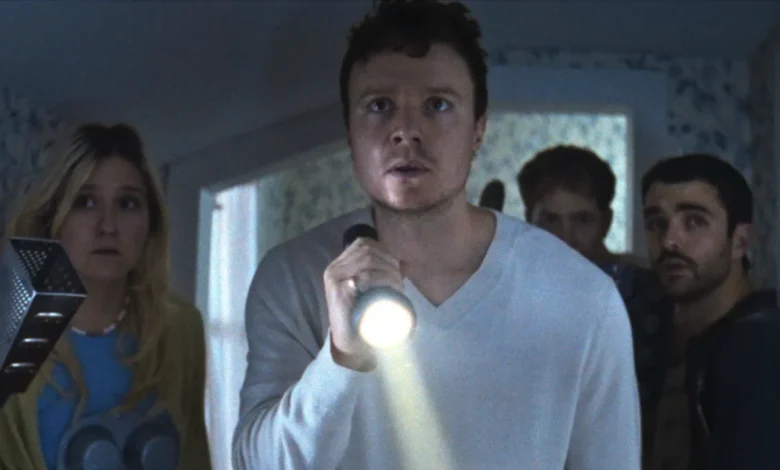
The narrative centers on the fractured remnants of "Simple Town," a once-promising comedy collective. Years after their dissolution, former collaborators Will (Will Niedmann), Caroline (Caro Yost), and Felipe (Felipe Di Poi Tamargo) are drawn back together by their estranged friend, Sam (Samuel Lanier). Sam is the sole member of the group to have escaped the clutches of obscurity, achieving a significant level of fame with his wildly successful "Gummy Bears" movie franchise. His isolated, secluded home becomes the stage for this uneasy reunion, where simmering resentments and unspoken betrayals threaten to boil over.
With a "Gummy Bears" sequel already in development, the reunion takes on a desperate edge. Will, Caroline, and Felipe are not only seeking to confront the unresolved issues that led to their friendship’s demise but are also engaged in an increasingly toxic campaign to secure roles in Sam’s next film. Their journey to Sam’s remote cabin—a setting eerily reminiscent of classic "cabin in the woods" horror tropes—marks a critical juncture. As the living ghosts of Simple Town converge, they must navigate the immediate peril of the weekend before they can even begin to address the deeper wounds inflicted by their former friend and the industry that appears to have favored him so generously.

The Unrelenting Pressure Cooker of the Entertainment Industry
Hollywood’s landscape is characterized by a unique blend of intense competition and fleeting recognition. For many artists, the journey is not a linear ascent but a constant negotiation with time and relevance. The industry’s insatiable appetite for novelty often leads to the marginalization of seasoned talent, pushing them to the periphery in favor of fresh faces. This dynamic is a well-documented aspect of the entertainment business, with numerous studies and anecdotal accounts highlighting the ageism and the rapid turnover of talent. The pressure to maintain momentum is immense, creating an environment where the fear of being forgotten is as potent as the desire for success.
"Big Break" taps into this pervasive anxiety by framing the reunion as a desperate bid for relevance. The former members of Simple Town, having witnessed Sam’s meteoric rise while they languished in relative obscurity, are forced to confront the stark reality of their diverging career paths. Sam, portrayed with a peculiar intensity that suggests his success may have amplified existing eccentricities, represents the embodiment of the Hollywood dream achieved, albeit through a lens that has alienated his former peers. His lavish lifestyle and burgeoning franchise stand in sharp contrast to the continued struggles of Will, Caroline, and Felipe, exacerbating the existing friction.
A Genre-Bending Exploration of Ambition
While "Big Break" features elements of violence, including stabbings and a brutal head-bashing, it functions less as a traditional horror film and more as a sharp, revealing indie satire. Faria skillfully weaves a narrative of psychic violence through the excruciatingly awkward social dynamics of his deeply flawed characters. The film’s most effective comedic device, and a clever subversion of horror tropes, lies in the protagonists’ single-minded fixation on fame. So consumed are they by their ambition that they repeatedly fail to recognize the immediate danger posed by a killer in their midst.
Instead of reacting with alarm, Will, Caroline, and Felipe engage in a pathetic charade, practically begging Sam for roles in his next project. Their obliviousness is amplified by the chilling fact that Sam has another "guest" incapacitated in his basement, a grim detail they remain utterly unaware of. The tension within the film arises not from sustained suspense but from the cumulative effect of escalating, uncomfortable misunderstandings. This approach allows Faria to comment on the industry’s tendency to blind its participants to reality, prioritizing the illusion of opportunity over tangible threats.

Industry Satire with a Touch of Compassion
"Big Break" offers a surprisingly generous critique of the entertainment industry. Rather than simply mocking artists for their unwavering pursuit of often unattainable dreams, or painting Hollywood figures as one-dimensional villains, the film acknowledges the genuine struggle. It recognizes that the business model itself, built on an illusion of scarcity and a constant churn of talent, can warp even the noblest intentions. The industry’s emphasis on success as a marker of importance, and importance as a predictor of happiness, is subtly deconstructed.
The film posits that the real people behind Simple Town, despite their flaws, possess a keen self-awareness. They are simultaneously brilliant in their understanding of their own creative ecosystem and tragically resigned to submitting themselves for judgment within an industry teetering on the brink of significant disruption. This period, marked by production shutdowns, labor strikes, shrinking budgets, and the looming specter of generative AI, presents an unprecedented challenge for a generation of creatives. Faria’s film offers a sense of empathy for this audience, juxtaposing their anxieties with the outmoded, almost naive aspirations of his characters.
Character Studies in the Crucible of Hollywood
Samuel Lanier delivers a compelling performance as Sam, embodying the archetypal "vaguely crazed yuppie" that Los Angeles seems uniquely capable of producing. His seemingly innocuous physical tics, such as the casual way he pops his posterior while bending over, become incisive visual gags that underscore his character’s self-absorbed nature. Will Niedmann as Will is remarkably endearing, capturing the lovable helplessness of a character who, despite his best efforts, cannot control his own loquaciousness.
However, the dramatic core of "Big Break" rests with Caro Yost and Felipe Di Poi Tamargo. Yost’s portrayal of Caroline is a masterclass in balancing outward competence with a simmering, unexpressed ambition. This professional drive collides with Di Poi Tamargo’s depiction of Felipe’s chaotic personal life, which includes a subplot involving an undergraduate girlfriend played by the deadpan Ivy Wolk. Their performances create a complex dynamic, exploring the fraught territory between professional resentment and personal morality.

Navigating Likability and Artistic Merit
While none of the characters in "Big Break" are overtly admirable, the film succeeds in portraying them with a profound understanding that being difficult to like does not equate to being unworthy of affection. This nuanced portrayal imbues the narrative with genuine stakes, even if the body count doesn’t meet the expectations of some hardcore horror aficionados. The film’s structure, which leans heavily on improv sensibilities, sometimes struggles to translate into the tangible spectacle often demanded by genre filmmaking. While the narrative occasionally meanders, the core strength of Simple Town’s collective imagination and their goofy magnetism sustains the movie remarkably well. Their inherent refusal to be overly self-conscious lends the work an unexpected poignancy.
A Radically Honest Portrait of Modern Dreams
Despite its occasional pacing issues, "Big Break" benefits immensely from the palpable joy of its creators. Similar to the cult success of "Dude Bro Party Massacre III" by 5 Second Films, the film thrives on the chemistry and comedic timing of its ensemble. The cast and director Ian Faria succeed in honoring their vision and, by extension, providing a rewarding experience for the audience. In an era where blockbuster franchises increasingly dilute metahumor through corporate branding exercises, Faria and Simple Town appear to have stumbled upon a radically honest portrayal of contemporary artistic ambition. They identify the industry itself as the true antagonist, a formidable killer that deserves to be unmasked.
Grade: B+
"Big Break" premiered at the Fantasia Festival on July 19 and is currently seeking U.S. distribution.