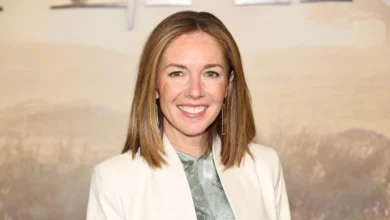
The twilight of the print media era in New York City serves as the backdrop for Magazine, a poignant and sharply observed feature directorial debut by Alexandra Pechman that made its world premiere at the Toronto International Film Festival within the Discovery section. Set in the transitional year of 2011, the film captures a distinct cultural inflection point: a moment just before the widespread dominance of social media, algorithmic content feeds, and digital-first publishing permanently altered the landscape of intellectual discourse and niche print journalism.
Drawing stylistic and thematic parallels to workplace comedies and indie dramas of decades past—echoing the snappy dialogue of Whit Stillman, the neurotic charm of early Noah Baumbach, and the nostalgic newsroom urgency of Joan Micklin Silver’s 1977 Boston-set feature Between the Lines—Pechman constructs a micro-universe within the fictional offices of Platen, a monthly New Yorker-lite magazine dedicated to long-form storytelling and audacious literary voices.
A Portrait of the Pre-Digital Publishing Landscape
Though set only a decade and a half prior to its release, Magazine operates as a historical period piece, illustrating the profound acceleration of modern communication. The offices of Platen are populated by a caste of bright, pseudo-elitist intellectuals and passionate staffers who treat the written word as an art form rather than a vehicle for internet click-through rates. The film examines the ecosystem of a high-brow publication where physical manuscripts, red-ink copy-editing, and deliberate pacing were still standard practice.
At the center of this microcosm are the unpaid summer interns, young and eager hopefuls arriving in New York with romanticized notions of the literary elite. The narrative begins with Nora, played by Lily McInerny, arriving outside the publication’s headquarters. Carefully monitoring her watch to avoid arriving either too early or too late, Nora embodies the cautious ambition of a college graduate stepping into what she believes is the epicenter of the cultural world.
Character Dynamics and the Competitive Internship Crucible
Once inside, Nora is introduced to a tight-knit and colorful cohort of fellow interns. Among them are the warm and affable Tabitha (portrayed by Lukita Maxwell), the endearingly nerdy Leonard (Daniel Zolghadri), and the vibrant Daphne (Iris Apatow). However, the professional hierarchy of the office immediately introduces complicated social dynamics.
At the front desk sits editorial assistant Thomas, played by Joshuah Melnick, who quickly sets his sights on Nora. Their swift, office-bound romance proves to be a precarious maneuver for a young woman whose primary objective is securing a permanent spot on the masthead should a position open up. Nora demonstrates an innate talent for rigorous copy-reading and meticulous administrative labor, but the competitive pressure escalates sharply with the arrival of Greer (Ruby Cruz). Confident, sharp, and fiercely capable, Greer quickly emerges as a formidable rival for the prospective full-time job, complicating her burgeoning friendship with Nora.

Overseeing the chaotic energy of the bullpen is Mickey, played with deadpan amusement by Jake Lacy. As the publication’s publisher, Mickey dispenses world-weary wisdom to the incoming generation, offering lines such as, "A magazine is like a snapshot of a single moment in time, and then it’s gone." This sentiment resonates prophetically against the backdrop of an industry on the precipice of obsolescence.
Furthermore, the film operates distinctly within a pre-Meghann #MeToo framework, addressing the casual boundary-pushing and workplace power dynamics that characterized media offices during the early 2010s. Thomas’s predatory advances toward the incoming interns serve as a sobering reminder of the systemic vulnerabilities young women faced in prestige industries before widespread cultural reckonings transformed corporate behavior.
Production and Industry Context
Written and directed by Alexandra Pechman, Magazine was produced by Pechman alongside Anne Alexander and Tess Cohen. The project secured representation for sales through UTA, positioning it as a notable acquisition title on the festival market. With a running time of one hour and 45 minutes, the film stands out as a rare, independently financed slice-of-life drama in an era dominated by high-budget intellectual property.
The ensemble cast features a robust roster of rising talent, including Lily McInerny, Lukita Maxwell, Joshuah Melnick, Iris Apatow, Ruby Cruz, Daniel Zolghadri, AnnaSophia Robb, Delaney Rowe, Jake Lacy, Sasha Bhasin, and Alex Edelman. The film’s aesthetic is noted for its polished production design and well-appointed period detailing, successfully recreating the cramped, paper-strewn offices of Manhattan publishing houses during the twilight years of the analog media boom.
Broader Implications and Critical Reception
Industry analysts reviewing the film at TIFF have drawn comparisons to The Devil Wears Prada, noting that while both films explore the high-stakes initiation of a young woman into a prestigious New York media institution, Magazine operates on a more modest, introspective scale. Rather than focusing on high fashion, Pechman’s film zeroes in on the intellectual vanity and economic precarity of literary culture.
The arrival of Magazine on the festival circuit highlights a growing appetite for cinematic retrospectives of the late 2000s and early 2010s—a distinct epoch defined by the transition from physical media consumption to ubiquitous mobile connectivity. By focusing on a generation of young hopefuls learning the hard realities of chasing prestige in a dying medium, the film captures a universal coming-of-age theme. As the characters navigate romantic missteps, professional rivalries, and the realization that their chosen industry is shrinking beneath their feet, Magazine offers both a lament for a bygone era of print journalism and a tribute to the resilience of those who attempt to leave their mark on paper.