Aaron Rowe Defends Ed Sheeran Amid Loop Tour Fallout While Targeting Robert Kraft Over Macklemore Controversy

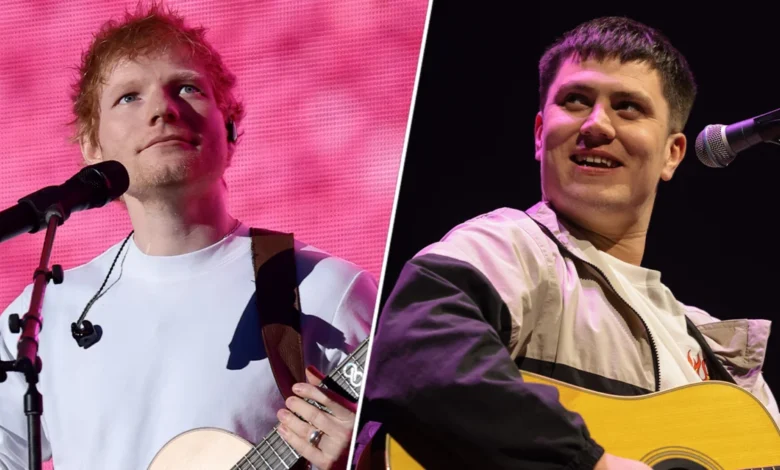
The contemporary intersection of live entertainment, corporate venue management, and geopolitical discourse has once again resulted in high-profile fallout, centering this time on British singer-songwriter Ed Sheeran’s ongoing Loop Tour. Following a cascade of lineup changes, cancellations, and intense public debate, Aaron Rowe—one of the tour’s former supporting acts who subsequently stepped down—has come forward to defend Sheeran. Rowe argues that public ire is being misdirected away from the powerful figures who engineered the initial controversy, specifically singling out billionaire businessman and Gillette Stadium owner Robert Kraft.
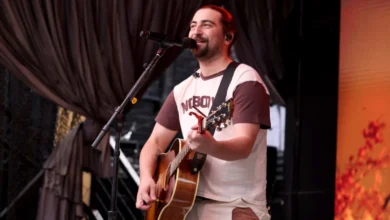
The controversy erupted earlier in the week when rapper Macklemore was removed from the Loop Tour following outspoken "Free Palestine" remarks made during a live performance. The decision to drop Macklemore ignited an immediate wave of backlash across the global music industry, ultimately leading to a domino effect that stripped Sheeran’s tour of its remaining supporting acts, including Rowe, Finneas, and Lukas Graham, as well as Sheeran’s longtime backing band, Beoga.
While the tour’s support roster has been left entirely vacant, the dialogue surrounding artistic autonomy, corporate censorship, and free speech in the entertainment sector continues to expand. Rowe’s recent defense of Sheeran offers a complex insider perspective on the pressures faced by headlining artists when major venue stakeholders exert financial and operational leverage.
Chronology of Events: From Onstage Remarks to Mass Departure
To understand the current state of the Loop Tour, it is necessary to examine the rapid succession of events that unfolded over the course of a single week. The friction began when Macklemore used his platform during a live performance to voice support for Palestine, a move that drew swift condemnation and political pressure from high-ranking venue executives.
According to statements released by Sheeran and subsequent reporting, the pressure point centralized around Gillette Stadium owner Robert Kraft. Reports indicate that Kraft convened a coalition of key tour venue representatives and delivered an ultimatum regarding Macklemore’s continued presence on the bill. Faced with the potential loss of multiple major stadium bookings, a decision was made to remove the rapper from the tour.
On Monday, the official announcement that Macklemore had been dropped triggered immediate outrage across social media and within artistic communities. Critics accused the tour management of caving to political censorship and attempting to silence artists advocating for Palestinian human rights. In an effort to address the backlash, Sheeran released a public statement clarifying that the decision was ultimately driven by the promoters and venue stakeholders responding to the ultimatum.
However, Sheeran’s explanation failed to quell the discontent. Within days, the controversy widened as artists associated with the tour began pulling out in solidarity and protest. Finneas, Aaron Rowe, and Lukas Graham independently announced their departures from the Loop Tour lineup. They were swiftly joined by Beoga, the traditional Irish instrumental backing band that has long been a staple of Sheeran’s live performances. By the end of the week, Sheeran found himself headlining the remainder of the tour with zero opening acts.
Aaron Rowe’s Defense and Critique of Venue Power
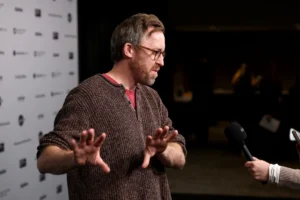
Taking to Instagram on Friday, Aaron Rowe addressed his followers directly via video to contextualize his departure and defend Ed Sheeran against what he characterized as misdirected hostility from the public and media.
Rowe asserted that critics were focusing their anger on the wrong individual. He stated that while Sheeran’s public statement could have been more forcefully articulated, the headlining artist was operating under extreme pressure from multiple directions.
"I’m gonna be honest, I think you are all focusing on the wrong person here," Rowe stated in his video message. "All I keep hearing is Ed Sheeran this, Ed Sheeran that, but you really should be focusing on the likes of Robert Kraft. You really should be focusing on the zionist lobbies that are trying to silence the voices of people who are shouting about genocide, the genocide that is happening in Palestine right now, by Israel."
Rowe further characterized the decision to drop Macklemore as a consequence of panic and external coercion rather than ideological alignment on Sheeran’s part. He emphasized that all of the artists selected to open for Sheeran on the Loop Tour shared pro-Palestine stances, arguing that if Sheeran harbored opposing political views, he would not have curated such a lineup.
"That’s a mistake from a person," Rowe continued, describing Sheeran’s handling of the situation as human error. "I know Ed Sheeran has done so much for so many fucking people, including artists like me, who he’s literally changed their entire lives. All he has inside of him is kindness. That is who Ed Sheeran is, and yes, like every other human being, he makes fucking mistakes."
Directing his critique back toward the corporate and media structures of the entertainment industry, Rowe urged activists and music fans to shift their focus toward holding powerful stakeholders accountable for suppressing free expression. He called on the public to use the momentum of the controversy to spotlight Robert Kraft and other industry figures who possess the financial leverage to dictate acceptable political discourse on major stages.
Broader Implications for the Live Music Industry
The Loop Tour controversy highlights an increasingly volatile landscape for touring musicians, venue owners, and promoters. As global geopolitical conflicts increasingly intersect with popular culture, artists and corporate entities alike find themselves navigating a minefield of public expectations, political alignments, and economic dependencies.
Historically, major stadium tours have operated under strict commercial agreements designed to minimize controversy and protect the financial investments of venue owners, sports franchises, and corporate sponsors. However, the modern music industry is populated by artists who are increasingly vocal about international human rights issues, climate change, and geopolitical conflicts. When these two worlds collide—as demonstrated by the standoff between venue stakeholders and politically expressive performers—the friction can result in immediate operational disruption.
Industry analysts note that incidents of this scale set a significant precedent for how venue conglomerates interact with touring headliners. The ability of a venue owner, such as Robert Kraft, to influence tour lineups through collective bargaining among stadiums demonstrates the vast economic power held by infrastructure owners over creative content. Conversely, the mass walkout by supporting acts—including prominent names like Finneas and established bands like Beoga—indicates that contemporary artists are increasingly willing to sacrifice high-profile touring opportunities to uphold solidarity and protect freedom of expression.
The fallout also places a spotlight on the burden placed upon major headliners like Ed Sheeran. While international superstars command immense audiences and financial success, they are frequently caught between the conflicting demands of corporate venue partners, booking agencies, management teams, and their own supporting rosters. Sheeran’s experience serves as a case study in the modern perils of large-scale touring, where local venue politics can rapidly escalate into international cultural flashpoints.
Future Outlook for the Loop Tour and Affected Artists
As Ed Sheeran prepares to complete the remaining dates of the Loop Tour without an opening lineup, the long-term professional consequences for the artists involved remain to be seen. For Rowe, Finneas, and Lukas Graham, the decision to walk away represents a definitive ethical stance, though it also involves substantial financial and professional sacrifices associated with canceling stadium-level promotional appearances.
Meanwhile, public discourse regarding the intersection of entertainment and geopolitical activism shows no sign of abating. Social media platforms continue to serve as battlegrounds where fans, political advocates, and industry observers debate the boundaries of corporate censorship and artistic freedom.
Whether this incident will prompt a structural shift in how tour contracts are negotiated between venue owners and management agencies remains uncertain. However, the public statements from artists like Aaron Rowe ensure that the debate over power dynamics, executive influence, and political expression within the live music ecosystem will remain a central topic of discussion for the foreseeable future.