WHO Director-General visits Jordan to recognize strong collaboration on health system delivery, emergency relief and advancing mental health

The World Health Organization (WHO) Director-General, Dr. Tedros Adhanom Ghebreyesus, has concluded the first leg of a pivotal two-day state visit to the Hashemite Kingdom of Jordan. The visit serves as a strategic reaffirmation of the alliance between the global health agency and the Jordanian government, focusing on three core pillars: the advancement of Universal Health Coverage (UHC), the integration of comprehensive mental health services, and the intensification of humanitarian health operations in a region currently destabilized by protracted conflict.
A High-Level Diplomatic Engagement
The centerpiece of the visit was a formal audience with His Majesty King Abdullah II. This meeting underscored Jordan’s distinct position as a regional hub for medical diplomacy and humanitarian logistics. Discussions were centered on the systemic strengthening of healthcare infrastructure, the expansion of access to essential services for marginalized populations, and the logistical challenges of sustaining emergency responses.
The dialogue specifically addressed the plight of the Palestinian people and the operational requirements of the medical evacuation corridors that have allowed injured civilians—particularly children—from Gaza to receive life-saving treatments within Jordanian facilities. His Majesty’s commitment to these initiatives reflects a broader national strategy that prioritizes healthcare as a cornerstone of both domestic stability and international humanitarian obligation.
Historical Context and Regional Humanitarian Burden
Jordan’s role in regional healthcare is disproportionate to its size. For decades, the Kingdom has absorbed significant waves of displacement. According to current data from the United Nations High Commissioner for Refugees (UNHCR) and local Jordanian statistics, the country hosts more than three million refugees, primarily from Syria and Palestine. Providing comprehensive health services to this population requires a resilient and adaptive national health system.
The "Medical Corridor" initiative, personally championed by King Abdullah II, has emerged as a vital lifeline. By facilitating the transport of patients with critical injuries, cancer, and other life-threatening conditions, the initiative serves as a model for regional cooperation. Dr. Tedros explicitly commended this effort, noting that Jordan’s ability to integrate these refugees into its health system while maintaining domestic standards is a testament to the nation’s resilience.
Field Observations and Direct Impact
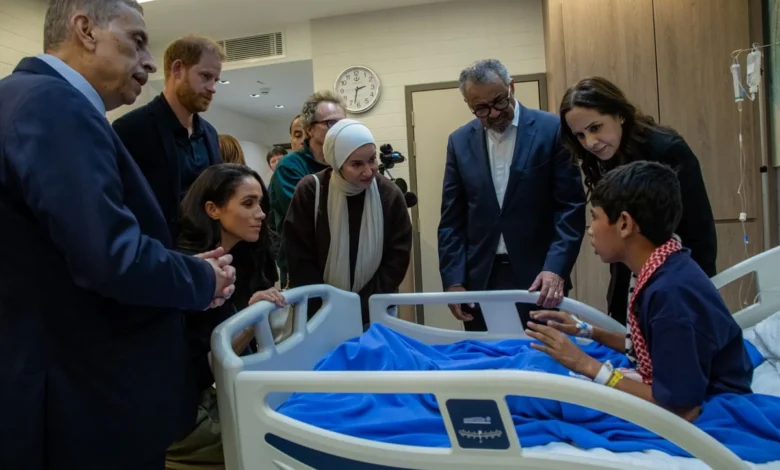
During his first day in Amman, Dr. Tedros visited a specialized medical facility currently treating children evacuated from Gaza. The visit provided the Director-General with firsthand insight into the medical complexities of the ongoing crisis. He engaged with frontline healthcare professionals who are managing a spectrum of trauma, ranging from blast-related injuries to the disruption of chronic care for conditions such as pediatric oncology.
This site visit highlighted the precarious nature of medical evacuations. As international borders tighten and conflict zones remain volatile, the continuity of the evacuation corridor remains a top priority for the WHO. The Director-General’s presence served to signal to the international community that the financial and logistical support for these corridors must be sustained if further preventable mortality is to be avoided.
Strategic Partnerships and Philanthropic Involvement
A notable dimension of the visit was the participation of the Duke and Duchess of Sussex, Prince Harry and Meghan. Representing Archewell Philanthropies, the couple joined the WHO delegation to amplify the focus on mental health—a field they have long championed.
The involvement of Archewell in this visit marks a continuation of their partnership with the WHO, which has previously spanned efforts from equitable vaccine distribution to the implementation of mental health programming in conflict zones. Prince Harry, speaking as an ally to the WHO’s mission, emphasized that mental health must be treated as a primary requirement for post-conflict recovery. "Mental health is fundamental to recovery, dignity, and long-term peace," the Duke remarked, pointing to the necessity of dismantling the stigma that often prevents young men and displaced populations from seeking psychological support.
Analysis: Strengthening Jordan’s Health Infrastructure
The bilateral meetings between Dr. Tedros and the Jordanian Minister of Health focused on the technical aspects of achieving Universal Health Coverage. Jordan has made significant strides in primary healthcare, particularly in the integration of mental health services into routine clinics. This approach—moving mental health out of specialized institutions and into general practice—is a core objective of the Director-General’s Special Initiative for Mental Health.
Economically, the challenge for Jordan lies in the financing of these services. With a large, non-national population, the strain on the public purse is significant. Dr. Tedros convened a high-level meeting involving donor countries, UN agencies, and private philanthropies to address the "financing gap." The objective was to secure long-term commitments rather than ad-hoc emergency funding, ensuring that the Jordanian health system can remain robust against future external shocks.
Chronology and Upcoming Engagements
The second day of the mission is designed to broaden the scope of the visit beyond emergency response. Key scheduled engagements include:
- The National Center for Rehabilitation of Addicts: A tour of the WHO-supported facility to review integrated treatment models that combine medical detox with psychological and social reintegration services.
- Engagement with Civil Society: A roundtable with the Jordanian Hashemite Fund for Human Development to discuss the role of community-led organizations in driving public health outcomes.
- King Hussein Cancer Center: A high-level discussion on oncology research and the potential for the center to act as a regional oncology training and treatment hub.
These events underscore the transition from emergency humanitarian assistance to long-term systemic development. By focusing on both the King Hussein Cancer Center and addiction rehabilitation services, the WHO is signaling that Jordan’s healthcare system is evolving into a sophisticated, multi-disciplinary model capable of addressing diverse health burdens.
Broader Implications for Global Health
The visit to Jordan serves as a microcosm for the challenges faced by the WHO globally. It highlights the tension between providing immediate humanitarian relief and building sustainable, resilient health systems. As the world faces increasing numbers of climate-driven and conflict-driven displacements, the Jordanian model of hosting refugees while simultaneously advancing national UHC goals provides a blueprint for other nations.
The data suggests that without international support, countries like Jordan risk "systemic exhaustion," where the burden of hosting large refugee populations eventually erodes the quality of care for the host population. The presence of international donors and the direct involvement of the WHO leadership during this state visit are intended to mitigate this risk. By highlighting Jordan’s "compassion, resilience, and innovation," the WHO is actively advocating for increased global investment in host nations that serve as the front line for regional stability.
Conclusion and Looking Forward
As Dr. Tedros concludes his visit, the consensus among stakeholders is clear: the partnership between Jordan and the WHO is not merely a bilateral relationship, but a critical component of regional security. The focus on mental health, coupled with the commitment to the medical evacuation of the most vulnerable, provides a framework that the WHO hopes to replicate in other conflict-affected zones.
The success of these initiatives will ultimately depend on the follow-through of the donor countries and organizations present at the high-level meetings. If the funding pledges discussed during the visit materialize into sustained budget support, Jordan will likely continue to serve as a beacon of healthcare resilience in the Middle East. For the World Health Organization, the visit reinforces the urgency of its "Health for All" mandate, proving that even in the face of immense geopolitical pressure, the prioritization of health and humanity remains the most effective path toward long-term peace.