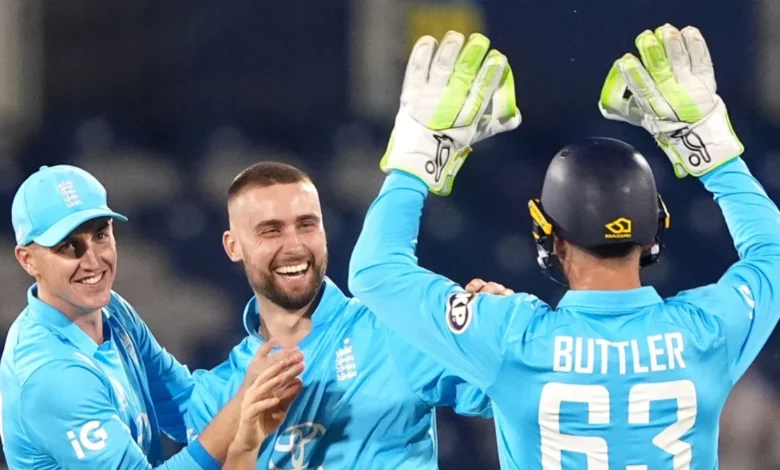
England began their three-match ODI series against Sri Lanka with a statement of intent at Durham, clinching an 89-run victory underpinned by a standout performance from all-rounder Will Jacks. In a display of tactical versatility and individual brilliance, the 27-year-old provided the decisive contributions that allowed England to navigate a tricky surface and dismantle the Sri Lankan batting lineup. The win marks a significant milestone for England’s white-ball evolution under captain Harry Brook, emphasizing a new era of flexibility and adaptability.
A Match Defined by Tactical Maturity
The fixture at Durham presented a challenging pitch that demanded patience from the top order and disciplined variation from the bowlers. England, having elected to bat first, initially found the going tough against a probing Sri Lankan attack. The early loss of momentum necessitated a recalibration of their approach, with the middle order forced to anchor the innings before accelerating toward the latter stages.
England’s total of 265 all out in 48.1 overs was built on a foundation of grit rather than explosive power, a departure from the high-octane style often associated with the team in recent years. Harry Brook led from the front with a measured 67 off 69 balls, supported by Joe Root’s tactical 44 from 52 deliveries. However, it was the late-innings flourish provided by Will Jacks—scoring an unbeaten 46 from 47 balls—that proved vital. The highlight of his batting display arrived in the 48th over when he dismantled Dushmantha Chameera, dispatching the seamer for four consecutive boundaries. This 18-run sequence shifted the momentum firmly in England’s favor, pushing the score past the 260-run mark and providing the bowlers with a defendable total.
Chronology of the Collapse
Sri Lanka’s pursuit of 266 began with the intention of matching England’s scoring rate, but the visitors were ultimately undone by the spin-bowling masterclass of Will Jacks. Entering the attack in the 20th over, Jacks immediately applied pressure on a pitch beginning to offer turn and inconsistent bounce.
The dismissal of Charith Asalanka for just one run acted as the catalyst for a systematic dismantling of the Sri Lankan lineup. Despite a period of relative stability provided by Kusal Mendis (42 off 60) and a spirited cameo from Dunith Wellalage (45 off 36), the Sri Lankan chase never gained the necessary traction. Jacks claimed his second victim in the 27th over, trapping the captain, Mendis, leg-before-wicket.
As the pressure mounted, the lower order failed to resist the precision of the England attack. Jacks removed Wellalage and Asitha Fernando in quick succession, effectively ending any realistic prospect of a Sri Lankan victory. The final act of the match was a delivery of exceptional quality that clean-bowled Dilshan Madushanka, cementing career-best ODI figures for Jacks of 5-22 from seven overs. Sri Lanka were bowled out for 176 in 37 overs, handing England a comprehensive 1-0 lead in the series.
Statistical Context and Historical Significance
The brilliance of Will Jacks’ performance is best framed by the historical rarity of his figures. His haul of 5-22 stands as the most impressive bowling analysis by an England spinner in an ODI since Vic Marks recorded 5-20 against New Zealand in Wellington back in 1984. This achievement serves as a testament to Jacks’ development as a genuine all-rounder rather than a part-time option.
Throughout the match, the statistical contrast between the two teams was stark. England’s ability to build partnerships, coupled with a strike rate that improved exponentially in the final ten overs, contrasted with Sri Lanka’s inability to form significant stands. The contributions of Sachindu Colombage and Asitha Fernando, who both claimed three wickets for the tourists, were commendable, but their efforts were overshadowed by the lack of support from their batting counterparts.
Official Reactions and Team Philosophy
Following the match, captain Harry Brook was effusive in his praise for Jacks, highlighting the all-rounder’s commitment to the team’s new strategic direction. "He is really growing into this role," Brook stated during the post-match press conference. "He’s bought into everything we want to do. We’ve been talking about adapting to conditions, and he has done that exceptionally well over the last 18 months."
Brook noted that the transition to batting in the middle order is not always seamless for players accustomed to opening the innings, yet Jacks has embraced the challenge with professionalism. "He could have easily complained about the shift in his role, but he’s accepted it. He is a very good off-spinner who can spin the ball big and contain batters when we need him to."
For his part, Will Jacks maintained a modest outlook on his performance. "I go into each game with an open mind," he explained. "It’s refreshing and it keeps me relaxed. Knowing what the wicket was like after batting on it, I felt confident I could play a role with the ball. Harry likes us to be flexible, and that’s why we’re seeing some good things happen."
Expert Analysis: Eoin Morgan on England’s Evolution
Former England white-ball captain Eoin Morgan, providing analysis for Sky Sports, underscored the significance of Jacks’ evolution. Morgan highlighted that the "high-risk, high-reward" nature of batting in the middle order requires a specific type of temperament—one that Jacks is rapidly mastering.
"His clarity of thought is what stands out," Morgan observed. "He unpicks every situation differently. Even when he was scratching around at the start of his innings, he didn’t panic. He stuck in there and set himself up to kick on. His bowling, too, was exceptional. He gets a huge amount of turn, and even when he missed his mark, he was clearly focused on being as miserly as possible. This is a key role in modern ODI cricket, and he is filling it perfectly."
Implications for the Series and Beyond
The victory at Durham provides England with more than just a series lead; it validates the team’s ongoing transition under the current leadership. By fostering a culture of flexibility, where players are encouraged to contribute in multiple facets of the game, England is positioning itself to be more resilient against varying international conditions.
The upcoming second ODI will now be viewed as a critical juncture for Sri Lanka. To stay in the series, they must find a way to counter the threat of the England spin battery, which proved decisive in the first encounter. For England, the objective will be to maintain the intensity and tactical discipline displayed in Durham.
As the series shifts, the reliance on players like Will Jacks—who can alter the trajectory of a game with both bat and ball—will likely remain a central theme. The successful integration of these multi-skilled players is not merely a short-term tactical gain; it is a fundamental pillar of England’s strategy as they look toward future ICC tournaments and the long-term development of their white-ball squad. The performance at Durham serves as a blueprint for how this team intends to play: with composure, adaptability, and an unwavering commitment to the team’s collective goals.