Beyond the Mound: CC and Amber Sabathia’s Legacy of Impact and Professional Evolution

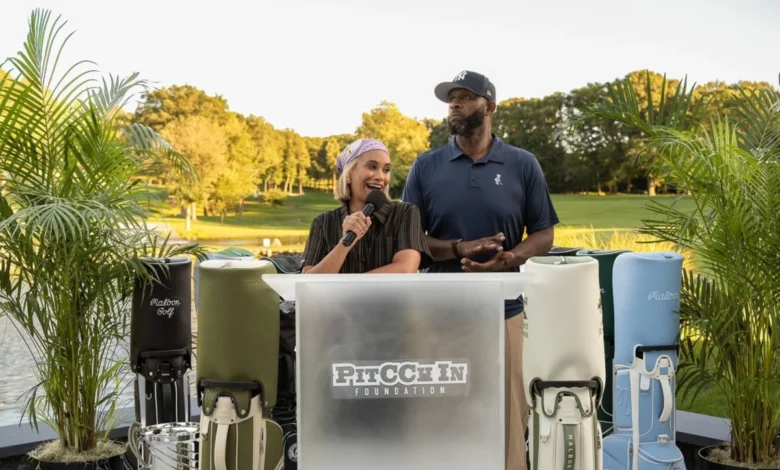
In the hyper-competitive landscape of Major League Baseball, where the average career for a pitcher is often measured in a handful of seasons, CC Sabathia’s 19-year tenure stands as a testament to rare durability and elite performance. A powerhouse of the modern era, Sabathia’s journey from a young prospect to a World Series champion and perennial All-Star culminated in his 2019 retirement. As the New York Yankees recently honored his legacy by officially retiring his iconic No. 52, the focus has shifted from his accomplishments on the pitcher’s mound to the lasting influence he and his wife, Amber Sabathia, continue to exert through the PitCCh In Foundation and their evolving roles in the sports industry.
The Sabathias’ philanthropic journey began in 2008, a year defined by significant career volatility for the left-hander. As he navigated the complexities of high-stakes free agency, the couple recognized that their platform could facilitate more than just monetary donations. They sought to address the systemic challenges facing underserved youth in their hometown of Vallejo, California, and in the communities where they lived during the season. This realization led to the founding of the PitCCh In Foundation, an organization designed to provide educational and athletic resources to children.
For the Sabathias, the foundation was never intended to be a passive charitable vehicle. Amber Sabathia, in discussions regarding the organization’s trajectory, emphasized the necessity of a hands-on approach. The couple aimed to move beyond the traditional model of corporate philanthropy—writing checks—and toward a model of active community engagement. This philosophy was deeply informed by CC’s own formative experiences as a member of the Boys & Girls Clubs, where he found early guidance and opportunities through organized sports.
The Chronology of a Commitment
The evolution of PitCCh In mirrors the trajectory of Sabathia’s career. From its inception in 2008 to the present day, the foundation has expanded its scope to include three core programmatic pillars: the All-Star Baseball Clinic, the Youth Backpack Program, and ongoing Field Renovations.
The All-Star Baseball Clinic provides young athletes with fundamental skills training, while the Youth Backpack Program addresses the immediate material needs of students, ensuring they are equipped for the school year. Perhaps the most visible aspect of their work, the Field Renovations, involves the physical restoration of baseball diamonds, creating safe, high-quality spaces for children to play. This initiative serves a dual purpose: providing infrastructure for youth development and revitalizing local public spaces.
Beyond these core programs, the foundation’s annual fundraising efforts—most notably the Sabathia Shootout—have become key events in the sports and entertainment calendar. These gatherings do more than raise capital; they consolidate a network of industry professionals, athletes, and entertainers who share a commitment to social responsibility. Recent events have featured high-profile figures including Michael Strahan, J.R. Smith, and various professional athletes, illustrating the breadth of influence the Sabathias have cultivated over nearly two decades.
The Professional Transition: Amber Sabathia’s Shift to Agent
While CC’s transition from professional athlete to philanthropist has been a central narrative, the career evolution of Amber Sabathia has added a significant layer to the family’s post-MLB life. In 2021, two years following CC’s retirement, Amber obtained her certification as a baseball agent with CAA Sports. This move was not merely a career shift but a strategic application of the unique insights she gained while managing the complexities of her husband’s career.
The life of a high-profile athlete is often characterized by the tension between professional performance and personal stability. Amber’s experience navigating free agency, trades, and contract negotiations provided her with an intimate understanding of the “human side” of the baseball business. By translating this experience into a professional advisory role, she has positioned herself to advocate for athletes who, like her husband, require guidance that extends beyond salary figures.
The role of an agent is inherently multifaceted, requiring a grasp of the Collective Bargaining Agreement (CBA), contract law, and negotiation theory. However, Amber notes that the most critical component of the job is the cultivation of trust. Because the decisions an agent oversees impact a client’s family, financial future, and long-term legacy, the relationship necessitates a high degree of transparency and loyalty. Her entry into this field highlights a broader trend: the increasing role of family members and partners in the strategic management of athlete wealth and career longevity.
The Business of Philanthropy and Community Engagement
From an organizational standpoint, the success of the PitCCh In Foundation underscores the importance of mission-aligned leadership. By viewing the foundation as an integral part of their family life—CC famously refers to it as his “fifth child”—the Sabathias have ensured that their philanthropic work remains a constant, rather than an auxiliary, effort.
The impact of such foundations on professional sports cannot be overstated. When athletes invest in their communities, they provide more than financial support; they offer a sense of continuity that is often lacking in a sport where players are frequently traded or move between teams. The Sabathias’ focus on long-term relationships with Boys & Girls Clubs and local youth initiatives creates a feedback loop where the donors witness the growth and development of the children they support over time. This longitudinal engagement is the hallmark of effective, sustainable philanthropy.
Fact-Based Analysis: The Impact of Athlete-Led Foundations
The rise of athlete-led charitable foundations has shifted the paradigm of sports-based giving. Research into non-profit management within professional sports suggests that organizations led by current or former athletes tend to have higher engagement rates in their target communities due to the “celebrity halo effect,” which draws media attention and additional donor interest.
However, the challenge for such foundations remains the transition from the playing career to retirement. For many athletes, the retirement period results in a decline in visibility, which can impact fundraising capabilities. The Sabathias have managed this transition by institutionalizing their foundation’s operations. By focusing on signature programs that produce measurable outcomes—such as the number of backpacks distributed or the number of fields renovated—they have built a resilient organizational structure that is less dependent on the star power of the founder and more reliant on the efficacy of the mission.
The Legacy of No. 52
The retirement of CC Sabathia’s No. 52 by the New York Yankees serves as an appropriate capstone to his on-field career. Yet, in the broader context of his life, the ceremony represents a transition to a new phase of influence. For the Sabathias, the recognition of his athletic career provides a platform to further the mission of PitCCh In. While they remain careful not to align their charitable work solely with the timing of career accolades, they recognize that the public interest generated by such milestones provides a valuable opportunity to amplify their message.
As they move forward, the Sabathias’ model of integrating professional expertise with dedicated philanthropy offers a roadmap for other high-profile individuals. The lesson is clear: long-term impact requires intentionality, a deep understanding of the communities being served, and the ability to adapt as one’s professional life changes. Whether through the advocacy of an agent or the structural support of a foundation, the Sabathias have demonstrated that a career in sports can serve as a catalyst for sustained, positive change.
As CC Sabathia reflected on his retirement and the subsequent celebrations, he noted that the experience has been a “blessing.” For the youth reached by the PitCCh In Foundation, that blessing is manifested in the concrete form of new baseball fields, educational resources, and the presence of mentors who have successfully navigated the highest levels of professional competition. The legacy of No. 52, therefore, is no longer limited to the scoreboard; it is found in the next generation of athletes and students whose own paths are being paved by the work of the Sabathia family.
Related posts: