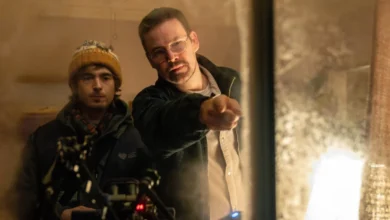
Tom Cruise and Alejandro G. Iñárritu Defy Conventional Hollywood Boundaries With the Divisive, Maximalist Epic Digger


The contemporary landscape of major studio filmmaking rarely yields projects that actively antagonize box-office safety, yet the release of Digger has fractured critical consensus and ignited intense industry debate. Directed by visionary auteur Alejandro G. Iñárritu and anchored by a transformative, multi-layered lead performance from Tom Cruise as eccentric oil tycoon Digger Rockwell, the film has emerged as one of the most polarizing cinematic events of the year. Divided evenly between passionate defenders who praise its maximalist ambition and detractors who label it indulgent, Digger invites comparisons to past Hollywood experiments that initially suffered from mixed receptions before securing enduring critical appreciation.
Behind the Scenes and the Genesis of a Collaborative Vision
The journey toward bringing Digger to the screen involved a rigorous and unconventional production schedule, culminating in an exclusive screening at the Academy’s Samuel Goldwyn Theater followed by a panel discussion moderated with the creative team. Alongside Iñárritu and Cruise, producer Mary Parent and ensemble cast members John Goodman, Sandra Hüller, and Michael Stuhlbarg detailed the extensive preparation required to realize the director’s complex vision.

Production took place primarily at Pinewood Studios, where the creative team engaged in an exhaustive rehearsal process that relied heavily on full costume, heavy prosthetic makeup by Kazu Hiro, and fully assembled set equipment. According to John Goodman, who portrays a bewildered and theatrical President, the rehearsals allowed the actors to test the limits of Iñárritu’s demanding script. Michael Stuhlbarg noted that the project evolved through considerable trial and error, requiring the ensemble to discover the precise tonal balance as a collective unit rather than relying on predetermined choices. Iñárritu candidly admitted during the post-screening Q&A that the high-stakes experimentation occasionally resulted in unusable footage, requiring the production to reassess daily rushes and recalibrate its stylistic approach.
A Cinematic Mosaic of Historical and Stylistic Influences
Digger draws upon a diverse array of stylistic references that span multiple decades of cinema, intentionally blending tones that rarely intersect within a single narrative. Iñárritu has cited classical 1940s Hollywood screwball comedies, such as Howard Hawks’s His Girl Friday and Ernst Lubitsch’s To Be or Not to Be, as foundational templates for the film’s rapid-fire dialogue and verbal dexterity. Furthermore, the narrative structure incorporates structural absurdity and visual density reminiscent of Stanley Kubrick’s Dr. Strangelove, alongside the theatrical intensity of John Cassavetes’s Opening Night.
This eclectic mix of influences extends to Cruise’s performance, which requires the actor to manage a demanding ten-minute monologue that shifts seamlessly between humor, rage, triumph, and resignation. Industry analysts have noted that the role represents a significant departure from Cruise’s recent output in action franchises like Mission: Impossible and Top Gun, instead recalling his critically acclaimed dramatic and character-driven turns in late-1990s auteur projects such as Stanley Kubrick’s Eyes Wide Shut and Paul Thomas Anderson’s Magnolia.

Ensemble Dynamics and VistaVision Compositional Techniques
While Cruise occupies the center of the narrative as Digger Rockwell, the film operates fundamentally as an ensemble piece supported by strong performances from its secondary cast. Sandra Hüller and Michael Stuhlbarg deliver nuanced contributions that are designed to reward repeat viewings. Stuhlbarg’s portrayal of the Vice President, characterized by subtle physical comedy situated in the periphery of the frame, exemplifies Iñárritu’s directorial philosophy.
Rather than dictating the audience’s focus through tight focal lengths or rapid editing, Iñárritu utilizes high-resolution VistaVision framing to create deep fields of vision. This compositional strategy allows multiple narrative actions to occur simultaneously within a single shot, drawing comparisons to the democratic humanism found in the works of French master Jean Renoir. The meticulous production design—particularly the rendering of Digger’s opulent yet isolating home environment—serves as an active participant in shaping character psychology and reinforcing the film’s broader thematic concerns.
Studio Support and the Broader Industry Implications

The realization of Digger on a major studio scale underscores a broader shift in executive strategy at Warner Bros., under the leadership of motion picture group co-chairmen Pam Abdy and Michael De Luca. The studio has increasingly championed high-budget, auteur-driven projects that prioritize individual artistic vision over standardized commercial formulas. This administrative strategy has resulted in a recent slate of critically discussed studio releases, placing Digger within a lineage of ambitious contemporary American films.
Industry observers note that this level of institutional backing for risky, idiosyncratic filmmaking recalls historic studio eras, such as Robert Evans’s tenure at Paramount Pictures in the late 1960s and 1970s or John Calley’s leadership at Warner Bros. By providing substantial financial and logistical resources to directors like Iñárritu, Christopher Nolan, and others, the studio continues to test the commercial viability of handmade, large-scale epics in a risk-averse theatrical marketplace.
Legacy and Critical Re-Evaluation
As public discourse surrounding Digger continues to evolve, proponents of the film suggest that its initial divisiveness mirrors the historical reception of other challenging masterworks that ultimately transcended contemporary criticism. The debate among film critics regarding the picture’s pacing, tone, and narrative indulgence highlights the friction that often occurs when major cinematic icons subvert public expectations. Whether Digger will achieve the enduring status of repertory classics remains a subject of ongoing industry analysis, but its release firmly establishes both Cruise and Iñárritu’s willingness to challenge the boundaries of contemporary mainstream cinema.