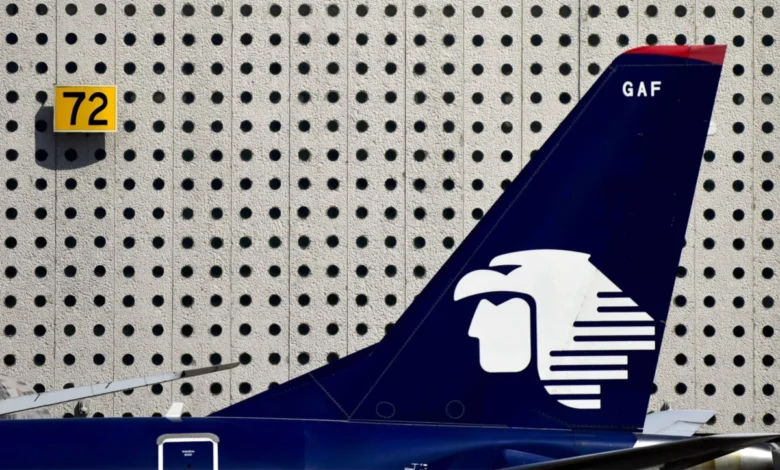
Delta Air Lines flyers will soon enjoy expanded connectivity between the United States and Mexico, as SkyTeam Alliance partner Aeromexico announced the introduction of three brand-new routes connecting Mexico City to strategic U.S. markets starting this coming January. The expansion marks a significant push by the Mexican flag carrier to capture high-demand transborder traffic, leveraging its deep commercial ties with Delta Air Lines.
All three incoming daily routes will operate out of Mexico City’s Benito Juarez International Airport (MEX), utilizing the modern and fuel-efficient Boeing 737 MAX 8 aircraft configured with 166 passenger seats. Aviation analytics from Cirium indicate that Aeromexico will face no direct competition on these new sectors, as no other airline currently operates non-stop services between Mexico City and these specific U.S. destinations.
The strategic network growth highlights the resilience of the partnership between the two major North American carriers, even as broader regulatory headwinds loom over the bilateral aviation landscape.
Chronology and Regulatory Landscape
The announcement of Aeromexico’s latest U.S. expansion arrives against a backdrop of ongoing diplomatic and regulatory friction between U.S. and Mexican aviation authorities. The current climate is the result of a years-long disagreement that escalated significantly in 2022.

The trouble began following the opening of Felipe Ángeles International Airport (NLU), a secondary hub designed to relieve congestion in Mexico City. Concurrently, the Mexican government unilaterally reduced the number of hourly flight slots available at Benito Juarez International Airport (MEX). This capacity reduction sparked immediate pushback from U.S. carriers and officials, who argued that the capacity cuts violated the long-standing U.S.-Mexico open skies agreement.
The dispute reached a critical juncture when the U.S. Department of Transportation (DOT) moved to terminate the immunized joint venture between Delta Air Lines and Aeromexico in 2024, while simultaneously barring Mexican carriers from adding new U.S. flights originating from Mexico City.
However, the legal and regulatory tides shifted in the second half of 2024. In August, a federal court ruled that the Delta-Aeromexico joint venture could continue its operations. Shortly thereafter, in October, the DOT lifted its restrictions preventing Mexican airlines from launching new U.S. routes from Mexico City. These legal and regulatory reprieves paved the way for carriers like Aeromexico and low-cost competitor Volaris to file and secure approval for new cross-border paths.
Despite these recent victories, the horizon remains clouded by potential future safety downgrades. Industry observers and government insiders have raised concerns that U.S. aviation authorities could once again downgrade Mexico’s safety rating to Category 2 as early as February 2027. A Category 2 rating evaluates a country’s national civil aviation authority and regulatory oversight regime rather than the safety standards of individual airlines.
If implemented, a Category 2 designation would immediately bar Mexican airlines from introducing new flights to the United States, though carriers would be permitted to maintain their existing schedules. Notably, a downgrade of Mexico’s regulatory rating would not restrict U.S. carriers from continuing their operations to and from the country. Mexico’s safety rating was previously docked at Category 2 from 2021 through 2023 before being restored following extensive remediation efforts. Anticipating potential regulatory freezes, Mexican carriers have rushed to solidify their U.S. footprints ahead of any prospective policy shifts.

Supporting Data and Route Analysis
Aeromexico’s new routes are meticulously designed to reinforce Delta Air Lines’ existing domestic and international strengths within the United States. By targeting cities where Delta maintains a robust historical presence or substantial local loyalty bases, the partnership maximizes feed traffic for both airlines.
For instance, Portland International Airport (PDX) serves as one of the new focal points. Historically, PDX functioned as Delta’s primary transpacific gateway to Asia until the airline restructured its network in the 2000s. Despite the reduction of long-haul Asian routes from the Pacific Northwest, Delta has retained a deeply loyal corporate and leisure customer base in Portland, though Alaska Airlines remains the dominant carrier at the airport.
Similarly, Fort Lauderdale-Hollywood International Airport (FLL) represents a crucial stronghold. Delta stands as the largest network legacy carrier at FLL, trailing only low-cost powerhouse JetBlue Airways in overall market share. By linking Mexico City directly to Fort Lauderdale, Aeromexico provides South Florida travelers with seamless, one-stop connectivity deeper into Latin America via its primary hub.
The deployment of the Boeing 737 MAX 8 on these routes underscores the airline’s focus on operational efficiency and passenger comfort. The 166-seat layout typically features a split cabin configuration offering both business-class and economy options, catering to the lucrative corporate travel sector as well as price-sensitive leisure passengers.
The Joint Venture Advantage
The operational backbone of this expansion is the immunized joint venture between Aeromexico and Delta Air Lines. Operating essentially as a single commercial entity within the transborder market, the alliance allows both carriers to coordinate schedules, align pricing strategies, and jointly market flights on both sides of the border.

For passengers, the partnership translates into extensive reciprocal loyalty benefits. Members of Delta’s SkyMiles frequent flyer program can seamlessly earn and redeem miles on Aeromexico-operated flights, enjoy priority airport services, and access through-checked baggage benefits. This deep integration has made travel between the United States and Mexico smoother for millions of business and vacation travelers, insulating the airlines against fragmented localized competition.
Broader Impact and Market Implications
The expansion by Aeromexico, mirrored by aggressive route launches from rival Mexican ultra-low-cost carrier Volaris—which has recently introduced service to Boston (BOS), Nashville (BNA), Raleigh-Durham (RDU), and Washington Dulles (IAD)—demonstrates the intense commercial appetite for North American connectivity.
While the specter of a potential 2027 Category 2 safety downgrade hangs over Mexican carriers, the immediate reality is one of growth and aggressive capacity deployment. Airlines are capitalizing on the legal stability provided by recent court rulings and DOT policy reversals to lock in market share before any regulatory bottlenecks materialize.
For travelers, the new non-stop options promise greater convenience, increased seat capacity, and potentially more competitive fare pricing across transborder corridors. As Aeromexico integrates these new routes into its master schedule this coming January, the success of the expansion will serve as a bellwether for the durability of U.S.-Mexico aviation ties in an era of shifting regulatory dynamics.