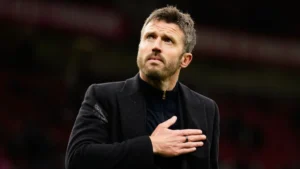
Vincent Kompany: Bayern Munich head coach discharged from hospital after collapsing at training

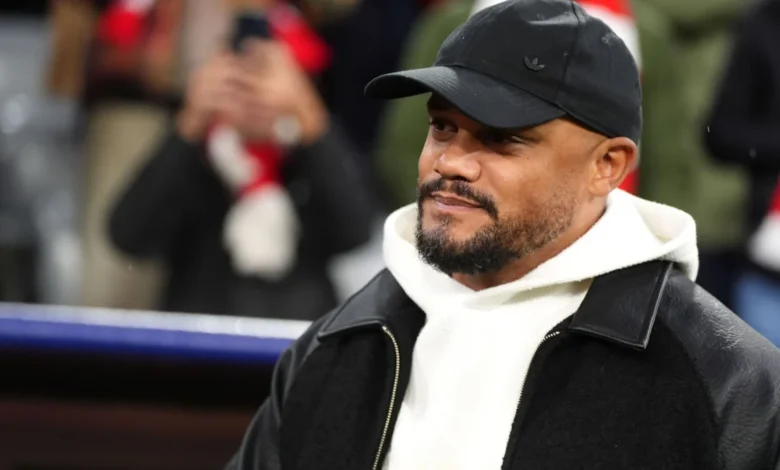
The release of the Bayern Munich manager from medical care marks a significant milestone in a week that has been fraught with concern for the Bavarian giants. The incident, which occurred last Friday during a session with the club’s second team, initially sparked widespread alarm across European football, given the sudden nature of the collapse. For a club currently battling on multiple fronts—including the Bundesliga and the UEFA Champions League—the health of their tactical leader is of paramount importance.
Chronology of Events: A Week of Uncertainty
The sequence of events leading to the current positive update began early last week. Kompany, who took the helm at the Allianz Arena with significant expectations, had been managing a viral infection that had already impacted his professional schedule. By midweek, it was evident that the Belgian tactician was struggling; he was notably absent from pre-match media commitments ahead of Bayern’s high-stakes Champions League encounter against Arsenal. Despite his physical distress, Kompany demonstrated his commitment to the role by appearing in the dugout for the fixture, which concluded in a 2-2 draw.
However, the situation escalated on Friday. While overseeing a training session with the Bayern Munich second team, Kompany suffered a collapse that necessitated immediate emergency medical intervention. He was transported to a local facility for comprehensive diagnostic testing. Throughout the weekend, the club maintained a posture of caution, providing limited updates as medical professionals assessed the cause of the collapse. It was later determined that the underlying issue was a meningeal irritation, a condition involving the inflammation of the protective membranes covering the brain and spinal cord.
By Sunday, the club’s administrative staff and medical team confirmed that Kompany remained under observation. In his absence, his trusted assistant, Aaron Danks, stepped into the technical area to lead the squad. Danks oversaw a successful 3-1 victory against Freiburg, a result that served to stabilize the team’s momentum during a period of significant emotional strain for the players and coaching staff alike.
Official Statements and Medical Outlook
Max Eberl, Bayern Munich’s board member for sports, addressed the media on Wednesday ahead of the DFB-Pokal fixture against Magdeburg—a match Bayern won convincingly 6-1. Eberl’s words offered a mix of relief and measured caution.
"Given the circumstances, he is doing well," Eberl told the broadcaster ARD. "He was discharged from the hospital today. That is the biggest and best news for all of us. It was a meningeal irritation that caused this incident on Friday. He will now rest and take medication, and I am certain that he will very soon be back on the touchline, operating at 100 per cent."
While the news is overwhelmingly positive, the club has been careful not to establish a definitive timeline for his return. Eberl emphasized that the recovery process would be governed strictly by medical clearance rather than the demands of the fixture list. "He will resume his duties only after receiving medical clearance," Eberl noted, underscoring the organization’s commitment to prioritizing the long-term well-being of their head coach over immediate competitive pressures.
The Impact on Bayern Munich’s Tactical Season
The absence of a head coach is a significant disruption for any elite-level football club, particularly one with the tactical complexity of Bayern Munich. Kompany has spent the early months of his tenure implementing a high-intensity philosophy that relies heavily on clear communication and consistent presence on the training ground.
Data from the current campaign highlights the stability Kompany has brought to the team. Before his medical leave, Bayern had maintained a robust defensive structure while simultaneously ranking as one of the most prolific attacking units in the Bundesliga. His ability to manage the squad rotation during a congested period of Champions League and domestic cup fixtures has been a hallmark of his short time in Munich.
The reliance on assistant coach Aaron Danks has been a necessary contingency. Danks, who arrived with a strong reputation for tactical development, has effectively mirrored the structures Kompany put in place. The 3-1 victory against Freiburg demonstrated that the squad possesses the tactical maturity to execute the game plan in the manager’s absence. However, the upcoming schedule presents a more daunting challenge: a critical Bundesliga showdown against title rivals Borussia Dortmund this Saturday.
Broader Implications for Club Management
The incident involving Kompany raises broader questions regarding the immense physical and mental toll exerted on elite football managers. In the modern game, the demands on coaching staff—ranging from constant scouting and tactical analysis to media obligations and long-distance travel—are exhaustive.
Sports medicine experts often point out that viral infections, if not given adequate time to resolve, can weaken an individual’s resilience to more acute neurological or systemic issues. The fact that Kompany attempted to fulfill his media and dugout duties while battling a viral infection has sparked a conversation among sports analysts regarding the necessity for clubs to mandate rest for staff, regardless of the perceived importance of the upcoming fixtures.
From an institutional standpoint, Bayern Munich’s management of the situation has been praised for its transparency and focus on human welfare. By deferring to medical experts and ensuring the assistant coaching staff was fully prepared to lead, the club has minimized the potential for internal instability. The board’s insistence that Kompany returns only when he is at "100 per cent" reflects a shift in sports culture, where the health of the individual is increasingly being prioritized over the short-term requirements of the sporting calendar.
Looking Ahead: The Road to Recovery
As Kompany begins his period of recuperation, the focus will shift to his gradual reintegration into the team’s daily operations. The medical advice regarding meningeal irritation typically requires a period of rest and symptom monitoring to ensure no lasting complications arise.
For the Bayern Munich squad, the immediate focus remains on the training ground at Säbener Straße. With the Dortmund match looming, the players find themselves in a unique position where they must maintain their competitive edge without their primary leader. The club’s performance in the 6-1 win against Magdeburg serves as evidence that the team’s infrastructure remains sound, yet the return of the manager remains the most anticipated event for fans and the sporting community.
The club has confirmed that further updates will be provided as the situation evolves, though they have requested privacy for Kompany and his family during his recovery. As the Bundesliga season approaches its mid-term intensity, the return of a fully recovered Kompany will be viewed not just as a tactical advantage for the team, but as a necessary restoration of the club’s leadership hierarchy.
For now, the Bayern Munich machine continues to function, buoyed by the news that their manager is on the mend. The club’s internal focus is currently on maintaining the tactical continuity established by Kompany, while simultaneously ensuring that the transition back to his full-time leadership is handled with the utmost care and medical oversight. Whether Kompany will be on the bench for the high-stakes clash against Dortmund remains the primary question for the supporters, but the prevailing sentiment from the board is one of patience: the priority is to ensure he returns to the dugout not just for the next match, but for the long-term future of the club.
Related posts: