Britain’s Historic Leap into Orbit: The Legacy of the Prospero Satellite and the Black Arrow Rocket

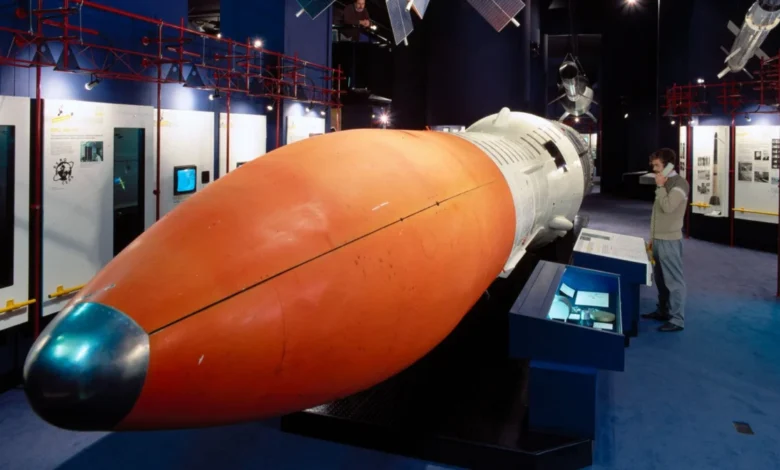
On October 28, 1971, the United Kingdom achieved a monumental milestone in its aerospace history by successfully launching its first-ever satellite into Earth orbit using a domestically manufactured rocket. The spacecraft, officially named Prospero and alternatively designated as the X-3, lifted off from the remote Woomera Range Complex in South Australia at the hands of a British-built three-stage Black Arrow carrier rocket.
While this launch marked a crowning technological achievement for the nation, it paradoxically represented the final chapter of the United Kingdom’s independent orbital launch capability. To this day, Prospero remains both the first and the last British satellite to be successfully sent into space aboard a native launch vehicle. More than five decades later, the historic spacecraft continues to orbit the planet, serving not only as a poignant reminder of Britain’s early ambitions in space exploration but also as a focal point for modern discussions regarding space sustainability and orbital debris mitigation.
A Genesis Rooted in the Cold War and National Pride
To understand the significance of the Prospero mission, one must examine the geopolitical and technological landscape of the mid-20th century. During the 1960s, the space race between the United States and the Soviet Union dominated global scientific achievements. Middle powers like the United Kingdom sought to establish sovereign capabilities to ensure they were not entirely dependent on foreign superpowers for access to the cosmos.
Prior to the October 1971 launch, the United Kingdom had successfully placed six satellites into orbit. However, every single one of those preceding missions relied on American rockets launched from facilities in the United States. Recognizing the strategic and economic vulnerabilities of this reliance, the British government—through the Royal Aircraft Establishment—embarked on an ambitious endeavor to develop an independent launch system.
The resulting vehicle was the Black Arrow, a slender, three-stage rocket that stood nearly 13 meters tall and derived its technological heritage from the earlier Black Knight research rocket. Designed primarily to test technologies for future telecommunications and military space applications, the Black Arrow program was engineered to give the UK independent access to low Earth orbit.
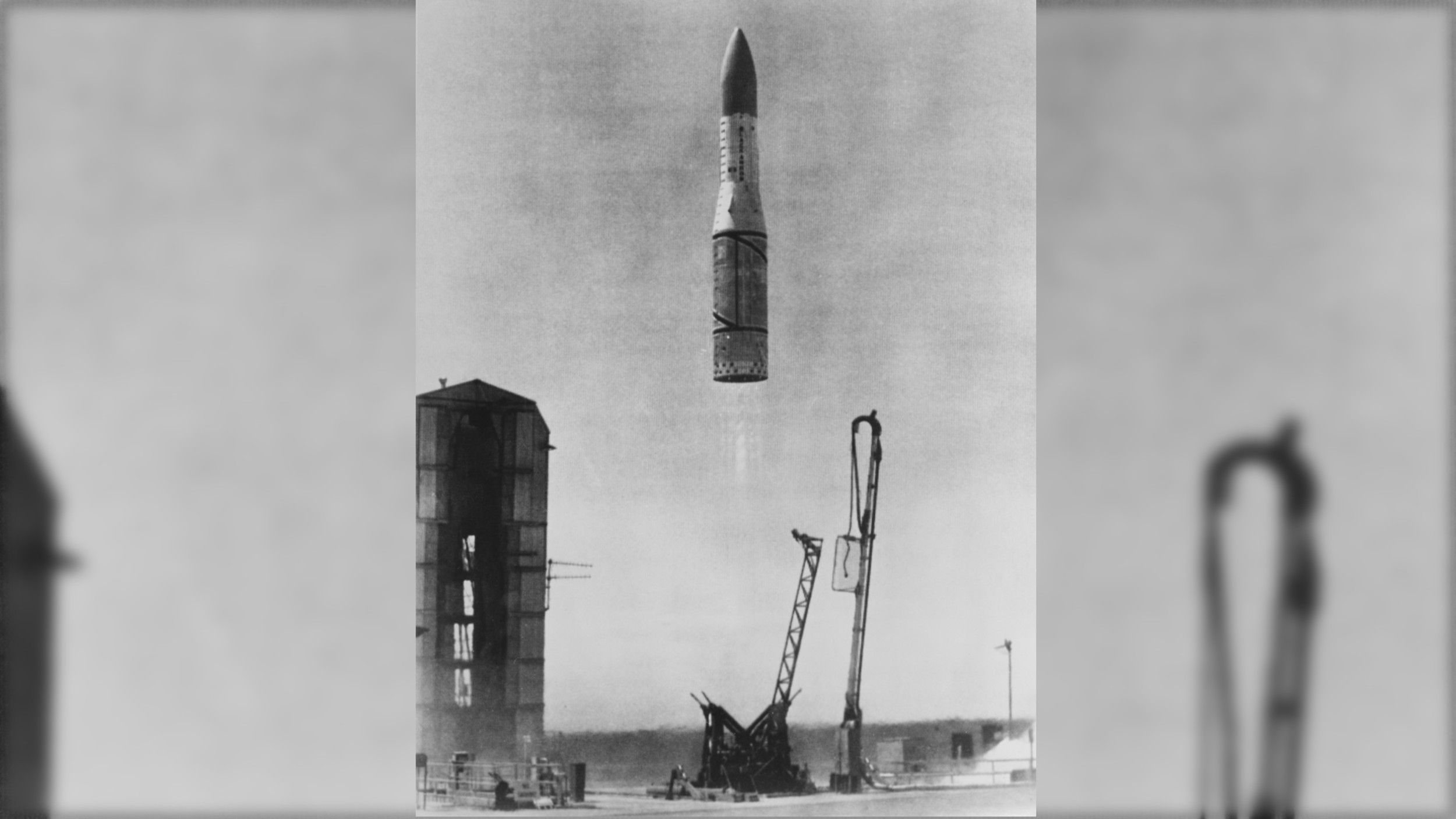
The Woomera Campaign and the Flight of Black Arrow R-3
The development and testing of the Black Arrow rocket took place at the Woomera Range Complex in South Australia, a vast expanse operated jointly by the British and Australian governments that offered a safe corridor for experimental rocket testing.
The Black Arrow program endured a turbulent development cycle characterized by mixed results. Out of its four total flight attempts, the program recorded two failures and two successes:
- September 1969 (Flight R-1): The maiden flight of the Black Arrow ended in failure when the first stage experienced directional instability and was deliberately destroyed by range safety.
- March 1970 (Flight R-2): The second test flight also failed due to a premature second-stage engine shutdown, preventing the rocket from reaching orbit.
- September 1970 (Flight R-3): The third flight achieved a major breakthrough, successfully carrying the Orba technological payload into the upper atmosphere, though it did not achieve orbit.
- October 1971 (Flight R-4): The final and definitive flight successfully injected the Prospero research satellite into an elliptical low Earth orbit.
Despite the ultimate success of the fourth flight, the political and economic environment surrounding the British space program had shifted dramatically. Facing escalating costs and competing budget priorities, the British government had already made the decision to cancel the Black Arrow program prior to the final launch, rendering Prospero the swan song of Britain’s native orbital launch capability.
Mission Objectives and Technical Specifications of Prospero
Weighing approximately 66 kilograms, the Prospero satellite was a marvel of early 1970s engineering. Once operational, the spacecraft settled into an elliptical orbit ranging from a perigee of 522 kilometers to an apogee of 1,300 kilometers above the Earth.
The mission was designed to test experimental technologies and evaluate how the harsh environment of space would affect future communications infrastructure. Among its primary payloads were advanced solar cells designed to test power generation efficiency in the vacuum of space, highly sensitive telemetry systems, and a dedicated micrometeoroid detector. This detector was tasked with measuring the density and potential threat of small particles and space dust to orbiting spacecraft—an early recognition of the hazards posed by space debris.
The launch itself was not entirely without incident. Following successful separation from the final stage of the Black Arrow rocket, the spent booster bumped into the newly freed satellite. The minor collision snapped off one of Prospero’s four radio antennas. Despite this structural damage, the satellite’s internal systems remained robust. Prospero continued to function and transmit telemetry data back to ground stations until its primary operational lifespan concluded in 1973.
Long-Term Legacy and Intermittent Contact
Even after its primary mission ended, Prospero lingered in the public consciousness as an engineering triumph. Although regular communications with the satellite ceased in 1973, amateur radio operators and space agencies managed to contact the historic spacecraft at least once every year through 1996, demonstrating the remarkable durability of its electrical and radio systems.
Decades later, Prospero remains firmly entrenched in orbit, gradually circling the Earth as an artifact of a bygone era. Its enduring presence has transformed it from a historical footnote into a modern subject of environmental concern, particularly regarding the growing density of space debris in low Earth orbit.
The Modern Quest to Retrieve Britain’s First Satellite
In recent years, the legacy of the Prospero mission has intersected with modern commercial space ventures aimed at solving the escalating crisis of orbital debris. In 2021, the Scotland-based space startup Skyrora announced an ambitious and symbolic initiative: a mission to locate, rendezvous with, and actively deorbit the historic Prospero satellite.
The proposed operation would utilize one of Skyrora’s specialized space tugs, launched aboard the company’s upcoming Skyrora XL rocket from the newly established Saxavord Spaceport in the Shetland Islands, Scotland. Upon reaching orbit, the space tug would capture the defunct satellite and pull it down into Earth’s atmosphere, where both vehicles would safely burn up upon re-entry.

Industry analysts and corporate leadership have framed the initiative as a vital statement on modern space ethics. Volodymyr Levykin, founder and CEO of Skyrora, emphasized the symbolic and practical importance of the undertaking during the announcement of the mission challenge.
"By recovering Prospero, we are not only coming together as a space nation and taking responsibility for what we have launched into orbit, but also confirming our commitment to the sustainable use of outer space," Levykin stated.
Broader Implications and the Future of British Spaceflight
The story of Prospero encapsulates the arc of British space history: a brilliant surge of technological innovation followed by a retreat from independent launch capabilities in favor of international collaboration. For decades, the United Kingdom relied heavily on international partnerships, contributing payloads and scientific instruments to missions managed by the European Space Agency (ESA), NASA, and commercial launch providers.
However, the modern resurgence of domestic launch infrastructure—exemplified by spaceports in Scotland and England, alongside private ventures like Skyrora—signals a potential renaissance for the British aerospace sector. By developing new spaceports and pursuing innovative debris-removal technologies, the UK is attempting to reclaim a measure of the independent spirit that characterized the Black Arrow program in 1971.
As nations and private enterprises grapple with the long-term sustainability of Earth’s orbital environment, the potential retrieval of Prospero serves as a bridge between the dawn of the space age and its modern regulatory era. More than fifty years after its dramatic launch from the Australian outback, Britain’s pioneering satellite continues to inspire a new generation of engineers, policymakers, and spacefarers to look toward the stars with both ambition and responsibility.