NASA is making a significant adjustment to the launch vehicle for its upcoming Sun Radio Interferometer Space Experiment (SunRISE) mission, a crucial endeavor aimed at providing early warnings for solar storms. The six small satellites that comprise the SunRISE constellation, originally slated for launch aboard a United Launch Alliance (ULA) Vulcan Centaur rocket, will now embark on their journey to Earth orbit atop a SpaceX Falcon Heavy. This change, confirmed in a recent NASA mission update, signals a dynamic shift in the landscape of space launch services and underscores the U.S. Space Force’s strategic role in shaping launch provider manifest decisions.
The SunRISE Mission: An Early Warning System for Solar Storms
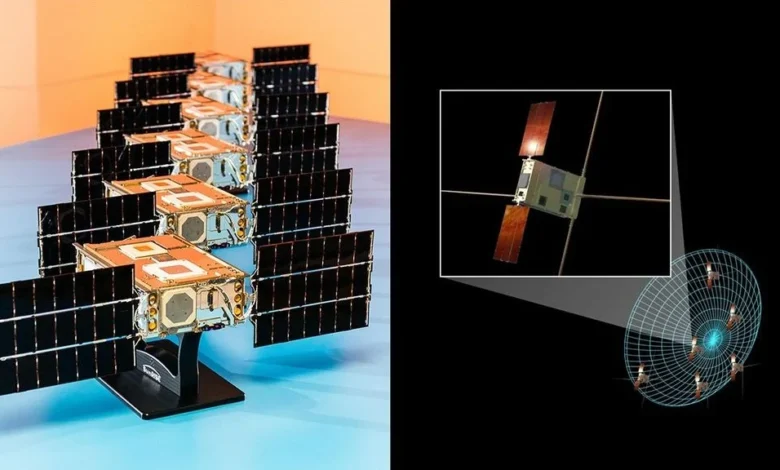
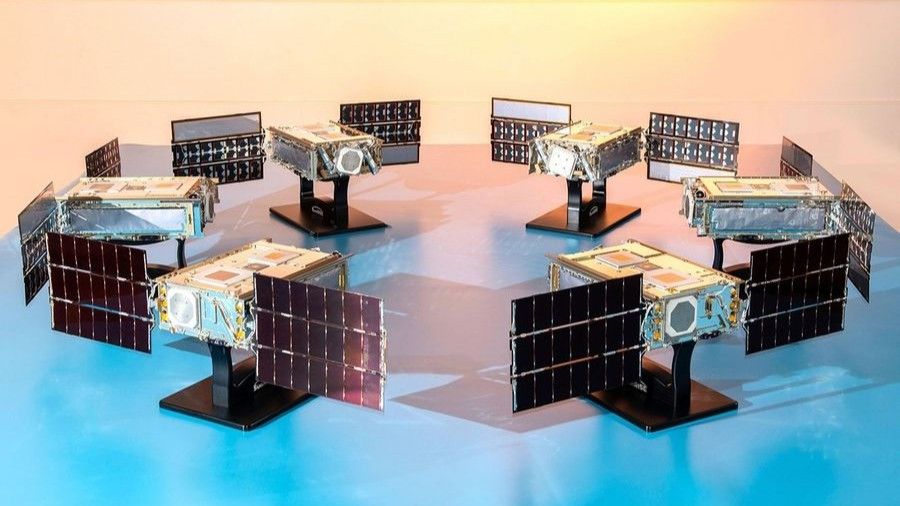
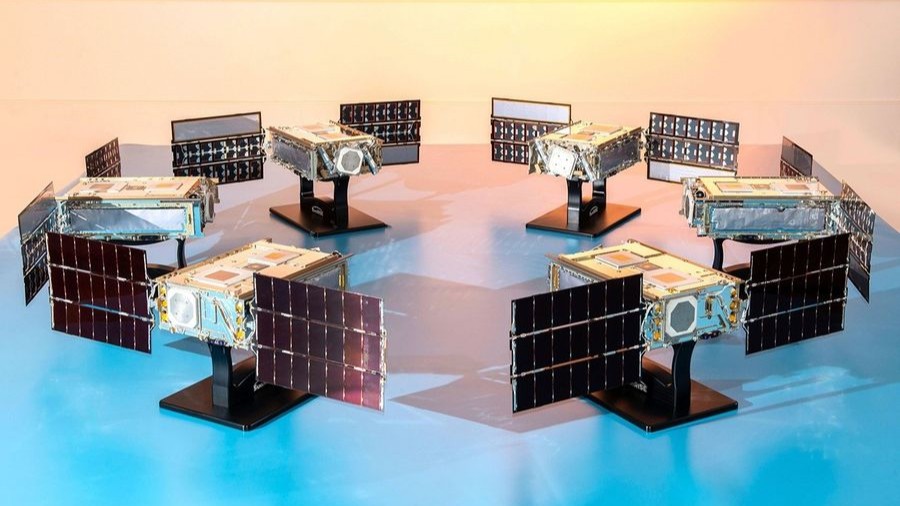
The SunRISE mission is designed to be a pioneering heliophysics study operating under the NASA Science Mission Directorate’s "missions of opportunity" umbrella, managed by the Explorers Program. Spearheaded by scientists at the University of Michigan and managed by NASA’s Jet Propulsion Laboratory in Southern California, SunRISE comprises six compact satellites, each approximately the size of a mailbox. These satellites will be deployed into a unique orbital configuration, approximately 22,000 miles (35,000 kilometers) above Earth, positioning them just above geostationary altitude.
In orbit, the six satellites will arrange themselves into a vast "X" formation, spanning approximately 10 miles (16 kilometers). Each satellite will extend its roughly 10-foot (2.5-meter) antenna booms, collectively functioning as a single, large radio telescope. Their primary objective will be to track and analyze solar radio bursts. These bursts, generated by energetic solar events, travel at the speed of light and precede the arrival of the associated energetic particles that constitute a solar storm. By detecting these radio bursts, SunRISE aims to provide a crucial lead time, potentially hours, for forewarning of an approaching solar storm.
This capability is vital given the increasing reliance on space-based infrastructure and the growing vulnerability of Earth to space weather phenomena. Powerful solar storms, such as the significant event that impacted Earth in January, can have far-reaching consequences. They are capable of disrupting or outright disabling satellites by interfering with onboard electronics, sensitive scientific instruments, and critical communication systems. The consequences can extend to potential radiation threats for astronauts in orbit and even pose a hazard to passengers on high-altitude flights near Earth’s poles, where the planet’s protective magnetic field is weaker.
A Shift in Launch Providers: Unpacking the Decision
The decision to transition SunRISE from ULA’s Vulcan Centaur to SpaceX’s Falcon Heavy is not explicitly detailed in the NASA announcement, but contextual information suggests a strong influence from the U.S. Space Force’s (USSF) Space Systems Command (SSC). SunRISE will be launched as part of a rideshare mission sponsored by SSC, highlighting the command’s significant role in manifesting national security and scientific payloads.
The recent performance of the Vulcan Centaur rocket has introduced a degree of uncertainty into its launch manifest. On its most recent launch, USSF-87, the Vulcan experienced a notable anomaly in one of its solid rocket boosters. This marked the second such incident in the rocket’s relatively short history, having already flown four missions. While the USSF-87 mission successfully delivered its payload to orbit, the recurrence of the booster issue prompted the Space Force to temporarily pause national security launches utilizing the Vulcan rocket until the problem could be thoroughly investigated and resolved.
This pause has had ripple effects across the launch schedule. The SSC has already demonstrated a willingness to adjust its launch plans, having shifted other missions between Vulcan and SpaceX’s workhorse, the Falcon 9 rocket. The move of NASA’s SunRISE mission to the Falcon Heavy could therefore indicate one of two scenarios: either SunRISE has been remanifested onto a different SSC-sponsored rideshare mission utilizing a different launch vehicle, or another SSC mission originally assigned to the Vulcan has been entirely re-slotted, freeing up a launch slot that SunRISE can now occupy. The Falcon Heavy, with its robust launch capacity, is well-suited to accommodate the significant payload of multiple satellites.
The Falcon Heavy: A Proven Powerhouse
The SpaceX Falcon Heavy represents one of the most powerful operational launch vehicles in the world. Introduced in February 2018, it is essentially composed of three modified Falcon 9 first stages. This configuration grants it an exceptional lift capability, capable of sending up to approximately 58,860 pounds (26,700 kilograms) to a geostationary transfer orbit. Since its inception, the Falcon Heavy has undertaken 12 successful launches, including four missions dedicated to delivering national security payloads to orbit. Its most recent national security deployment was USSF-52 in December 2023. The rocket’s most recent mission overall was in April of this year, successfully deploying the Viasat-3 F3 telecommunications satellite.
The Falcon Heavy’s next scheduled mission is to carry NASA’s Nancy Grace Roman Space Telescope into orbit, with a target launch date no earlier than August 30th. Following this, the SunRISE mission is slated for a launch later this year, though a more precise launch window has not yet been officially announced. This scheduling indicates that SunRISE will be integrated into a specific launch slot within the Falcon Heavy’s upcoming manifest.
Understanding Space Weather and Its Impact
The scientific impetus behind the SunRISE mission lies in the critical need to better understand and predict space weather. Solar radio bursts are an important precursor to more significant space weather events. By studying these bursts, scientists aim to refine their models for predicting the timing, intensity, and trajectory of solar storms. This enhanced predictive capability is crucial for developing effective mitigation strategies to protect our increasingly space-dependent world.
The consequences of unchecked solar storms are substantial. Beyond the direct threat to satellites, which form the backbone of modern communication, navigation (GPS), and weather forecasting systems, severe solar events can also disrupt terrestrial power grids and damage underground infrastructure. The electromagnetic pulses generated by large solar flares can induce currents in long conductors, leading to widespread blackouts. Furthermore, the increased radiation poses a health risk to astronauts and, as mentioned, to individuals on high-altitude flights. The economic impact of a major solar storm could be in the billions of dollars, necessitating proactive scientific research and technological preparedness.
A History of Collaboration and Evolution in Launch Services
NASA’s reliance on commercial launch providers has grown significantly over the past two decades. This evolution began with the Space Shuttle program’s retirement, which spurred the development of the Commercial Crew and Cargo programs, fostering partnerships with companies like SpaceX and Northrop Grumman (formerly Orbital Sciences). The agency’s approach to securing launch services has increasingly involved leveraging the diverse capabilities of the commercial sector, often through competitive bidding and integrated mission planning.
The involvement of the U.S. Space Force in the SunRISE launch is a testament to the symbiotic relationship between scientific exploration and national security objectives in space. The USSF, through its Space Systems Command, is responsible for acquiring and operating space systems for national defense. By integrating scientific payloads like SunRISE onto rideshare missions designed for national security launches, the USSF can help reduce costs and increase launch cadence for both its own payloads and those of its scientific partners. This approach also fosters technological advancements and ensures a robust launch infrastructure capable of meeting diverse mission requirements.
The shift from ULA to SpaceX for the SunRISE mission highlights the competitive nature of the launch market and the agility required by both government agencies and private companies. ULA, a joint venture between Boeing and Lockheed Martin, has a long and distinguished history of reliable launches for government and commercial satellites. However, the emergence of newer, more cost-competitive launch vehicles and the inherent complexities of rocket development mean that manifest decisions can be fluid. SpaceX, with its rapid iteration and reusable rocket technology, has significantly disrupted the launch industry, offering a compelling alternative for many missions.
Future Implications and the Road Ahead
The successful deployment of SunRISE will mark a significant step forward in our ability to anticipate and respond to the challenges posed by space weather. The data gathered by its orbiting radio telescope will contribute to a deeper scientific understanding of solar physics and the complex processes that drive solar storms. This, in turn, will inform the development of more resilient space infrastructure and enhance our preparedness for potentially disruptive solar events.
The transition to the Falcon Heavy also underscores the importance of flexibility and adaptability in space mission planning. As launch vehicle technologies continue to evolve and the demands on space infrastructure grow, agencies like NASA and organizations like the USSF will need to remain agile in their selection of launch providers. The SunRISE mission’s journey from its initial launch vehicle assignment to its current placement on the Falcon Heavy is a clear illustration of this dynamic and ever-evolving space launch environment. The mission’s eventual launch will be a significant achievement, not only for its scientific objectives but also as a reflection of the collaborative and adaptive spirit driving modern space exploration and national security in the final frontier. The broader scientific community and the public alike will be watching closely as this vital mission prepares to take flight.
Related posts: