Barbara Barrie, Acclaimed Character Actress and Oscar Nominee Known for Breaking Away and Company, Dies at 95

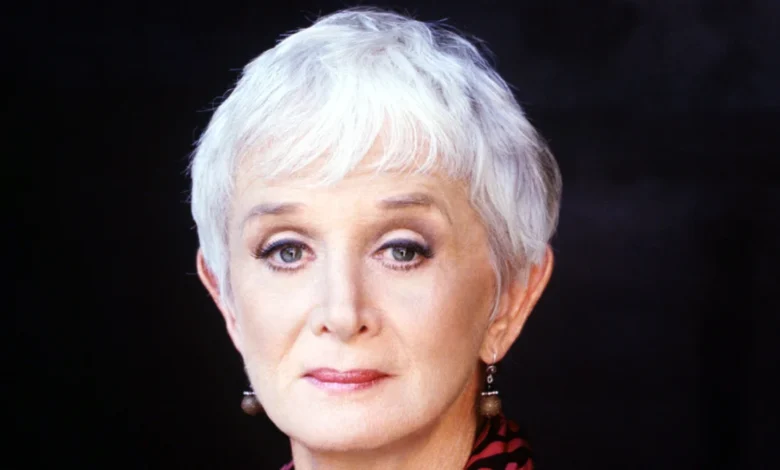
Barbara Barrie, a formidable and versatile character actress whose distinctive blend of warmth, sharp comedic timing, and emotional depth graced stages and screens for over half a century, has died at the age of 95. Known to generations of filmgoers as the quintessential boisterous yet tenderhearted maternal figure in beloved classics like Breaking Away and Private Benjamin, Barrie’s career spanned monumental shifts in American entertainment, leaving an indelible mark on theater, film, and television.
Her daughter, Jane Harnick, confirmed the passing to the New York Times, revealing that Barrie had been suffering from terminal cancer and that her death was medically assisted. This final chapter aligned with a life and career defined by autonomy, candor, and a fierce dedication to truth—qualities that also fueled her later endeavors as a published author openly documenting her own health battles.
From her origins on the New York stage to international film acclaim and ubiquitous television presence, Barrie built a resume characterized by relentless industry and a rare talent for commanding attention regardless of the scene’s size. Her passing marks the end of an era for a specific generation of classical character actors who bridged the gap between the golden age of television, the gritty realism of 1970s cinema, and the golden age of modern Broadway.
Early Life and Theatrical Foundations
Born Barbara Barrie on United States soil in Chicago, Illinois, in 1931, the young actress cultivated an early passion for performance that led her to pursue formal dramatic training. After honing her craft in regional theater and studying at the University of Texas at Austin, Barrie made her way to New York City, the epicenter of American theatrical ambition.
In the 1950s and 1960s, the Off-Broadway and Broadway circuits served as the crucible for her talent. Barrie quickly established herself as a reliable, chameleon-like presence capable of shifting effortlessly between biting wit and profound vulnerability. Her theatrical pedigree grew substantially as she became a fixture of the New York stage, working alongside some of the most influential directors and writers of the mid-20th century.
Her theatrical journey culminated in a career-defining role in 1970 when she was cast in the original Broadway production of Stephen Sondheim and George Furth’s revolutionary musical, Company. As Sarah, one of a circle of married friends orbiting around a perpetually single protagonist, Barrie helped anchor a production that fundamentally altered the trajectory of American musical theater by dismantling traditional linear storytelling in favor of thematic exploration of modern relationships and commitment. Her performance earned her a Tony Award nomination for Best Featured Actress in a Musical, cementing her status as theatrical royalty. Subsequent high-profile stage credits, including Neil Simon’s box-office smash California Suite, further showcased her mastery of comedic dialogue and theatrical timing.
International Film Acclaim and Breakout Roles
While Barrie’s theatrical roots ran deep, her cinematic career yielded some of her most lauded and historic achievements. In 1964, she delivered a performance of astonishing courage and sensitivity in the independent drama One Potato, Two Potato, directed by Larry Peerce. The film tackled the taboo subject of interracial marriage and custody battles, casting Barrie as a white mother whose ex-husband challenges her custody rights after she remarries a Black man. Barrie’s nuanced portrayal of a woman confronting entrenched societal prejudice earned her the Best Actress award at the prestigious Cannes Film Festival in 1964, placing her firmly on the international cinematic map.
Despite this early triumph, it was a distinctly blue-collar maternal role in the late 1970s that transformed Barrie into a household face across America. In Peter Yates’s celebrated 1979 coming-of-age classic Breaking Away, Barrie portrayed Evelyn Stohler, the exasperated yet deeply loving mother of a Bloomington, Indiana teenager obsessed with competitive bicycle racing. Barrie brought authenticity, humor, and a grounded realism to the role, capturing the economic anxieties and familial dynamics of America’s heartland. Her performance resonated deeply with audiences and critics alike, earning her an Academy Award nomination for Best Supporting Actress.
The cultural footprint of Breaking Away was significant enough to spawn a television adaptation in 1980. Barrie gamely reprised her role as Evelyn Stohler for the small screen, a rare crossover that earned her a Primetime Emmy Award nomination. This television success mirrored her concurrent visibility on the hit 1970s police sitcom Barney Miller, where she portrayed Elizabeth Miller, the long-suffering, supportive wife of Captain Barney Miller, played by Hal Linden. Her recurring appearances provided a grounding domestic counterpoint to the chaotic confines of the Greenwich Village precinct.
A Ubiquitous Presence Across Film and Television
Throughout the 1980s, 1990s, and into the 21st century, Barrie maintained a relentless working schedule, appearing in a diverse array of projects that spanned high-art cinema, mainstream comedies, and network television.
In film, she delivered memorable supporting turns in Howard Zieff’s Private Benjamin (1980) starring Goldie Hawn, Richard Brooks’s adaptation of Sylvia Plath’s The Bell Jar (1979), and the acclaimed independent drama Judy Berlin (1999). Animating a different kind of maternal warmth, Barrie lent her voice to the character of Alcmene, the mortal adoptive mother of the titular hero, in Disney’s animated feature Hercules (1997).
Television audiences routinely spotted her guest-starring on preeminent procedural and comedic landscapes, including multiple appearances across the Law & Order franchise, Suddenly Susan, and Susan Stroman’s theatrical revivals. Whether playing a grieving mother, a sharp-tongued neighbor, or a pillar of the community, Barrie approached every role with the same rigorous professionalism and commitment to psychological truth.
Literary Pursuits and Public Advocacy
Beyond her acting credits, Barrie cultivated a successful parallel career as a published author. Transitioning from interpreting characters written by others to crafting her own narratives, she wrote several books for children, drawing on her imagination and warmth to connect with younger readers.
More personally, Barrie utilized her platform to address private struggles with public candor. In her memoirs Second Act and Don’t Die of Embarrassment, she chronicled her personal experiences, most notably her battle with colorectal cancer. By speaking openly and with characteristic wit about a disease often shrouded in stigma and silence, Barrie transformed her personal medical trials into a form of advocacy, encouraging early detection and destigmatizing conversations around gastrointestinal health. Her willingness to share her vulnerabilities endeared her even further to a public that had watched her age gracefully across decades of screen performances.
Chronology of a Remarkable Life and Career
- 1931: Born in Chicago, Illinois.
- 1950s-1960s: Builds a formidable reputation in New York theater and television.
- 1964: Wins the Best Actress award at the Cannes Film Festival for her groundbreaking work in One Potato, Two Potato.
- 1970: Earns a Tony Award nomination for her performance in the original Broadway cast of Stephen Sondheim’s Company.
- 1975–1982: Recurs as Elizabeth Miller on the hit television sitcom Barney Miller.
- 1979: Receives an Academy Award nomination for Best Supporting Actress for her role in Breaking Away.
- 1980: Earns a Primetime Emmy Award nomination for reprising her role in the television series adaptation of Breaking Away; appears in Private Benjamin.
- 1997: Provides the voice of Alcmene in Disney’s animated feature film Hercules.
- 1999: Appears in the critically acclaimed independent film Judy Berlin.
- 2000s-2010s: Publishes several books, including memoirs detailing her survival of colorectal cancer.
- October 2026: Passes away at the age of 95 in New York following a battle with terminal cancer.
Broader Impact and Industry Legacy
The death of Barbara Barrie closes a chapter on a specific archetype of American performance: the steadfast, unflappable, and deeply human character actor who serves as the emotional bedrock of a narrative. While leading actors often capture the immediate spotlight, performers of Barrie’s caliber constructed the contextual reality that made cinematic and theatrical worlds believable.
Her ability to transition seamlessly from the avant-garde complexity of Stephen Sondheim’s musical theater to the populist warmth of studio comedies and suburban dramas demonstrated a range that modern casting practices rarely demand. She inhabited mothers, wives, professionals, and neighbors with a complete absence of vanity, prioritizing the truth of the character over personal glamour.
As tributes flow from colleagues, fans, and cultural institutions, Barrie’s legacy remains anchored in a body of work that spans the formative decades of contemporary American media. From the dusty tracks of Indiana in Breaking Away to the sophisticated dissonance of Broadway in Company, Barbara Barrie leaves behind a masterclass in longevity, versatility, and enduring grace.
Related posts: