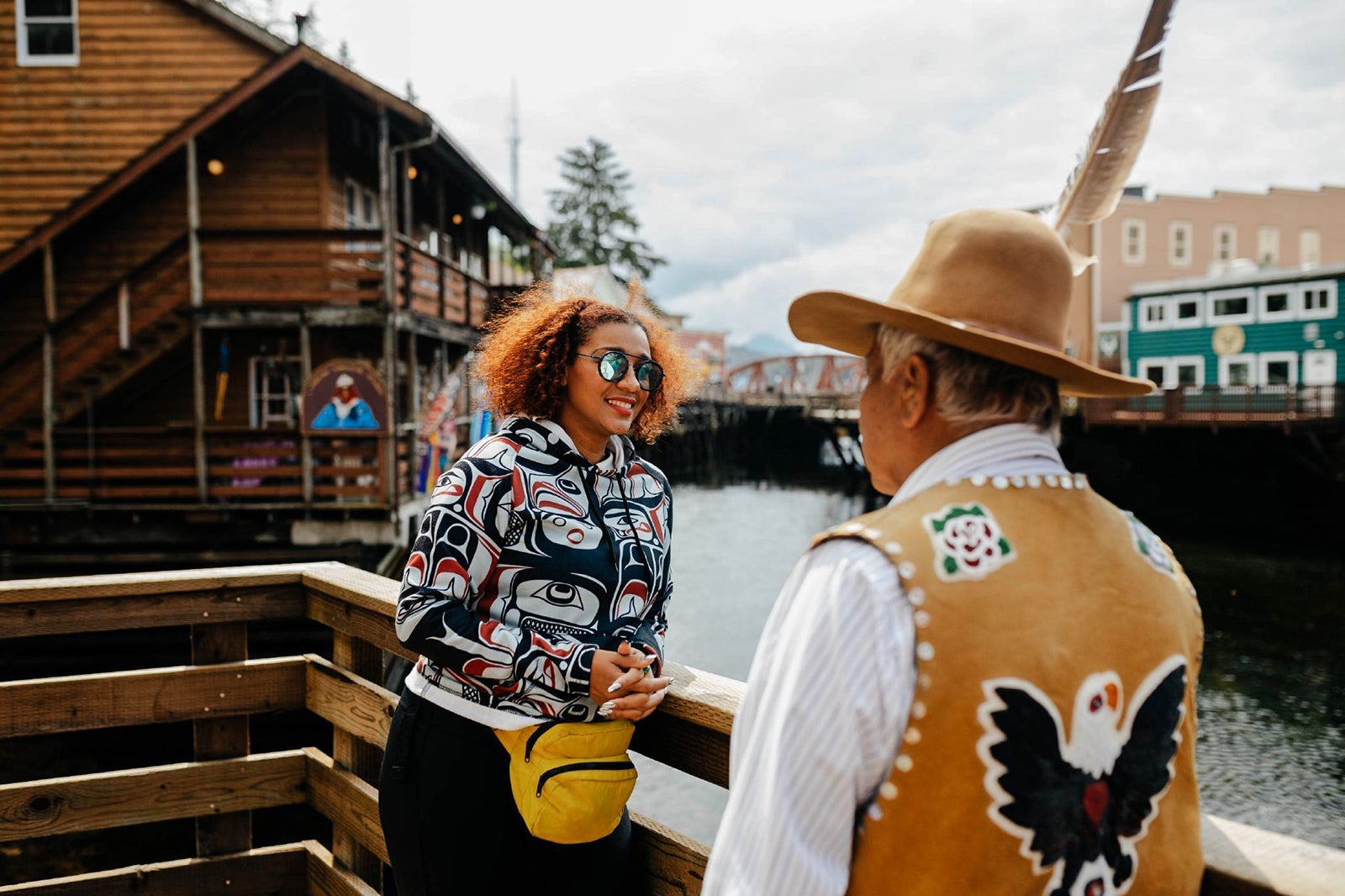
The picturesque coastal city of Ketchikan, Alaska, often celebrated as the “Salmon Capital of the World,” has recently stepped into the international spotlight following a comprehensive cultural and geographical exploration led by renowned travel visionary Evita Robinson and local cultural ambassador Joe Williams Jr. Their journey, captured in the critically acclaimed collaborative project Where the Eagle Walks, offers travelers a profound look into the intricate tapestry of Southeast Alaska’s Tlingit, Haida, and Tsimshian heritage. As the tourism landscape shifts toward more sustainable, culturally immersive, and respectful models of exploration, this collaborative feature highlights how modern travelers can engage meaningfully with indigenous communities while navigating one of North America’s most dramatic wilderness frontiers.
The initiative brings together Robinson, celebrated globally as the founder of the Nomadness Travel Tribe and a pioneer in diversifying the travel industry, and Williams, a respected figure deeply rooted in the historical and political fabric of Ketchikan. Together, they trace the storied pathways of Creek Street, delve into the spiritual significance of the region’s totem poles, and examine the enduring legacy of the First Nations people who have inhabited the Alexander Archipelago for millennia. This comprehensive narrative not only showcases the breathtaking natural beauty of the Last Frontier but also emphasizes the critical importance of indigenous-led storytelling in contemporary tourism.
Main Facts and the Genesis of the Collaboration
The partnership between Evita Robinson and Joe Williams Jr. represents a significant milestone in modern travel journalism and cultural documentation. Commissioned to showcase the multifaceted identity of Ketchikan, the project moves far beyond the standard cruise-port narrative of gift shops and zip-lining, instead opting for a deep dive into the ancestral lands of the Lingít (Tlingit) people.
Ketchikan, situated on Revillagigedo Island, serves as the southernmost gateway to the Inside Passage. With a population hovering around 8,000 residents, the city experiences a massive seasonal influx of visitors, welcoming over a million cruise ship passengers annually during peak summer months. However, beneath the bustling commercial waterfront lies a rich, centuries-old heritage that frequently remains opaque to short-term visitors. Recognizing this gap, the collaboration was designed to center indigenous voices, ensuring that the historical context of the land is preserved and communicated accurately.
Evita Robinson brought her extensive expertise in transformative travel to the venture. Having spent over a decade advocating for inclusivity and cultural depth in global tourism, Robinson approached Ketchikan with a focus on historical reckoning and authentic human connection. Joe Williams Jr., drawing from his extensive background in local governance, cultural preservation, and storytelling, acted as the primary bridge between the modern city and its indigenous roots. Through their documented walks, conversations, and interactions with local artisans, the project provides a blueprint for how destinations can honor their original stewards while welcoming global travelers.
Chronology of the Expedition and Project Development
The conceptualization and execution of Where the Eagle Walks in Ketchikan followed a meticulously planned timeline designed to capture both the seasonal transitions of Southeast Alaska and the deep historical continuity of the region.
Phase One: Conceptualization and Research (Late 2023 – Early 2024)
The foundation of the project was laid through months of remote collaboration between production teams, regional tourism boards, and indigenous leaders in Southeast Alaska. Discussions centered on identifying narratives that had been historically marginalized in mainstream travel literature. Joe Williams Jr. played a pivotal role during this phase, consulting with tribal elders and cultural historians to ensure that the storytelling honored sacred sites and traditional protocols.
Phase Two: Fieldwork and On-Site Documentation (Mid-2024)
Production commenced in the field, with Robinson and Williams embarking on an intensive exploration of Ketchikan and its surrounding waterways. The chronology of their journey took them from the historic boardwalks of Creek Street—once a vibrant and notorious red-light district built over a salmon-rich tidal creek—to the Totem Heritage Center, which houses one of the largest collections of unrestored 19th-century totem poles in the United States. During this phase, they engaged in dialogues regarding the resilience of indigenous governance, the impact of the canning industry on local ecosystems, and the resurgence of traditional carving and weaving arts.
Phase Three: Post-Production and Global Rollout (Late 2024 – 2026)
Following the completion of fieldwork, the initiative entered a multi-phase editing and promotional cycle. Media assets, long-form articles, and visual documentaries were curated to reach audiences seeking educational and transformative travel experiences. The formal release of the comprehensive features established the project as a benchmark for modern travel storytelling, culminating in sustained industry interest and academic discussion regarding indigenous tourism partnerships.
Supporting Data and Tourism Metrics in Southeast Alaska
To understand the broader significance of the Robinson-Williams collaboration, it is essential to examine the economic and demographic landscape of tourism in Ketchikan and the wider Southeast Alaska region. According to data from the Alaska Department of Commerce, Community, and Economic Development (DCCED) and regional cruise industry associations, tourism serves as the economic lifeblood of the municipality.
- Visitor Volume: Prior to seasonal fluctuations, Ketchikan regularly accommodates between 1.2 million and 1.4 million cruise passengers annually, making it one of the most-visited cruise ports in the world relative to its permanent population.
- Economic Impact: Visitor spending in Ketchikan accounts for tens of millions of dollars annually in local tax revenues, supporting hundreds of small businesses, tour operators, and hospitality workers.
- Shift in Consumer Demand: Industry analytics from travel research firms indicate a 35% increase over the past five years in consumer demand for "authentic cultural tourism" and indigenous-led excursions, signaling a departure from passive sightseeing toward educational engagement.
- Conservation and Sustainability: Local municipal data shows that over 60% of visitors participate in shore excursions that incorporate natural wilderness elements, increasing the necessity for sustainable tourism models that protect local salmon habitats and old-growth Tongass National Forest timberlands.
These figures illustrate the delicate balancing act facing Ketchikan: managing high-volume cruise tourism while safeguarding the ecological integrity of the Tongass National Forest and the cultural sovereignty of its indigenous inhabitants. Projects like Where the Eagle Walks provide a vital framework for directing visitor interest toward sustainable, community-supporting pathways.
Official Responses and Perspectives from Stakeholders
The reception of the project among tourism boards, cultural preservationists, and community leaders has been overwhelmingly positive, highlighting the efficacy of collaborative storytelling.
Regional tourism representatives noted that the initiative aligns closely with strategic efforts to disperse visitor density and promote respectful exploration. In statements released following the rollout of the project materials, tourism officials emphasized that partnering with voices like Evita Robinson and Joe Williams Jr. allows visitors to connect with the destination on a much deeper intellectual and emotional level.
"When travelers understand the true history of the land they are standing on—when they learn about the resilience of the Tlingit people and the ecological importance of the salmon streams—their entire perception of Alaska changes," noted a regional tourism development coordinator. "It transforms a vacation into a journey of mutual respect."
Cultural preservationists in Ketchikan similarly praised the emphasis on indigenous sovereignty over historical narratives. For generations, historical accounts of Southeast Alaska were frequently filtered through the lens of colonial expansion, gold mining, and the canned salmon industry. By centering figures like Joe Williams Jr., the project ensures that the narrative voice remains authentic to those whose ancestors have managed and protected the ecosystem for millennia.
Furthermore, industry analysts have pointed out that the collaboration sets a high standard for travel influencers and content creators. In an era where social media often reduces complex destinations to aesthetic backdrops, the depth of research and respect demonstrated in Where the Eagle Walks serves as a corrective model for the broader travel media ecosystem.
Broader Impact and Implications for the Future of Travel
The implications of the Ketchikan exploration extend far beyond the borders of Southeast Alaska, offering valuable lessons for the global travel industry as it navigates the post-pandemic recovery and a renewed focus on ethical tourism.
1. The Rise of Decolonized Travel Media
For decades, travel journalism has predominantly reflected Western perspectives, often framing non-Western and indigenous communities as passive cultural attractions rather than sovereign authorities. Projects that elevate figures like Evita Robinson and local leaders like Joe Williams Jr. actively dismantle this outdated paradigm. By prioritizing indigenous-led storytelling, the travel industry moves closer to true representation and accountability.
2. Economic Empowerment for Indigenous Communities
A central challenge in high-impact tourist destinations is ensuring that revenue remains within the local community rather than flowing entirely to multinational cruise lines and external corporations. Initiatives that highlight locally owned cultural centers, indigenous artists, and community-guided excursions help redirect financial benefits directly to the people best equipped to steward the land and its heritage.
3. Environmental Stewardship and Climate Awareness
Ketchikan sits at the intersection of critical ecological debates, from the protection of the Tongass National Forest—often referred to as "America’s Climate Forest"—to the health of Pacific salmon populations facing climate-induced pressures. By educating travelers on the intrinsic connection between indigenous culture and environmental conservation, projects like Where the Eagle Walks foster a constituency of informed advocates who are more likely to support conservation legislation and sustainable travel practices upon returning home.
4. Redefining Transformative Travel
As consumers increasingly seek meaning over mere leisure, the demand for educational, emotionally resonant travel experiences will continue to grow. The success of this collaboration proves that travelers are eager to engage with complex histories, social realities, and diverse perspectives. Destinations that embrace this transparent, respectful approach will likely see higher traveler satisfaction, deeper community engagement, and more sustainable long-term growth.
In conclusion, the exploration of Ketchikan through the combined vision of Evita Robinson and Joe Williams Jr. transcends standard travel documentation. It serves as an educational masterclass, a cultural bridge, and a call to action for a more inclusive, respectful, and conscious global travel community. As travelers continue to seek out the majestic landscapes of Southeast Alaska, initiatives of this caliber ensure that the human stories embedded within the wilderness are heard, honored, and preserved for generations to come.