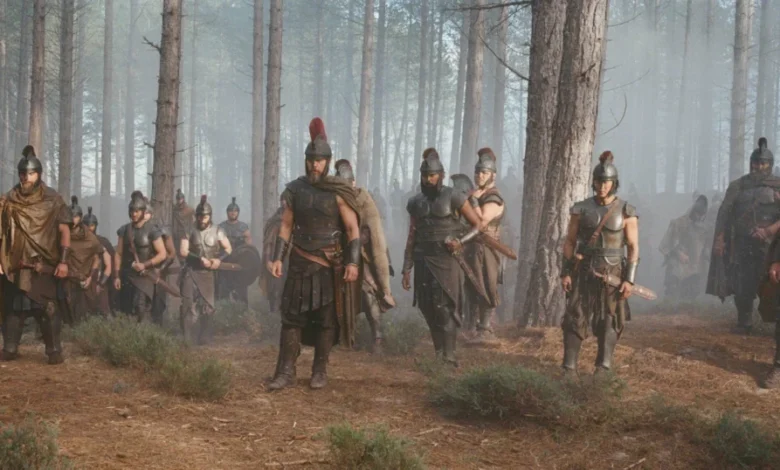
Christopher Nolan’s latest cinematic endeavor, a sprawling adaptation of Homer’s ancient Greek epic The Odyssey, has officially shifted the landscape of modern period filmmaking by eschewing traditional studio backlots in favor of a rigorous, multi-continental location shoot. Starring Matt Damon as the titular hero Odysseus and featuring a high-profile ensemble including Anne Hathaway, Tom Holland, and Lupita Nyong’o, the production represents one of the most ambitious logistical undertakings in recent Hollywood history. By moving the production across five distinct countries—Greece, Italy, Iceland, Morocco, and Scotland—Nolan and production designer Ruth De Jong have sought to capture the visceral, often harrowing reality of a ten-year maritime struggle, prioritizing practical environments over the digital artifice that has come to define the "sword-and-sandal" genre in the 21st century.
The Visionary Scope of a Practical Epic
The decision to film on location was driven by a desire to subvert the aesthetic tropes of classical antiquity films. While previous adaptations of Greek myths have often leaned into a "sun-bleached" or monochromatic Mediterranean palette, Nolan and De Jong intentionally sought out diverse climates and topographies to mirror the psychological and physical exhaustion of the Ithacan king’s journey. According to production notes, the team conducted an exhaustive global scouting mission, considering coastal regions in Australia and the dense woodlands of Japan before finalizing a route that balanced visual diversity with logistical feasibility.
The narrative of The Odyssey inherently demands a sense of geographic displacement. The story follows Odysseus (Damon) and his crew as they attempt to return home to Ithaca following the fall of Troy. Over the course of a decade, they face supernatural threats, mutiny, and the sheer unpredictability of the natural world. To ground these mythical elements in reality, the production utilized existing historical sites and extreme natural landscapes to serve as the backdrop for the crew’s dwindling numbers and deteriorating vessels.

Chronology of Production and Global Scouting
The production timeline for the film spanned over eighteen months, beginning with a rigorous pre-production phase where De Jong and Nolan mapped out the "travel nightmare" described in Homer’s text. The scouting process alone took the team across several hemispheres. The objective was to find locations that felt both ancient and alien, particularly for the more fantastical elements of the story, such as the descent into Hades and the encounter with the witch Circe.
- Initial Scouting (Year 1, Q1-Q2): Extensive travel to Japan and Australia to find unique coastal and forest environments.
- Location Finalization (Year 1, Q3): Decision to focus on the Mediterranean core with outliers in the North Atlantic and North Africa.
- Principal Photography Phase I (Year 2, Spring): Filming in Morocco for the Siege of Troy and the departure of the Greek fleet.
- Principal Photography Phase II (Year 2, Summer): High-latitude filming in Iceland for the underworld sequences and Scotland for the home of Circe.
- Principal Photography Phase III (Year 2, Autumn): Mediterranean filming in Greece and Italy to capture the Peloponnesian adventures and the return to Ithaca.
- Post-Production (Year 3): Integration of practical effects and final editing in Los Angeles.
Greece: The Ancestral Anchor
The production spent approximately one month in Greece, focusing on the Peloponnese region. This area served as the historical and emotional anchor for the film. One of the most significant locations utilized was Nestor’s Cave near Pylos, which the production repurposed for the terrifying encounter with the Cyclops, Polyphemus. By using a genuine geological site rather than a soundstage, the crew was able to leverage the natural acoustics and claustrophobic atmosphere of the cave.
In Messinia, the production filmed a pivotal hunting scene featuring Tom Holland as Telemachus, who travels to Sparta in search of his father. The scene was shot in a sprawling olive grove, utilizing the silver-green foliage to create a sense of timelessness. Further inland, the production utilized the Acrocorinth, a monolithic rock overlooking the ancient city of Corinth, and Methoni Castle to depict the tragic homecoming of Agamemnon (Benny Safdie). De Jong noted that the intense winds at these elevated sites were a key aesthetic requirement for Nolan, who wanted the environment to feel constantly active and unforgiving.
Italy: The Search for a Remote Ithaca
While the historical Ithaca exists, the production team chose the island of Favignana, located off the coast of Sicily, to represent Odysseus’s kingdom. The choice was driven by the need for a landscape that felt isolated and "epic" enough to justify a decade-long yearning for home. The centerpiece of this location was the Castle of Santa Caterina, a 15th-century fortress perched atop a steep hill.

The logistics of filming at Santa Caterina became a point of discussion among the cast and crew. To maintain the integrity of the site and the surrounding environment, the production eschewed traditional transport for much of the crew. Both Christopher Nolan and producer Emma Thomas reportedly hiked the 30-minute trail to the summit every day, a practice mirrored by much of the cast. Heavy equipment and construction materials for the sets were transported via helicopter, but the daily trek became a bonding ritual for the production team. This location served as the exterior for the palace where Penelope (Anne Hathaway) and Telemachus (Holland) wait for Odysseus, while the ornate interiors were meticulously reconstructed on stages in Los Angeles to allow for controlled lighting and complex camera movements.
Iceland: A Daylight Descent into Hades
Perhaps the most unconventional creative choice in the production was the decision to film the descent into Hades on the black sand beaches of Iceland. Eschewing the traditional "underground" or "dark" depiction of the afterlife, Nolan envisioned Hades as a vast, sun-drenched wasteland. Filming took place during the height of the Icelandic summer, utilizing the "Midnight Sun" to achieve a perpetual, eerie daylight that never quite transitions into night.
The production avoided the more tourist-heavy areas like Diamond Beach, opting instead for the remote sands near Hjörleifshöfði mountain, three hours east of Reykjavik. In a feat of agricultural logistics, the production also sourced a specific breed of cattle in Iceland that shared genetic lineage with ancient Greek herds to feature in the "Cattle of the Sun" sequence. This attention to detail extended to the contrast of the landscapes; while one beach provided the dark, volcanic grit of the underworld, another nearby location—referred to by the crew as "Apollo’s Beach"—offered pristine white sands and lush fields, providing a stark visual juxtaposition within the same geographic region.
Morocco: The Construction and Destruction of Troy
To depict the fall of Troy, the production moved to the Atlas Mountains of Morocco, specifically the village of Ait Benhaddou. A UNESCO World Heritage site, Ait Benhaddou has a long history as a cinematic backdrop, but Nolan’s team expanded upon the existing architecture by constructing two and a half acres of practical sets. These structures were built to be burnt, allowing the production to capture the literal "burning of Troy" with practical fire effects.

The heat of the Moroccan desert presented significant challenges for the cast, particularly during the high-action sequences where Greek soldiers are seen sprinting through the flaming ruins. Beyond the siege, Morocco also provided the interiors for King Menelaus’s palace in Marrakech and the coastal vistas of Essaouira. The latter served as the site for the discovery of the Trojan Horse and the subsequent departure of Odysseus’s fleet, marking the chronological beginning of the ten-year voyage.
Scotland: The Mysticism of the Highlands
The final major location was the Scottish Highlands, specifically the craggy coastline near Cullen. Although Scotland is geographically far removed from the Mediterranean setting of the original text, Nolan selected the region to represent the island of the witch Circe (Samantha Morton). The "serpentine paths" and verdant, mist-shrouded cliffs provided a sense of isolation and enchantment that the sunnier southern locations lacked.
The production built Circe’s house on a cliffside, overlooking the North Sea. The environment was chosen for its "middle of nowhere" atmosphere, emphasizing the danger Odysseus faces as his men are lured into the witch’s trap. The rugged terrain required the actors to navigate steep, rocky inclines, further contributing to the film’s emphasis on physical performance and environmental immersion.
Supporting Data and Production Logistics
The scale of The Odyssey production is reflected in the following data points:

- Total Locations: 14 major sites across 5 countries.
- Practical Set Construction: 2.5 acres for the Troy set; a full-scale 15th-century palace interior reconstruction.
- Logistics: Over 200 helicopter sorties for equipment transport in Italy; a crew of over 500 international technicians.
- Animal Wrangling: Sourcing and transporting ancient-breed cattle in Iceland and trained lions/tigers for the Scotland sequences.
Broader Impact and Industry Implications
The production of The Odyssey serves as a case study in the "new era" of prestige filmmaking, where the value of a film is increasingly tied to its physical authenticity. In an industry currently debating the over-reliance on Artificial Intelligence and Volume-based CGI (like Disney’s "The Mandalorian"), Nolan’s insistence on global location shooting acts as a counter-argument for the enduring power of the "real."
Market analysts suggest that the film’s release will likely trigger a surge in "set-jetting"—a travel trend where audiences visit the filming locations of their favorite movies. Regions like Favignana and the Peloponnese are already preparing for increased interest from cultural tourists. Furthermore, the film’s success in navigating the complex permits required for UNESCO sites like Ait Benhaddou and sensitive ecological areas in Iceland may provide a roadmap for future high-budget productions seeking to balance cinematic ambition with environmental and historical preservation.
By grounding a story of gods and monsters in the tangible wind, dust, and stone of the real world, Christopher Nolan’s The Odyssey aims to translate a three-thousand-year-old poem into a modern visceral experience, proving that the greatest travel nightmare in literature still requires a global stage to be told effectively.
Related posts: