The debate surrounding early childhood travel has long divided developmental psychologists, educators, and parents. While traditional parenting paradigms often prioritize routine, predictability, and localized environments, a subset of modern families is challenging these conventions by introducing toddlers and preschoolers to high-stimulus, international, and extreme-weather destinations. Proponents of this approach argue that navigating unfamiliar environments fosters cognitive flexibility and emotional resilience, whereas critics frequently cite the logistical hazards, health risks, and disruption of developmental milestones associated with rigorous travel schedules.
An examination of unconventional family itineraries reveals a growing trend among parents who utilize global exploration as an active tool for early childhood development. Rather than sheltering children from discomfort, these journeys embrace logistical failures, sensory overloads, and environmental extremes as natural pedagogical opportunities.

Main Facts and Logistical Realities of High-Stimulus Itineraries
Modern adventure travel with young children requires extensive logistical planning juxtaposed with an acceptance of inevitable unpredictability. Case studies of families undertaking multi-country or extreme-climate expeditions demonstrate that early exposure to diverse cultures alters a child’s baseline adaptability. For instance, infants and toddlers introduced to interstate and international transit before the age of two frequently develop a higher tolerance for sensory transitions.
However, these itineraries come with documented operational challenges. Common friction points include severe climate shifts, such as moving from temperate zones to sub-zero environments, navigating dense urban celebrations characterized by high crowd density, and managing acute pediatric health issues far from standard medical infrastructure. Despite these hurdles, data compiled from family travel advocacy groups suggest that the vast majority of destination-related anxieties are anticipatory rather than experiential. Parents frequently project worst-case scenarios onto foreign environments, whereas young children, unburdened by preconceived notions of danger or cultural propriety, tend to integrate seamlessly into novel surroundings.

Chronology of Major Expeditions and Incidents
To understand the trajectory of extreme family travel, one must examine the chronological progression of exposure scaling. The methodology typically begins with domestic, unconventional micro-trips before advancing to multi-continental deployments.
Initial Milestones: Early Infancy and Toddlerhood
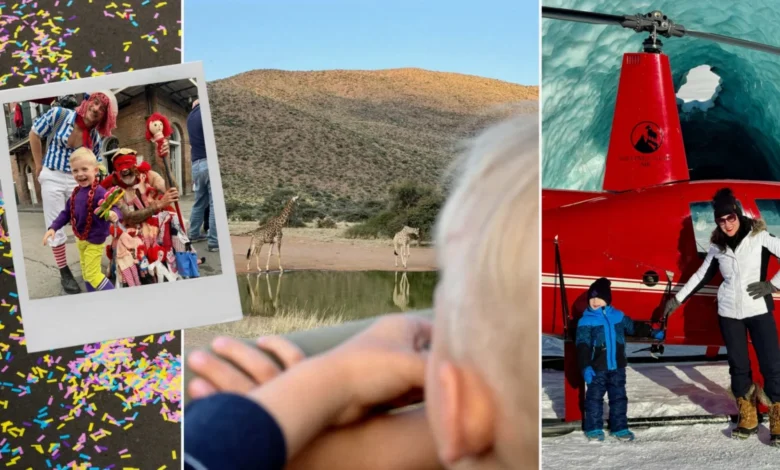
The foundation of high-stimulus travel often starts in the first year of life. Historical travel logs from seasoned adventure families document initial domestic excursions—such as winter camping or ice fishing in northern climates—occurring before the age of two months. These baseline trips test the child’s physiological response to temperature extremes and logistical disruption. By twenty months of age, children subjected to multi-week overland expeditions across disparate geographies—navigating desert expanses, mountainous terrain, and wildlife reserves—demonstrate an accelerated ability to process environmental stimuli. Subsequent multi-month global deployments spanning multiple continents and time zones further test psychological endurance, proving that structured chaos can become a stabilizing norm for a developing child.

The Mid-Scale Disasters: Operational Failures and Adaptability
Inevitably, large-scale travel itineraries encounter systemic failures. A prominent historical case study within adventure parenting circles involves high-profile public events where logistical oversight clashes with biological realities. For example, attending major sporting spectacles—such as the Indianapolis 500—while accompanied by a toddler often tests parental preparedness. Incidents of severe clothing failure, colloquially documented as major biological breaches, require immediate crisis management. In instances where replacement garments are commercially unavailable within high-security or remote sporting enclosures, improvisational solutions—such as repurposing oversized winter apparel into functional garments—demonstrate to the child that critical errors are manageable and temporary.
Geographic and Cultural Extremes: New Orleans and the Arctic Circle
Advancing the complexity of travel involves immersing young children in culturally dense and environmentally hostile landscapes.
During Mardi Gras celebrations in New Orleans, parents frequently confront warnings regarding crowd safety and public intoxication. However, objective observation reveals that structured participation—utilizing elevated viewing platforms, hotel club lounges, and strategic scheduling that circumvents late-night debauchery—mitigates primary risks. The primary hazard transitions from adult-oriented chaos to minor physical encounters with parade projectiles, transforming a potentially volatile street festival into an interactive, highly engaging cultural exchange.

Conversely, cold-weather expeditions present entirely different physiological challenges. Traveling to sub-arctic environments during peak winter festivals—such as the ceremonial start of the Iditarod Trail Sled Dog Race in Anchorage or navigating extreme sub-zero temperatures in Fairbanks—pushes pediatric resilience to its theoretical limits. Illness, equipment failure, and localized weather anomalies, such as regional blizzards resulting in multi-day airport strandings, test the limits of family endurance. Yet, these same environments offer high-reward experiences, including helicopter excursions over glacial fields, navigation of ice caves, and engagement with regional Arctic wildlife and indigenous winter sports.
Long-Term Implications and Psychological Analysis
The broader implications of exposing preschool-aged children to extreme environmental and cultural conditions are increasingly drawing the attention of behavioral researchers. While developmental psychology has traditionally emphasized the importance of a stable, consistent home base, contemporary studies indicate that controlled exposure to novelty and managed risk can enhance executive function, emotional regulation, and cognitive flexibility.

Statements and Insights from Child Development Specialists
Child psychologists note that anticipatory parental anxiety often serves as a barrier to developmental growth. When parents systematically eliminate difficult scenarios, they inadvertently communicate to the child that unfamiliarity equates to danger. Conversely, navigating a trip characterized by illness, extreme weather, or logistical breakdown—provided the child remains fundamentally safe—teaches critical life lessons: that a difficult day does not invalidate an entire experience, and that discomfort is a temporary state rather than a permanent crisis.
Fact-Based Implications for Family Dynamics
- Resilience Building: Children accustomed to erratic travel schedules demonstrate lower baseline anxiety when confronted with sudden changes in routine within their home environments.
- Cultural Empathy: Early international exposure diminishes ethnocentric biases, fostering a baseline curiosity toward foreign languages, social structures, and diverse human behaviors.
- Risk Calibration: Parents who regularly evaluate and manage real-world risks develop enhanced situational awareness, which translates into more confident decision-making across all areas of family life.
Conclusion and Future Outlook

The practice of unconventional family travel is not a mandatory prescription for effective parenting, nor is it suitable for every family dynamic. However, the documented outcomes of children raised within high-stimulus, global environments suggest that the boundaries of what is considered "family-friendly" are largely self-imposed. By pushing past conventional comfort zones, embracing the inevitability of logistical failures, and reframing difficult moments as shared historical narratives, families can cultivate a profound sense of resilience in the next generation. The ultimate objective of such travel is not the perfection of the itinerary, but the dismantling of fear as a guiding principle in early childhood development.