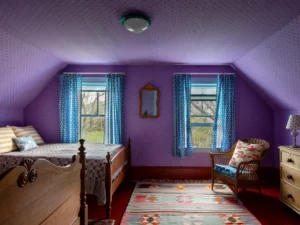
The real estate market in the Hudson Valley has long been characterized by a tension between historic preservation and the encroaching influence of modern, often artificial, aesthetic trends. For artist and society photographer Jessica Craig-Martin, the search for a new residence in Hudson, New York, began not with a desire for purchase, but with a degree of skepticism toward the digital portrayal of historic architecture. The property at Willard Place, a structure dating back to the 1875 whaling boom, served as the primary subject of this intersection between traditional architectural heritage and the evolving landscape of real estate marketing.

The Digital Versus the Physical Reality
The initial encounter with the Willard Place property was driven by what the homeowner described as "morbid curiosity." Online listings for the home featured a visual narrative that was both polarizing and confusing. The images depicted an interior that appeared to be heavily staged with aggressive, eccentric, and disjointed furniture arrangements. For a professional observer like Craig-Martin, these visuals acted as a deterrent rather than an invitation.

Upon conducting an in-person site visit, accompanied by real estate agent Julia Crowley and artist Helen Marden, the reality of the property proved to be starkly different from its online representation. The interior was found to be entirely vacant, stripped of the clutter and “grotesque” furnishings that had defined the listing images. It was subsequently determined that the online staging had been the result of artificial intelligence, a practice that is becoming increasingly common in high-end real estate but which also raises significant ethical questions regarding transparency in property marketing. The absence of furniture allowed for an objective assessment of the building’s core structural merits, including its soaring proportions, original woodwork, and the play of natural light across its historic floor plan.

Architectural Significance of the Hudson Whaling Era
The residence, constructed in 1875, is a representative example of the architectural evolution that defined Hudson, New York, during the late 19th century. This period, fueled by the regional wealth generated from the whaling industry, saw the construction of homes that prioritized elaborate ornamentation, including turrets, expansive bow windows, and complex rooflines.

The Willard Place home is classified within the Victorian architectural movement, specifically noted for its polychrome exterior—a design choice that emphasizes the structure’s eccentric history. From an urban planning perspective, these homes are critical to maintaining the historic integrity of Hudson’s streetscapes. The property had remained vacant and largely neglected for several years prior to the sale, a common fate for large-scale historic homes that require significant financial investment and upkeep.

The Decision to Invest
Following the initial visit, the acquisition process involved a period of deliberation. Despite the structural integrity of the building, the scale of the residence—featuring five bedrooms—posed a logistical challenge for a single occupant. The influence of peers, particularly that of Helen Marden, played a pivotal role in the final decision. Marden, the owner of the local Hotel Tivoli, provided a consistent narrative regarding the long-term value and character of the home, framing the purchase as an opportunity to steward a significant piece of local architecture.

After a thorough inspection revealed no catastrophic defects, the offer was finalized. The transition into the home was marked by a minimalist approach, reflecting a departure from the "staged" aesthetic of the listing. The owner’s move-in process, which initially involved little more than essential living items and a selection of personal artifacts, allowed for the gradual integration of a lifetime’s collection of art, textiles, and objects of curiosity.

Interior Curation and Artistic Integration
The home has since become a repository for a diverse array of items that defy standard interior design conventions. The current aesthetic is characterized by a juxtaposition of high-art pieces and vernacular objects. Key items within the home include:

- Artistic Pedigree: The collection features an etching by Brice Marden, a gift given to mark the birth of the owner’s son, as well as a print by Fernand Léger, inherited from the homeowner’s father, the noted artist Michael Craig-Martin.
- Curated Oddities: The space includes items such as a barracuda sculpture by Dalwa Donoffre, Stone Age tools, and contemporary works by artists like Ashley Bickerton and Mary Heilmann.
- Thematic Elements: The inclusion of natural history artifacts, such as whale vertebrae, alongside mass-produced objects like plush Japanese cushions, suggests a rejection of the "form follows function" school of design.
This approach highlights a growing trend among contemporary homeowners who seek to personalize historic properties through a collage-like accumulation of objects, prioritizing personal narrative over traditional period-correct interior design.

Broader Implications for the Real Estate Market
The case of the Willard Place home highlights several broader shifts in the regional real estate sector. First, it underscores the persistent issue of AI-generated listing photos. While these tools are designed to help buyers visualize the potential of a space, they can create a disconnect between expectation and reality, leading to consumer frustration. Industry analysts suggest that as AI becomes more prevalent, buyers may increasingly demand "raw" video tours to verify the condition of properties.

Second, the restoration of such properties by private owners is a primary driver of the ongoing economic revitalization of the Hudson Valley. By converting neglected, long-vacant historic structures into active residences, new owners contribute to the local tax base and support the preservation of regional architectural history. The "Norma Desmond-style" staircase, as referenced by the owner, serves as a metaphor for the appeal of grand, old-world features that continue to command a premium in the modern luxury market.

Conclusion: A Synthesis of Past and Present
The transformation of the Willard Place property serves as a case study in the successful integration of contemporary lifestyle demands within a 19th-century framework. The owner’s willingness to embrace the "madness" of the house—its quirks, its grand scale, and its history—suggests that the most successful restorations are those that allow the architecture to speak for itself while providing a backdrop for the occupant’s unique personal history.

As the Hudson real estate market continues to attract a demographic seeking both proximity to New York City and the cultural richness of the Hudson Valley, the preservation of these architectural landmarks remains a priority. The Willard House stands as a testament to the fact that when a property is treated with patience and a discerning eye, even the most daunting historic structures can be reclaimed as vibrant, functional homes.

Jessica Craig-Martin is a noted photographer and writer; her memoir, "I Regret I Am Able to Attend," is scheduled for release in November 2026, offering further insight into the intersection of her life among artists and her personal aesthetic journey.