The Evolution of Aerial Cinematography: A Comprehensive Analysis of the Antigravity A1 Drone System

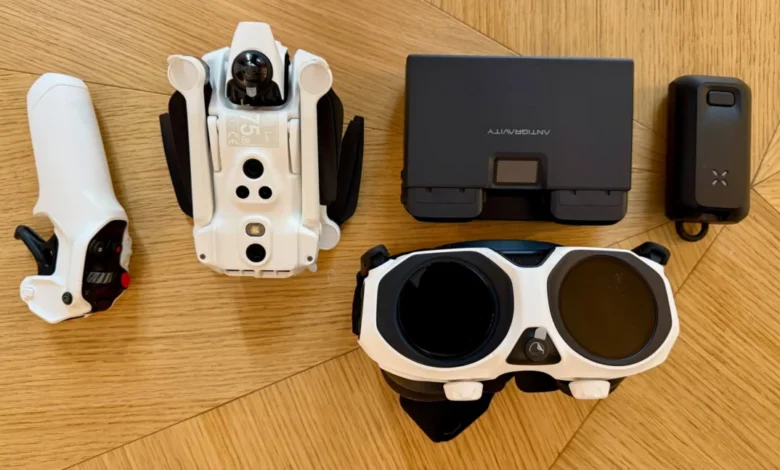
The landscape of consumer-grade aerial photography underwent a significant transformation in late 2025 with the release of the Antigravity A1. By departing from the traditional single-sensor gimbal-stabilized design, the A1 introduces a dual-lens 360-degree capture system that fundamentally alters how visual content is produced. This paradigm shift, often described by industry experts as a move from "piloting" to "directing," allows creators to record an omnidirectional sphere of data, effectively decoupling the physical act of flight from the creative process of framing shots.
Chronology of Development and Market Entry
The drone industry has seen a trajectory of rapid miniaturization and sensor optimization over the past decade. Historically, the "Pro" category of drones relied on 1-inch CMOS sensors mounted on motorized gimbals to combat the vibrations inherent in flight. However, these systems remained limited by their forward-facing perspective, necessitating precise pilot control to capture specific subjects.
In the second quarter of 2025, Antigravity Tech announced the A1, a project that had been in stealth development for approximately 24 months. The product reached the consumer market in November 2025, coinciding with a broader industry push toward "cinewhoop" designs—drones that prioritize stability and safety for indoor or proximity flight. By January 2026, the A1 had gained traction among independent videographers who sought to streamline post-production workflows by capturing entire environments in a single pass.
Technical Specifications and Engineering Architecture
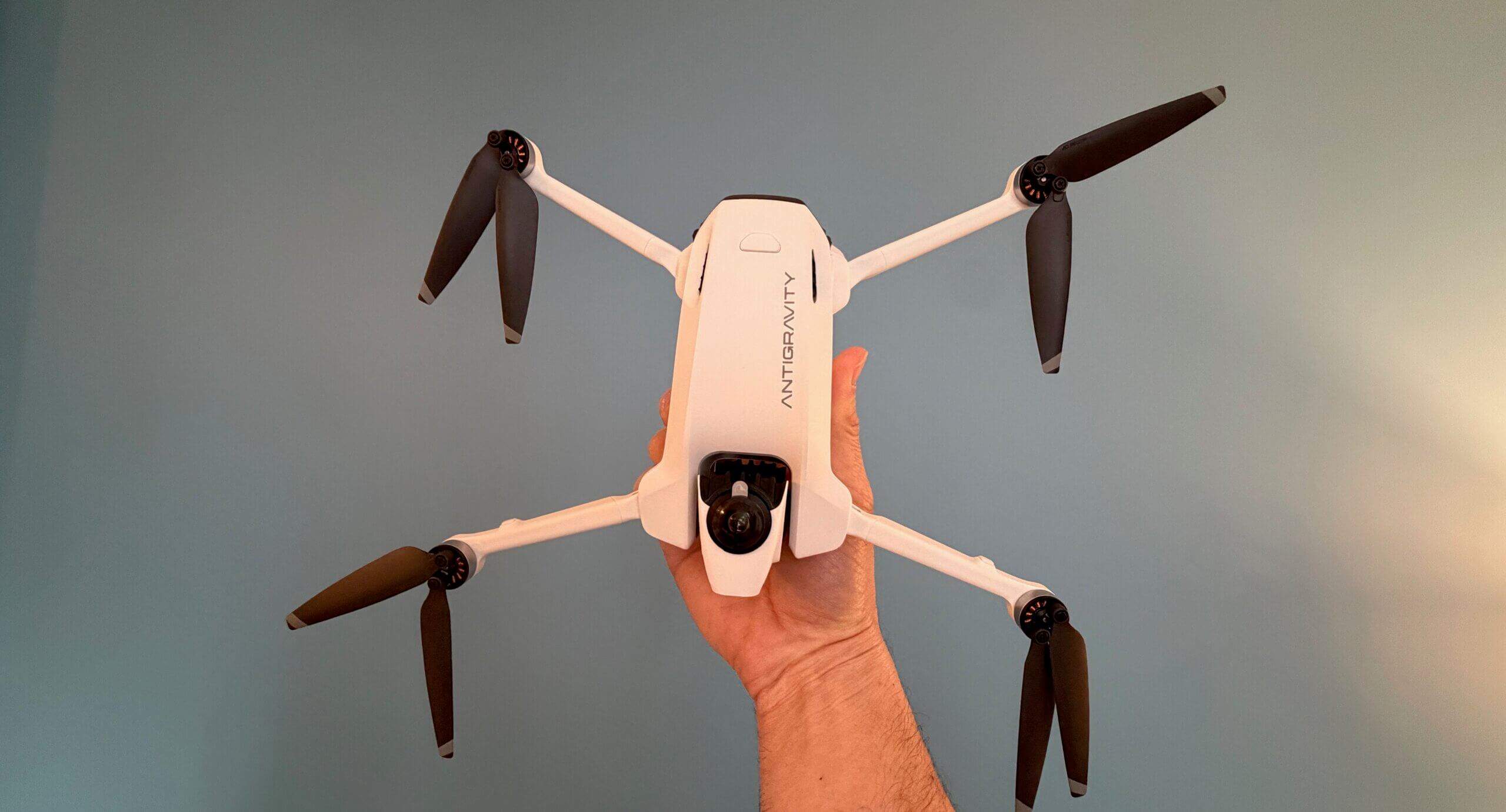
The core of the A1’s innovation lies in its dual-lens configuration. Positioned on the dorsal and ventral sides of the central fuselage, two ultra-wide-angle lenses each record a 200-degree field of view. These signals are stitched in real-time, resulting in a seamless 360-degree sphere.
Key technical data points include:
- Sensor Array: Dual 1/1.28-inch CMOS sensors, providing superior low-light sensitivity compared to standard 1/2.3-inch action camera sensors.
- Weight Profile: The aircraft is engineered at 249 grams with its standard battery, a strategic design choice that allows it to bypass mandatory registration requirements in many jurisdictions, including the United States (FAA) and parts of the European Union (EASA).
- Structural Composition: The frame utilizes carbon-fiber-reinforced polymer, which provides a higher strength-to-weight ratio than traditional ABS plastics, ensuring the airframe can withstand minor impacts while maintaining structural rigidity.
- Flight Dynamics: The drone reaches a maximum speed of 36 mph and utilizes "Turtle Mode," an automated recovery feature that allows the drone to flip itself over if it lands inverted, reducing the risk of equipment damage during remote field operations.
Flight Experience and Pilot Control Systems
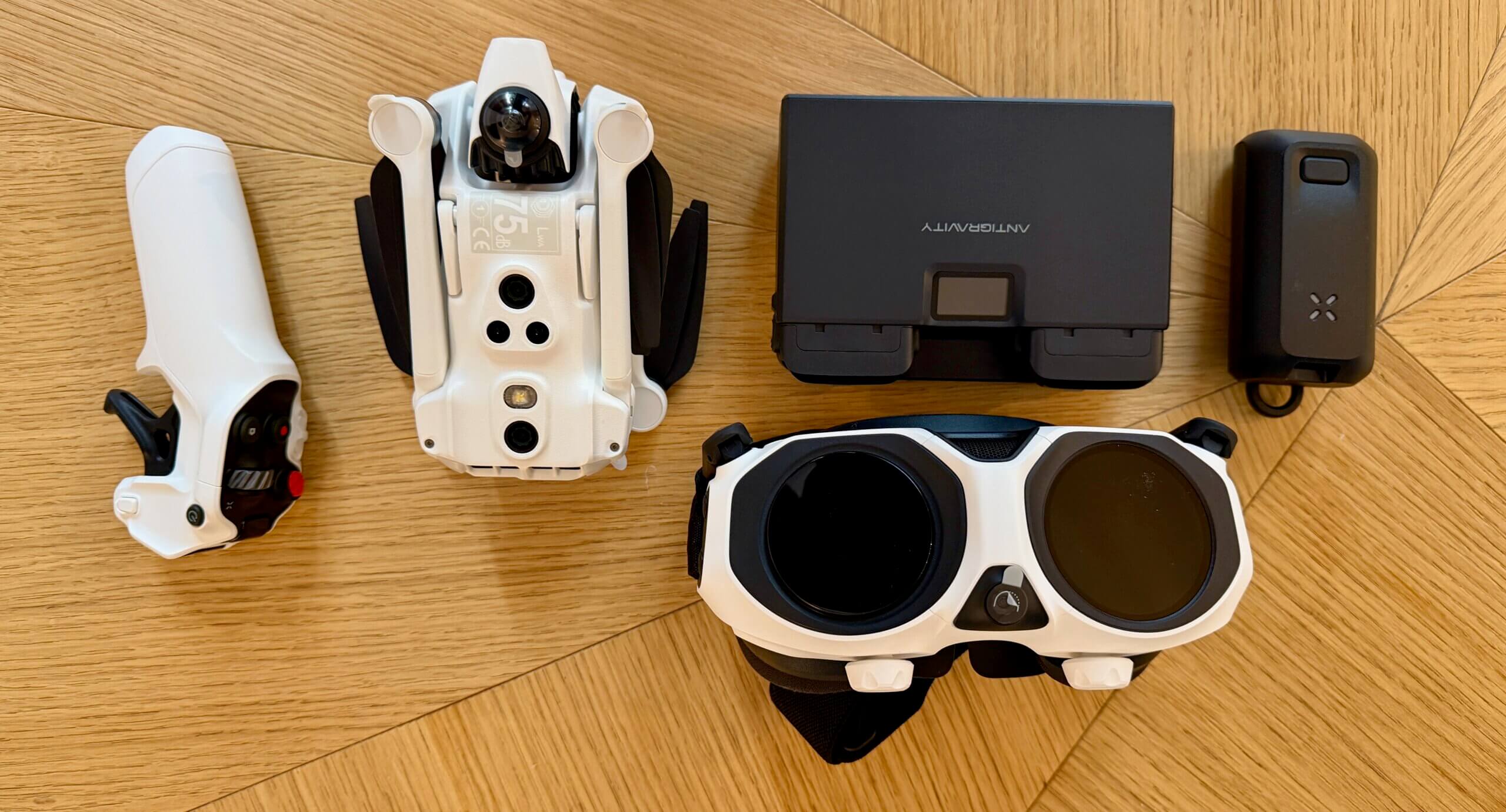
The Antigravity A1 features a unique approach to flight navigation, prioritizing intuitive motion-based controls over traditional dual-stick radio transmitters. The system utilizes a single-handed motion controller that interprets wrist orientation and trigger pressure to dictate movement.
Accompanying this is the Vision Goggles system, which incorporates dual 4K micro-OLED displays with a 120Hz refresh rate. A critical feature of this interface is its head-tracking capability. Because the drone captures a 360-degree field of view, the user is not restricted to the drone’s heading; tilting one’s head allows the viewer to pan across the digital sphere in real-time. This immersive capability provides a level of spatial awareness that standard First-Person View (FPV) systems cannot replicate. For traditionalists, the company maintains compatibility with "Mode 2" stick controllers, ensuring that professional FPV pilots can maintain manual control for complex, acrobatic flight maneuvers.
Analytical Perspective on Camera Performance
While the marketing materials for the A1 highlight "8K Resolution," a nuanced analysis is required to understand the output quality. In a standard 16:9 camera, 8K resolution allocates all pixels to a single frame. In the A1’s 360-degree environment, those pixels are distributed across the entire sphere. Consequently, when a user "reframes" the footage into a traditional flat video, the effective resolution represents a crop of the total 8K image.
Despite this, the A1’s integration of "FlowState" stabilization algorithms offers significant advantages. By leveraging the spherical data, the software can stabilize the image across all three axes, effectively compensating for high-velocity winds and erratic flight movements. This creates footage that appears to have been captured on a heavy-duty tripod or a professional-grade crane. Furthermore, the inclusion of a 10-bit "Log" profile allows professional colorists to manipulate dynamic range in post-production, a feature previously reserved for much larger, more expensive cinema drones.
Software Ecosystem and AI-Driven Editing
The "Antigravity Studio" application serves as the primary post-processing tool. Data is transferred wirelessly from the drone to the mobile device at speeds reaching 80MB/s. The software utilizes the phone’s internal gyroscope to allow the user to "re-film" the scene by physically moving the phone, a process known as reframing.
The inclusion of "Auto-Frame" AI represents a significant shift in post-production efficiency. By analyzing video metadata, the AI identifies and tracks primary subjects within the 360-degree environment. This enables solo content creators to produce sequences that appear to have been filmed by a dedicated camera operator, as the AI automatically adjusts the framing to keep subjects centered and in focus.
Battery Efficiency and Operational Logistics
Battery life remains the most significant constraint for the A1. The standard battery provides an operational flight time of approximately 19 to 20 minutes under real-world conditions. While this may appear short, the "work per minute" ratio is high; because the pilot does not need to re-fly a route to capture different camera angles, one flight can effectively replace three or four flights with a conventional single-lens drone.
For users requiring extended flight times, an optional "Pro Battery" is available. However, the increased mass of this battery pushes the drone’s total weight above the 250-gram regulatory threshold, requiring the operator to adhere to the stricter flight regulations mandated by civil aviation authorities.
Broader Industry Implications
The emergence of the A1 signals a maturation of the 360-degree drone market. By integrating advanced flight stabilization with sophisticated AI-driven post-production software, the system lowers the barrier to entry for high-quality cinematography.
From an industry perspective, this development poses a challenge to manufacturers of traditional entry-level and mid-range drones. The ability to "capture everything and edit later" provides a level of creative security—the knowledge that a shot cannot be "missed" due to poor framing—that is highly attractive to travel vloggers, real estate photographers, and independent filmmakers.
However, the technology is not without its limitations. The specialized lenses required for 360-degree capture are inherently more susceptible to damage than protected, recessed lenses on standard drones. Additionally, the image fidelity, while impressive, still faces the physical limitations of small-sensor optics in extreme low-light environments.
As the technology continues to iterate, the industry expects to see improvements in lens durability and sensor size. The success of the A1 will likely serve as a benchmark for future drone development, suggesting that the future of aerial photography lies not just in the drone’s flight performance, but in the intelligence of its image-capture and post-production ecosystem. For now, the Antigravity A1 stands as a compelling synthesis of hardware engineering and computational photography, offering a glimpse into a future where the mechanical constraints of flight are increasingly secondary to the creative vision of the pilot.