When Space Debris Meets Fine Art: Ashley Zelinskie Examines Humanity’s Cosmic Footprint in The Weight of Space

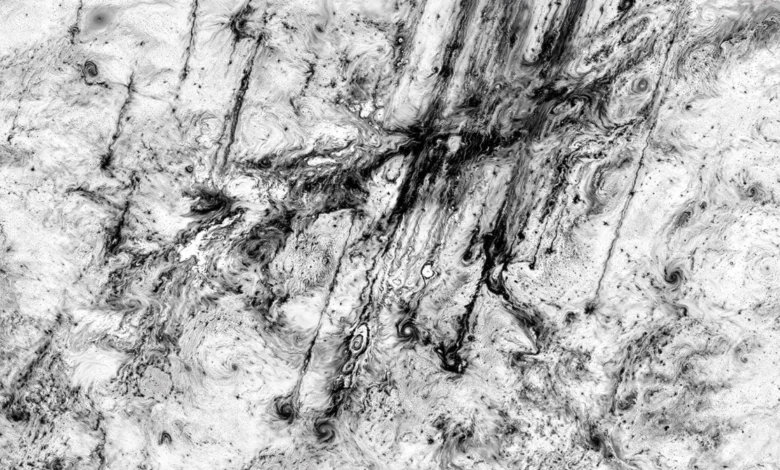
When a SpaceX Starship prototype violently disintegrated over the turquoise waters of the Turks and Caicos Islands in January 2025, it marked another fiery chapter in the rapid, high-stakes development of commercial spaceflight. While aerospace engineers analyzed telemetry and environmental agencies monitored debris fields, a handful of vacationing travelers made an unexpected discovery on the shoreline: intact fragments of the vehicle’s advanced heat-shield tiles. Rather than discarding these remnants of orbital re-entry, these travelers forwarded them to Brooklyn-based multimedia artist Ashley Zelinskie.
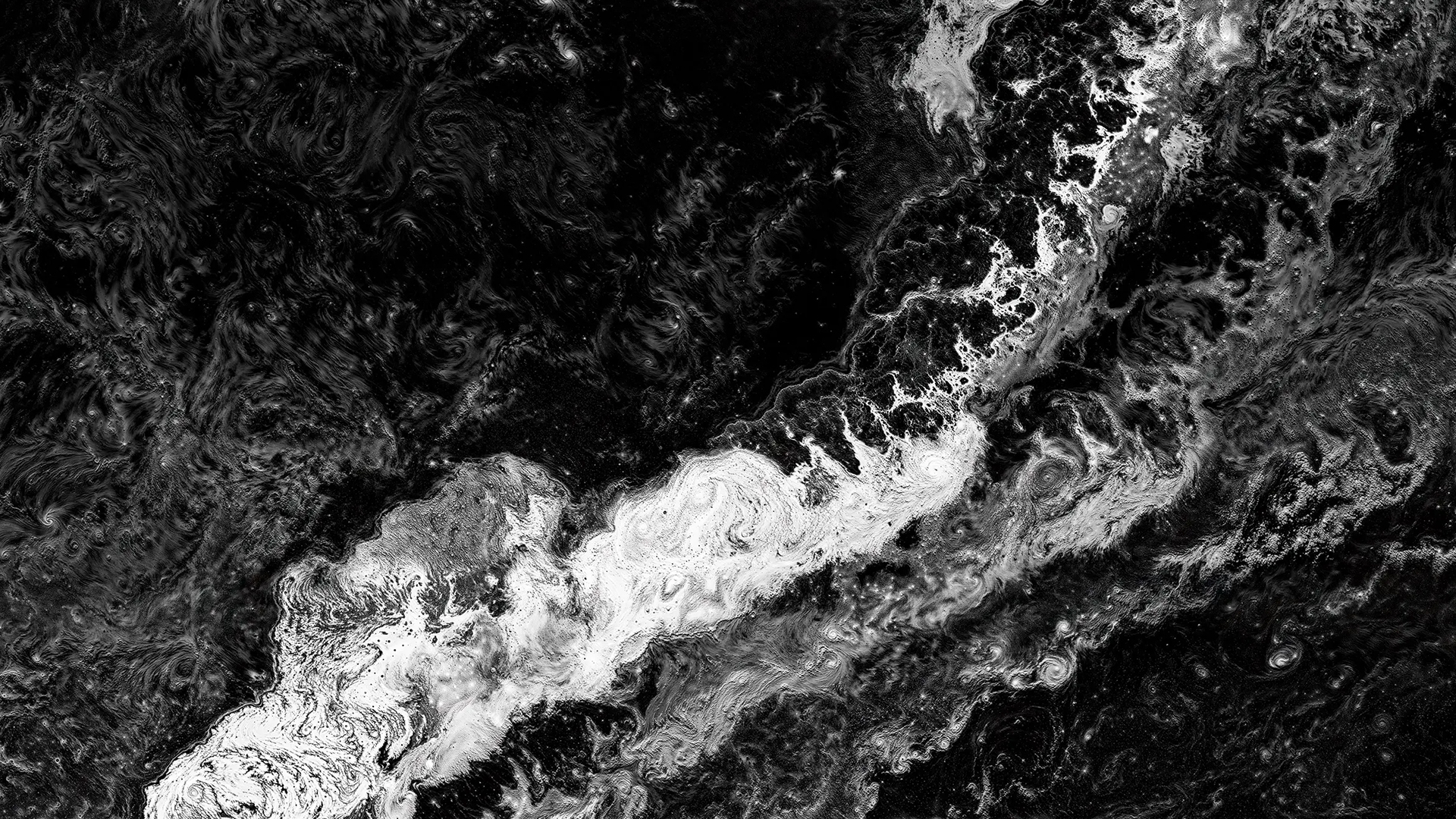
Today, those very fragments are pulverized into a fine gray dust and embedded directly into a gallery wall in Manhattan, forming a spectral, haunting print of the explosion that nearly destroyed the spacecraft. This striking synthesis of high-tech hardware and classical fine art serves as the centerpiece of Zelinskie’s solo exhibition, "The Weight of Space," which opened on November 20 at the Heft Gallery in New York City. The expansive exhibition runs through January 16, 2027, offering audiences a profound meditation on humanity’s expanding industrial footprint in the cosmos, the emotional weight of space exploration, and the fragile beauty of Earth.
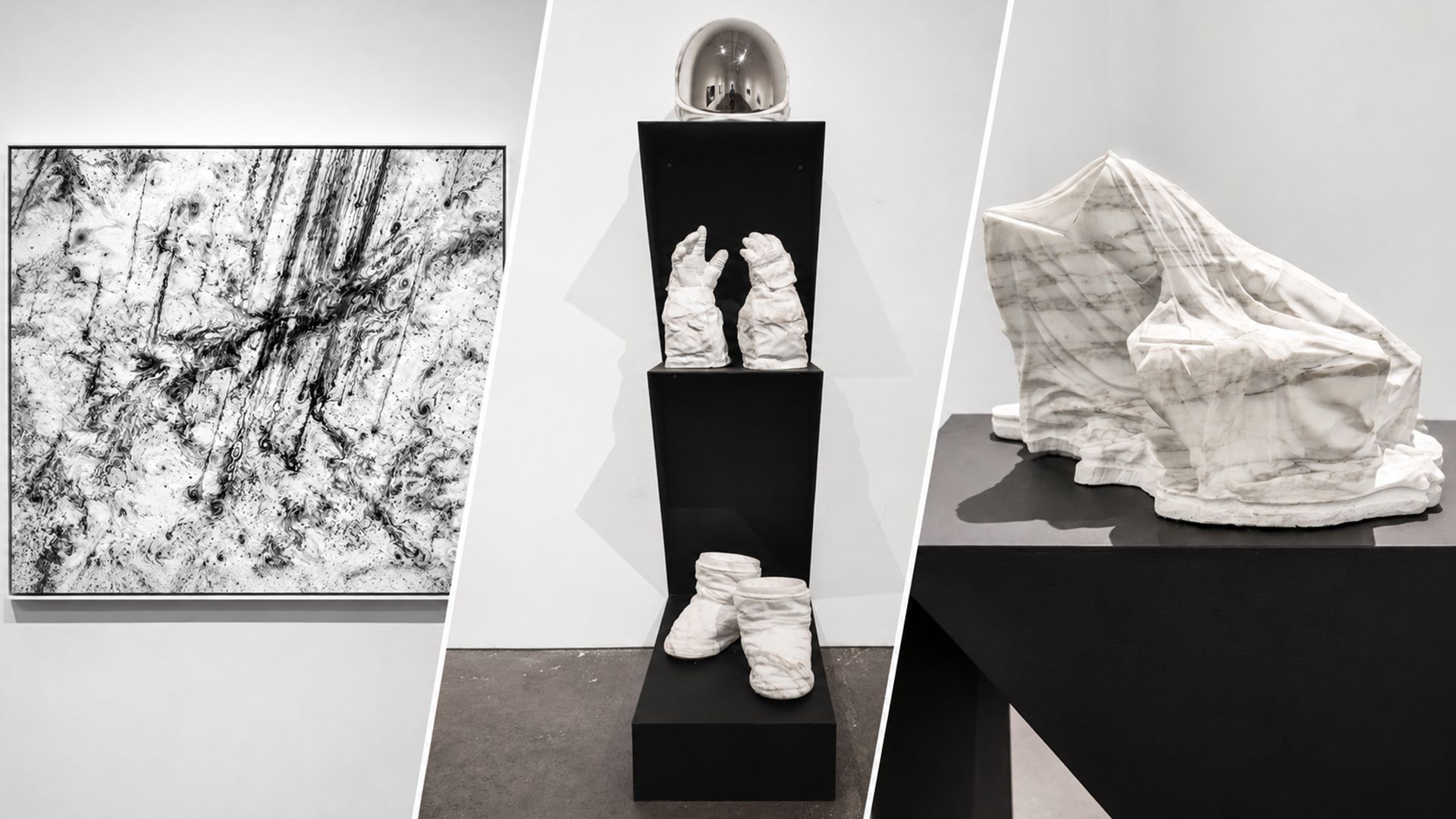
The intersection of aerospace engineering and contemporary art is rarely captured with such literal authenticity. "The Weight of Space" is divided into four thematic series—"Ejecta," "Monuments," "Launch Sequence," and "Crowded Sky"—each employing distinct mediums, from traditional Carrara marble to cutting-edge 3D modeling and live orbital tracking data.
Ejecta: Capturing Catastrophe and Cosmic Artistry
At the core of the exhibition is the "Ejecta" series, which translates the raw, chaotic energy of rocket plumes, launches, and catastrophic explosions onto paper. The Starship breakup print is a prime example of this methodology. By grinding recovered thermal protection tiles into pigment, Zelinskie bridges the physical gap between the upper atmosphere and the gallery floor.
Another prominent work within "Ejecta" stems from a photograph Zelinskie captured firsthand at NASA’s Kennedy Space Center visitor complex during the launch of the Artemis 2 mission. By applying algorithmic data distortion to her original photographs, she manipulates the swirling exhaust plumes until they visually mimic distant celestial nebulae. This deliberate visual pun suggests a continuum between human industrial output and the natural processes of stellar birth and death.
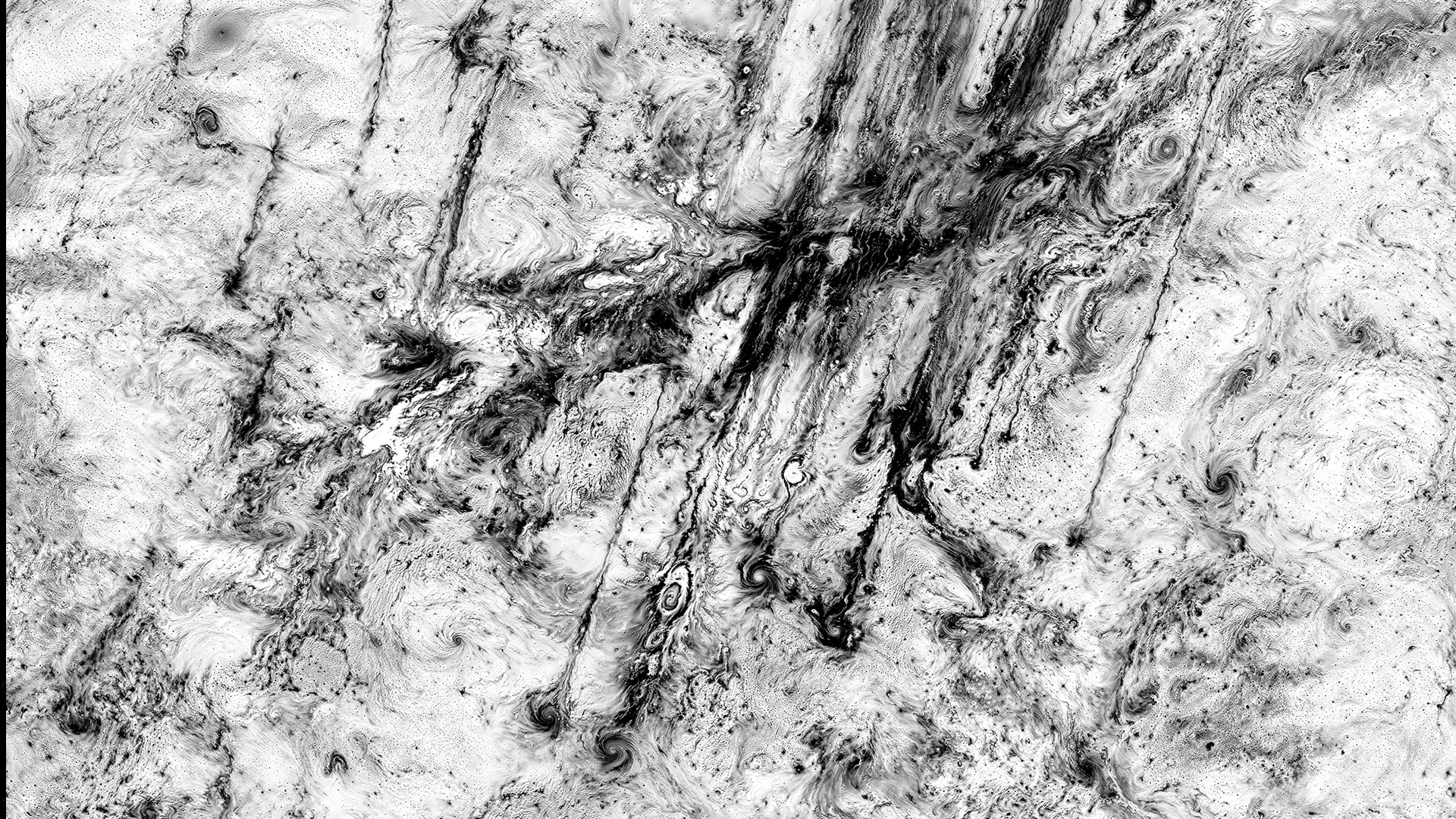
The series also confronts the darker, more tragic moments of spaceflight history, including a commemorative print depicting the loss of the Space Shuttle Challenger on January 28, 1986. For many visitors, particularly those who lived through the disaster, the piece evokes a heavy sense of collective grief. Retired NASA astronaut Mike Massimino, reflecting on Zelinskie’s interpretation during a walkthrough of the gallery, noted that an artist’s lens can sometimes distill historical trauma into something profoundly emotional, bypassing standard archival documentation to strike at the human core of space tragedies.
Monuments: Immortalizing Iconic Hardware and Human Resilience
While "Ejecta" focuses on fleeting moments of atmospheric chaos, the "Monuments" series seeks permanence, utilizing carved Italian marble to immortalize the iconic tools and garments of space exploration. Among the most striking pieces in this collection is a sculpture depicting Massimino’s bare, human hand gripping a copper-plated replica of a handrail.
This sculpture references a critical, improvisational moment during NASA’s final Hubble Space Telescope servicing mission (STS-125) in May 2009. During a spacewalk, Massimino and fellow astronaut Michael Good encountered a stripped bolt that blocked access to the Space Telescope Imaging Spectrograph (STIS)—a vital scientific instrument. With Mission Control watching in real time, Massimino was instructed to forcibly rip the handrail off the telescope to clear the obstruction.
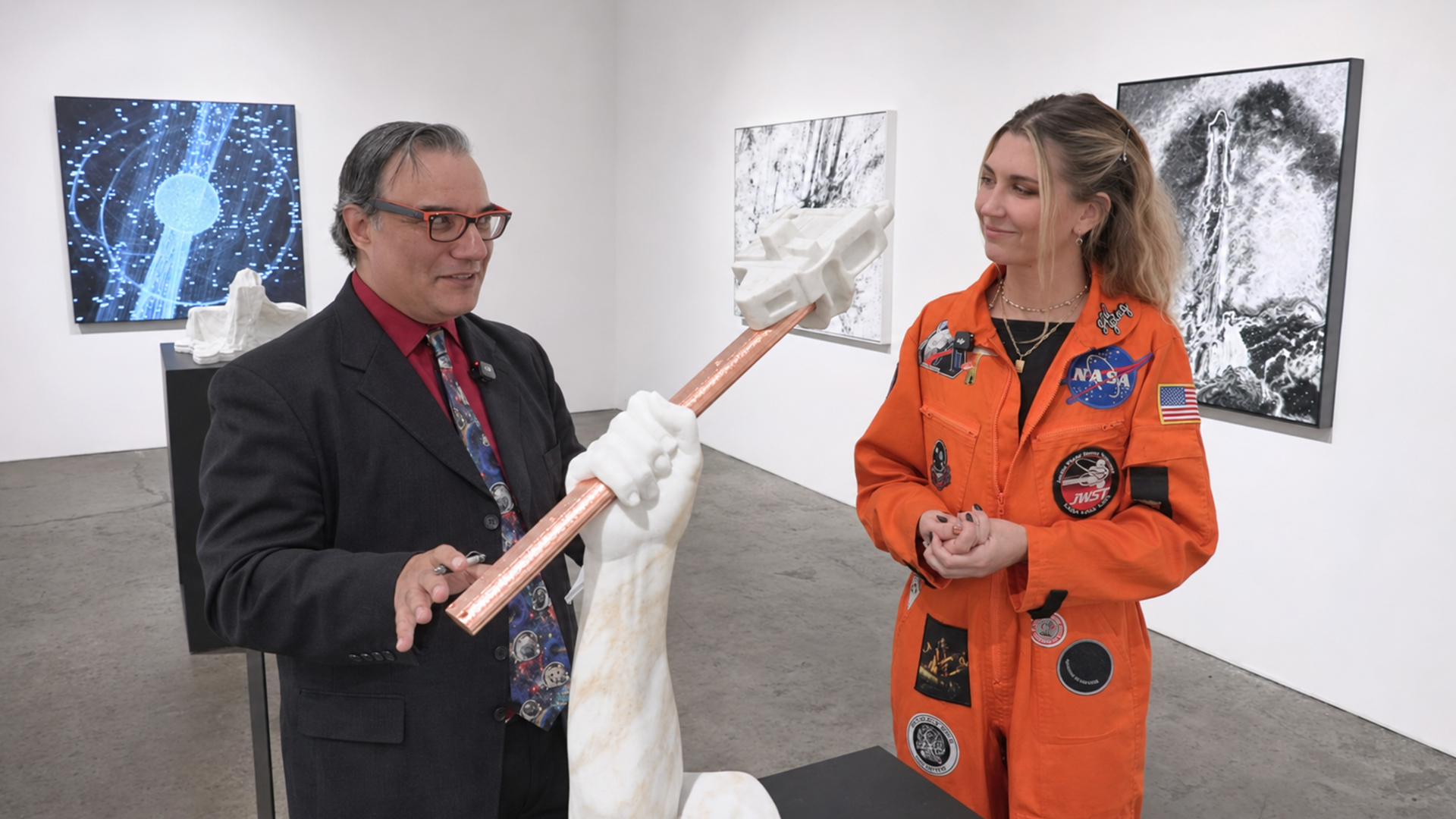
Speaking with journalists at the gallery, Massimino recalled that the physical exertion brought to mind a childhood memory of his father and uncle using brute mechanical leverage to force a stuck oil filter off an engine. Looking down at the curvature of the Earth from orbit, he recalled thinking, "This one’s for you, Uncle Frank." While NASA protocols required bulky, pressurized Extravehicular Mobility Unit (EMU) gloves for the task, Zelinskie intentionally sculpted Massimino’s hand bare. She explained that the artistic choice was designed to restore a sense of biological vulnerability and humanity to an otherwise sterile machine environment.
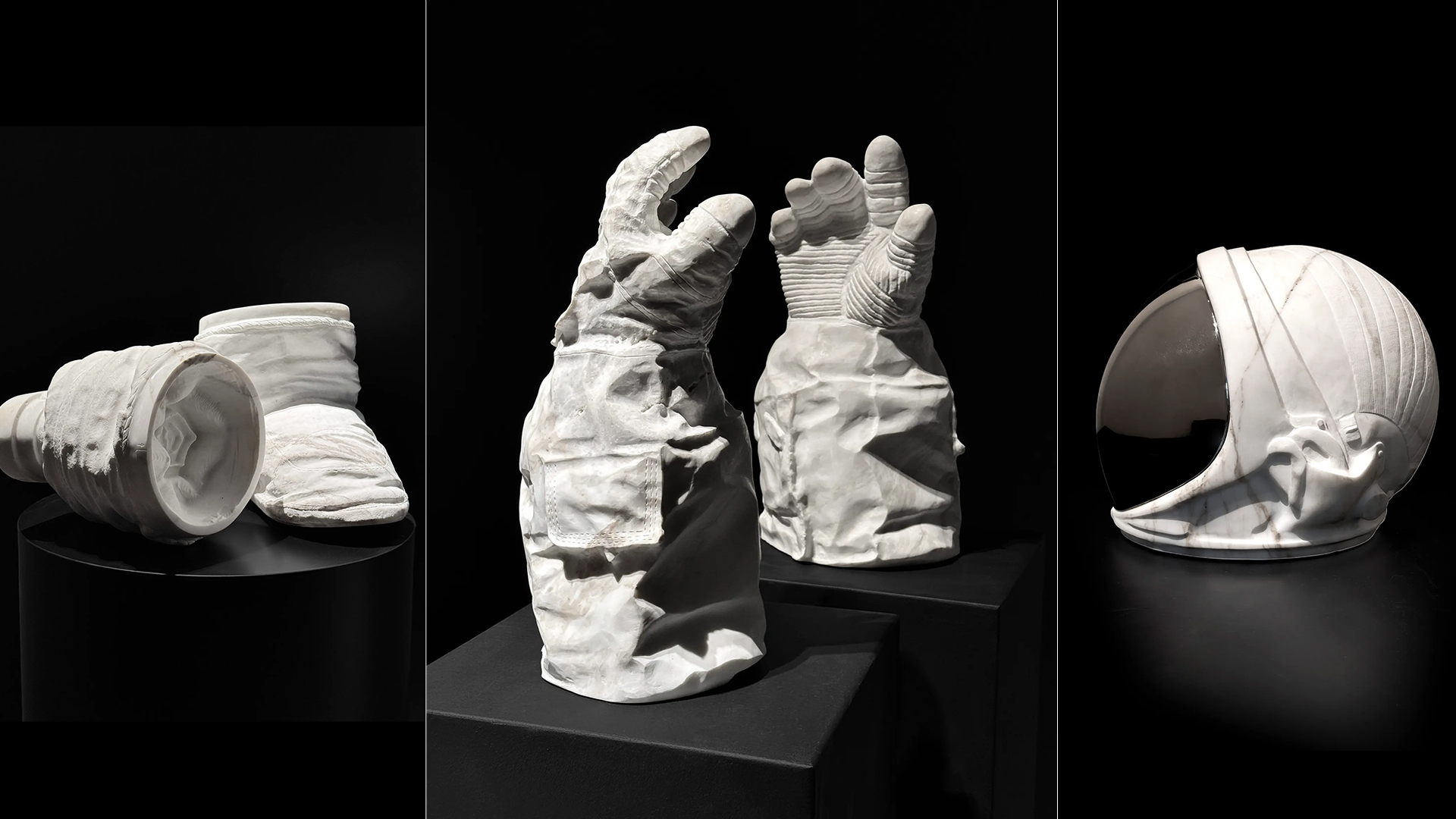
The "Monuments" series extends its narrative to other elements of spaceflight gear. Zelinskie’s journey into stone-carving began after Massimino brought a pair of his actual spaceflight gloves to her studio for 3D scanning. Struck by how the heavy fabric naturally folded and collapsed when set down, she remarked that the material "wanted to be stone." She subsequently traveled to Tuscany, utilizing robotic milling arms at the Digital Stone Project before finishing the sculptures by hand.
The accompanying astronaut boots feature polished, perfectly smooth soles—a subtle detail noting that footwear in orbit is engineered exclusively for floating rather than walking. Meanwhile, the sculpture of Massimino’s re-entry helmet pairs carved marble with a precision-engineered, electroplated 3D-printed visor finished to a mirror-like sheen.
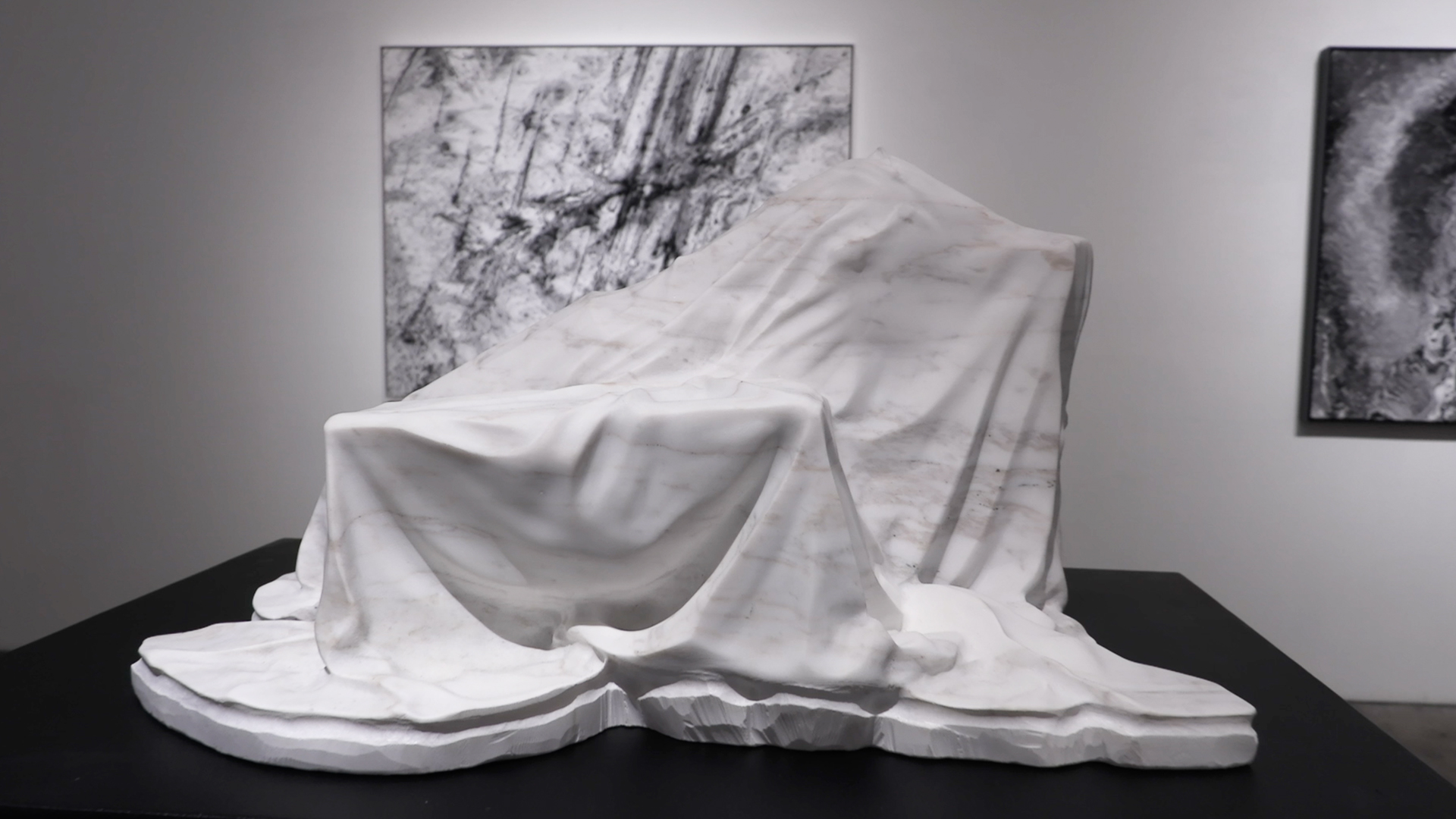
Another centerpiece of "Monuments" is a marble rendering of the Hubble Space Telescope itself. To capture the historical context of Hubble’s early operational hurdles, Zelinskie utilized 3D modeling software to drape a digital veil over the telescope’s geometry. This artistic overlay serves as a direct nod to the infamous optical aberration in Hubble’s primary mirror, which produced blurred images upon its 1990 deployment until servicing missions corrected the flaw. The final marble sculpture, finished by hand, offers a tactile, buttery-smooth surface that invites viewers to question the boundary between hard technology and organic drape.
Launch Sequence and Crowded Sky: Mapping the Future of Orbit
Moving from static hardware to dynamic motion, the "Launch Sequence" series captures the shifting geometry of rocket exhaust clouds as vehicles break free of Earth’s gravity. Fascinated by the volumetric growth of launch plumes, Zelinskie sculpted five successive moments of liftoff. For the rocket bodies themselves, she drew inspiration from modernist sculptor Constantin Brâncuși’s minimalist masterpiece, "Bird in Space," successfully conveying a visceral sense of upward velocity and vertical ambition.
The exhibition concludes with an interactive, data-driven installation titled "Crowded Sky," which addresses the contemporary realities of orbital congestion. The installation provides a real-time visualization of thousands of active objects currently circling the globe. In this display, government-owned spacecraft are marked in white, while commercial and private satellites are designated in black.
Visitors can interact with the exhibit by scanning QR codes linked to individual targets, pulling up immediate telemetry detailing each object’s operational function, ownership, and launch date. By adjusting the temporal parameters of the software, gallerygoers can look back to an era when a single satellite occupied the void, or project forward a decade into the future to visualize the exponential growth of mega-constellations and commercial space debris.
The Broader Implications of Space Art
Exhibitions like "The Weight of Space" arrive at a critical juncture in aerospace history. As commercial space companies accelerate launch cadences, the frequency of rocket debris re-entries, orbital congestion, and public interaction with the space industry reaches unprecedented levels. By repurposing physical debris—such as the titanium and ceramic tiles of a destroyed SpaceX Starship—artists like Zelinskie transform industrial waste into cultural artifacts.
Furthermore, the exhibition underscores a psychological phenomenon frequently reported by professional astronauts: the Overview Effect. Defined as a cognitive shift in awareness experienced by individuals viewing Earth from space, the concept emphasizes the planet’s finite nature and ecological fragility against the black void of the cosmos. Zelinskie notes that as humanity learns more about the universe through advanced instruments like Hubble and the James Webb Space Telescope, the ultimate takeaway must be a heightened appreciation for our home world.
"The Weight of Space" remains on view at the Heft Gallery in New York City through January 16, 2027, inviting the public to engage with the material reality of our extraterrestrial ambitions and the physical echoes they leave behind.