Gaza’s widows raise their families alone: “We do our duties twice over, but where are our rights?”

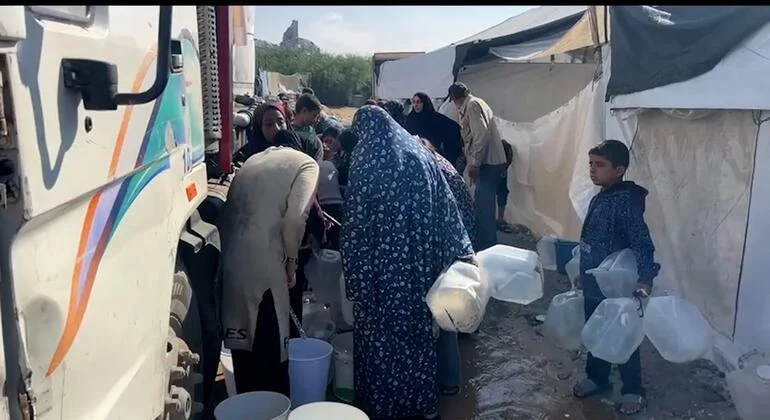
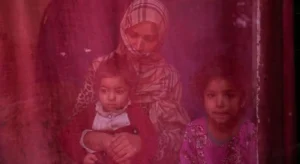
At dawn within the confines of the Flowers of Palestine displacement camp in western Gaza City, the day begins not with the promise of routine or comfort, but with an arduous trek to the nearest water tankers. Women and their children trudge through the dust and mud, hauling heavy plastic buckets and worn containers back to their makeshift canvas and timber dwellings. This repetitive, exhausting chore is merely the opening act of a relentless daily struggle for survival that has come to define the existence of tens of thousands of women across the besieged Gaza Strip.
The outbreak of the devastating conflict fundamentally transformed the socio-economic and familial landscape of Gaza, precipitating a demographic and humanitarian crisis characterized by mass widowhood and displaced domestic structures. According to comprehensive data compiled by UN Women, more than 86,000 households in the enclave are now headed exclusively by women. This staggering figure means that nearly one in four households is now managed without a male breadwinner, a dramatic surge from the pre-war baseline of one in nine. Highlighted during the solemn observance of the International Day for the Elimination of Violence against Women, these figures lay bare the profound reality that the war’s toll on the female population extends far beyond immediate casualties, manifesting as a long-term structural burden of unprecedented proportions.
From Academic Aspirations to Survival Entrepreneurship
Before the conflict dismantled her life, Kholoud Farajallah was a scholar on the precipice of achieving a significant academic milestone. Early in the war, however, she lost her husband, plunging her into immediate destitution and profound grief. With zero financial inflow and a household to sustain, Farajallah was forced to make a heart-wrenching sacrifice: she abandoned her master’s degree in mathematics and teaching methods, setting aside years of intellectual ambition to confront the raw demands of physical survival.
Faced with the bleak reality of displacement, Farajallah initiated a modest home-based micro-enterprise. She began baking simple pastries within her cramped temporary shelter, dispatching her young son to hawk them through the labyrinthine pathways of neighboring displacement camps. Over time, through sheer grit and resourcefulness, she managed to construct a small, rudimentary shop out of salvaged timber and plastic sheeting near the Flowers of Palestine camp. The meager revenues generated from this makeshift storefront cover the basic sustenance needs of her three children.
Yet, Farajallah’s responsibilities do not conclude at the storefront counter. She returns to her canvas dwelling to manage a complex household, acting as provider, nurturer, and educator simultaneously. "We carry out our duties twice over – our own and the man’s as well – but where are our rights?" Farajallah asked, her voice reflecting the deep exhaustion shared by countless mothers across the enclave. "As a woman, I have received none of my rights at all. I gave up my education, I gave up my life, and I devote everything – all my time – to raising my children. But until when?"
A Demographic Shift: One Household in Four
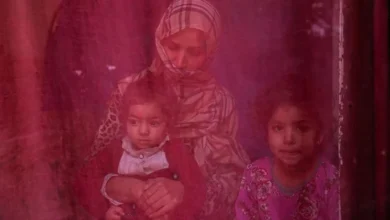
A short distance away, within another weather-beaten tent at the camp, Umm Mohammed Abu Rayala navigates a similarly daunting daily routine. She is solely responsible for raising, feeding, and educating her seven children amid an environment devoid of stability, security, or adequate infrastructure. The loss of her husband stripped away the traditional support systems that once cushioned family life in Gaza, leaving her to shoulder responsibilities she never anticipated carrying.
The macro-level statistics surrounding these female-headed households paint a grim picture of systemic vulnerability. UN Women reports that 68 per cent of these families currently lack access to adequate shelter, leaving them dangerously exposed to the elements. Furthermore, 67 per cent urgently require immediate cash assistance simply to navigate each successive week. Compounding these hardships is the relentless cycle of forced displacement; on average, these vulnerable families have been forced to pack up and flee their living spaces eight times since October 2023, disrupting children’s education, medical access, and psychological well-being.
The Genesis of the Flowers of Palestine Camp
In response to the escalating humanitarian vacuum, grassroots initiatives have attempted to address the acute vulnerabilities facing widows and orphans. The Flowers of Palestine camp represents one such localized intervention. Nidaa Matar, an organizer behind the initiative, explained that the project began as an organic response to the overwhelming influx of widowed women and fatherless children generated by the hostilities.
"We reached out to different organizations and associations to make this idea a reality. Thank God, we managed to build this camp, which shelters 82 widowed families," Matar stated. "We were able to give a home to families who didn’t know where to live, because they had no breadwinner and no income." Despite such localized sanctuaries, organizers acknowledge that these efforts are merely a drop in the ocean compared to the vast, systemic requirements of tens of thousands of displaced widows across the territory.
Chronology of the Crisis and Escalating Vulnerabilities
The systematic dismantling of Gaza’s civil infrastructure since October 2023 has triggered a compounding sequence of crises for women and children.
- October 2023: The outbreak of hostilities initiates massive population displacement, resulting in immediate widespread casualties among male breadwinners and instantly shifting household leadership demographics.
- Late 2023 to 2024: As the conflict grinds on, traditional support networks collapse. The rate of female-headed households climbs to nearly 25 per cent of all families in Gaza.
- Mid to Late 2024: Economic collapse, hyperinflation, and a scarcity of basic goods force thousands of women—many of whom were previously professionals, students, or homemakers—into informal survival economies, selling homemade goods or scavenging for resources.
- Late 2024 Onward: The onset of winter conditions introduces severe meteorological hazards, threatening flimsy tent structures and compounding health risks for vulnerable children and mothers.
Winter Rains and Impending Humanitarian Hazards
As seasonal weather shifts, international humanitarian agencies have issued urgent warnings regarding the impending dangers of winter rains and localized flooding across Gaza’s makeshift camps. UN Women has emphasized that households headed by women face disproportionately higher risks during extreme weather events. Because their shelters are constructed from fragile materials such as plastic sheeting, timber, and canvas, they offer minimal protection against freezing temperatures, driving rain, and mudslides.
Compounding these environmental hazards is the staggering human toll documented by international observers. According to UN Women data, nearly 50,000 women and girls in Gaza have been either killed or seriously injured since the conflict began. More than 38,000 women have lost their lives, while approximately 11,700 survivors have been left with permanent, life-altering disabilities. These casualties represent not only a catastrophic loss of life but also an acceleration of the widowhood and orphan crisis, as surviving family members are left to navigate trauma without adequate medical or psychological support.
Broader Socio-Economic Implications and Official Responses
The long-term implications of this widespread socio-economic reconfiguration extend far beyond the immediate humanitarian emergency. Sociologists and gender experts note that the sudden, forced transition of hundreds of thousands of women into sole household heads risks institutionalizing high levels of chronic poverty, multi-generational educational deficits, and severe psychosocial trauma.
International bodies, including various UN agencies and human rights organizations, have repeatedly called for targeted interventions. These recommendations include the unhindered delivery of gender-responsive humanitarian aid, priority allocation of cash assistance programs directly to women, the establishment of safe and weather-resistant housing infrastructure, and the provision of specialized mental health services to address pervasive post-traumatic stress disorder among widows and children.
However, severe access restrictions, ongoing military operations, and the generalized collapse of the local economy continue to severely hamper large-scale humanitarian relief efforts. Consequently, women like Kholoud Farajallah and Umm Mohammed Abu Rayala remain trapped in a daily cycle of endurance, juggling the relentless demands of physical survival, child-rearing, and psychological resilience.
As the international community marks observances dedicated to women’s rights and the elimination of gender-based violence, the daily reality for the widows of Gaza remains defined by profound isolation and unfulfilled promises of protection. Amid the canvas tents, the unending water queues, and the daily scramble for basic sustenance, these women continue to carry the weight of an entire society on their shoulders, even as they pose the fundamental question of their future: how much longer can they sustain this double burden without institutional recognition, basic rights, or an end to the conflict?