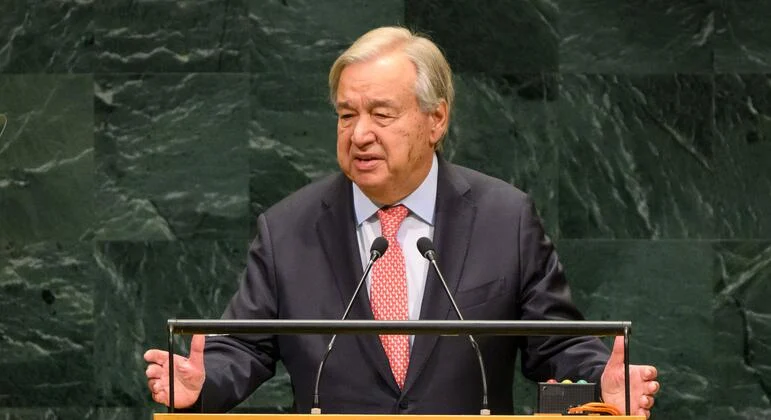
With approximately 100 days remaining in his tenure, United Nations Secretary-General António Guterres delivered a comprehensive and sobering address addressing the severe geopolitical fractures characterizing the modern era. Speaking before the international body, Guterres framed the world’s most critical crises—ranging from persistent armed conflicts to runaway climate change and the unregulated expansion of artificial intelligence—not as isolated events, but as systemic manifestations of a deeper global contest over the exercise and distribution of power.
The Secretary-General warned that international norms have eroded significantly over the past decade. He pointed to civilian populations increasingly targeted in active combat zones, a rising toll of slain humanitarian workers, the sidelining of international law, and a pervasive decline in trust between sovereign states. Asserting that the nature of global power is undergoing a fundamental transformation, Guterres challenged traditional paradigms of dominance. "The greatest power is not the power to dominate," he declared. "It is the power to build a future that works for everyone."
The comprehensive speech highlighted four primary stress tests facing the international community: escalating geopolitical conflicts, widening economic and social inequalities, the escalating climate crisis, and the rapid, unchecked evolution of artificial intelligence. By contextualizing these issues within a unified framework, Guterres sought to sound the alarm against a descent into permanent fragmentation and rival economic blocs, while urging global leaders to recommit to multilateralism and shared rules.
Background Context: A Decade of Eroding Multilateralism
The backdrop to Guterres’s address is a turbulent decade marked by the systematic weakening of the post-World War II international order. Established in the wake of global devastation in 1945, the United Nations was designed to bind nations together through collective security, human rights frameworks, and economic cooperation. However, recent years have witnessed a resurgence of aggressive nationalism, great power competition, and a paralysis within key multilateral institutions, most notably the UN Security Council.
As the UN approaches its 80th anniversary, the organization faces unprecedented strain. Veto power dynamics among permanent Security Council members have repeatedly stalled decisive interventions in major conflicts. Simultaneously, the proliferation of proxy wars, transnational economic shocks, and the weaponization of trade and technology have exacerbated global instability. Guterres’s final months in office have thus become a platform for urgent institutional introspection, calling attention to structural deficits that prevent the UN from meeting contemporary challenges.
Global Conflicts and the Breakdown of Collective Security
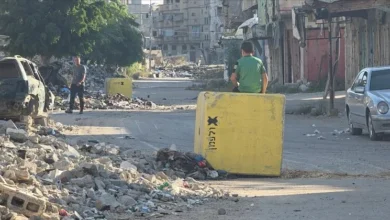
Turning to active theaters of war, Guterres offered a bleak assessment of international peace and security efforts. Pointing to cascading crises in the Middle East, Ukraine, Sudan, and Myanmar, he argued that contemporary ceasefires frequently function as mere reprieves—or "lesser fires"—that fail to stop civilian suffering or address root causes.
In the Middle East, Guterres renewed his demands for strict compliance with International Court of Justice (ICJ) directives regarding the situation in Gaza. He cautioned that relentless settlement expansion in the Israeli-occupied West Bank poses an existential threat to the viability of a two-State solution. Regarding Eastern Europe, he condemned Russia’s full-scale invasion of Ukraine as a blatant violation of the foundational principles enshrined in the UN Charter.
The Secretary-General also reiterated his long-standing campaign for comprehensive Security Council reform. Criticizing the current composition of the 15-member body as an anachronism rooted in a bygone geopolitical era, he labeled the ongoing absence of permanent African representation as both "unjust and indefensible." Analysts note that without structural reform to reflect modern geopolitical realities, the legitimacy of the Security Council will continue to deteriorate.
Economic Disparities and the Crisis of Multilateral Finance
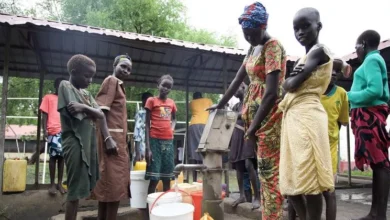
Addressing the staggering gulf between record global wealth and the billions of people deprived of basic necessities such as adequate nutrition, clean water, healthcare, and education, Guterres emphasized that inequality is fundamentally a question of power over opportunity and resources.
He reiterated structural criticisms of the international financial architecture, arguing that the current global monetary system disproportionately penalizes developing nations. These countries frequently find themselves crushed by unsustainable debt burdens while simultaneously bearing the brunt of climate disasters they did little to cause. To counter this systemic imbalance, Guterres called for accelerated debt relief mechanisms, bolder capitalization and lending practices by multilateral development banks, and fairer distribution of Special Drawing Rights managed by the International Monetary Fund (IMF).
Amid these economic challenges, the UN chief highlighted a rare institutional success: the achievement of full gender parity across the organization’s senior leadership, headquarters staff, and professional roles for the first time in its history. "Equality is not a dream; it is a decision," Guterres stated, utilizing the milestone to demonstrate that entrenched power structures can indeed be dismantled through deliberate political will.
Twin Challenges: The Climate Emergency and Artificial Intelligence
In the latter portion of his address, Guterres focused on two defining cross-border challenges of the 21st century: the climate crisis and the technological revolution driven by artificial intelligence.
Describing climate change as "the most profound intergenerational power imbalance," the Secretary-General warned of a near-certain breach of the critical 1.5-degree Celsius warming threshold. He demanded accountability from major polluters, insisting that fossil fuel companies "pay" for the damage they cause, particularly in light of the massive profits reaped by oil majors since the onset of the war in Ukraine. Meanwhile, he noted, global adaptation finance for developing nations remains a fraction of those corporate windfalls.
On the technological front, Guterres raised urgent concerns regarding the concentration of power within digital infrastructure—specifically data repositories, computing capacity, and algorithmic governance. He cautioned that artificial intelligence is advancing at a pace that far outstrips humanity’s regulatory capacity.
"The danger is not technology," Guterres cautioned. "The danger is technology without accountability."
To mitigate these risks, he called for the establishment of a robust multilateral AI risk management framework equipped with independent oversight. Expanding on this point, he issued specific warnings regarding autonomous military applications and child safety: "Life-and-death decisions must never be surrendered to machines. Killer robots must have no place in our future," he stated, adding that children must never serve as test subjects for unregulated digital systems.
Implications and the Future of the United Nations
As Guterres prepares to conclude his term, his final strategic interventions underscore a persistent philosophical defense of multilateralism. By rejecting the premise that human dignity, rights, security, and development can be decoupled from one another, he reaffirmed the inseparable pillars of the UN Charter.
The Secretary-General’s address serves as both a warning against the deepening fractures of international relations and a rallying cry for collective action. Observers note that while the UN lacks enforcement mechanisms independent of its member states, the moral and strategic clarity articulated by the leadership remains vital for framing global policy debates on debt, climate, and technology.
Guterres concluded his address with a resolute defense of the organization’s enduring mission, recalling the historical defiance of the nations that founded it in the ash of World War II. "The world does not need a weaker United Nations," he affirmed. "It needs a UN strong enough to face the world as it is and determined enough to build the world as it should be."