A Historic Partnership in Jeopardy
The United States was a foundational architect of the World Health Organization (WHO) when it was established in 1948 in the wake of the Second World War. As a charter member, the U.S. played a critical role in drafting the organization’s constitution and defining its mandate: to achieve the highest possible level of health for all people. For over 70 years, the relationship between Washington and Geneva has been defined by shared objectives in the eradication of communicable diseases and the establishment of global sanitary regulations.
The collaboration has yielded monumental achievements. The most celebrated of these was the successful eradication of smallpox, declared in 1980—a feat made possible only through the coordinated efforts of WHO member states, with the U.S. providing significant financial, logistical, and scientific support. Similarly, the ongoing effort to eradicate polio has seen cases drop by more than 99% since 1988, a campaign heavily bolstered by U.S. funding and expertise through the Centers for Disease Control and Prevention (CDC).
Chronology of the Withdrawal Process
The formal notification of withdrawal is not an instantaneous severance of ties but rather the initiation of a complex legal and administrative process. Under the terms of the WHO constitution, a member state wishing to withdraw must provide one year’s notice. During this twelve-month period, the nation is expected to fulfill its outstanding financial obligations to the organization.
The timeline of the current diplomatic friction began to accelerate following the onset of the global COVID-19 pandemic. In the months preceding the formal announcement of intent to withdraw, the U.S. government voiced intense criticism regarding the WHO’s early handling of the outbreak, specifically questioning the transparency of data provided by member nations and the pace of the organization’s emergency declarations. Despite these criticisms, WHO officials have maintained that their actions were consistent with the International Health Regulations (IHR) and the data available at the time.
Financial and Structural Implications
The departure of the United States carries profound financial implications for the WHO. As the organization’s largest single donor, the U.S. provides both assessed contributions—the mandatory dues based on wealth and population—and voluntary contributions, which are earmarked for specific health programs. These funds are vital for the WHO’s operations in conflict zones, fragile states, and regions suffering from systemic health failures.
Beyond the budgetary impact, there is the issue of scientific and technical integration. The WHO relies heavily on "WHO Collaborating Centres," many of which are based at prestigious American universities and federal health institutions. These centers provide the diagnostic expertise and laboratory capacity necessary to monitor emerging pathogens. A withdrawal risks severing these formal conduits of information, potentially isolating the U.S. from the global intelligence network that alerts nations to new disease threats before they become pandemics.
Global Reactions and Diplomatic Concerns
The international community has reacted with a mix of concern and calls for reconsideration. Public health experts and heads of state from various member nations have emphasized that global health is an inherently transnational issue. The movement of people, goods, and pathogens respects no borders, meaning that the health security of the United States is inextricably linked to the health status of the rest of the world.
Advocates for the WHO point to the organization’s recent reform efforts as evidence of its adaptability. Over the past seven years, the WHO has undergone significant structural overhauls aimed at increasing transparency, improving cost-effectiveness, and decentralizing authority to regional offices. These reforms were designed to ensure that the WHO remains a lean and impactful organization capable of navigating the complexities of 21st-century healthcare challenges, such as the rise of antimicrobial resistance and the impact of climate change on vector-borne diseases.
The Role of International Health Regulations
At the heart of the current crisis is the function of the International Health Regulations (IHR). The IHR is a legally binding instrument of international law that aims to prevent and respond to the international spread of disease. When a country withdraws from the WHO, it creates a vacuum in the enforcement and adherence to these regulations.
Without the oversight of the WHO, the global community loses a critical mechanism for peer-reviewed health monitoring. Historically, when countries report outbreaks to the WHO, the organization provides validation and coordination, preventing unnecessary economic disruptions and travel bans. A fractured system, where major powers operate outside of the multilateral framework, threatens to return the world to a state of isolationism that existed before the mid-20th century, where countries often hid outbreaks to protect domestic trade interests.
Impact on Vulnerable Populations
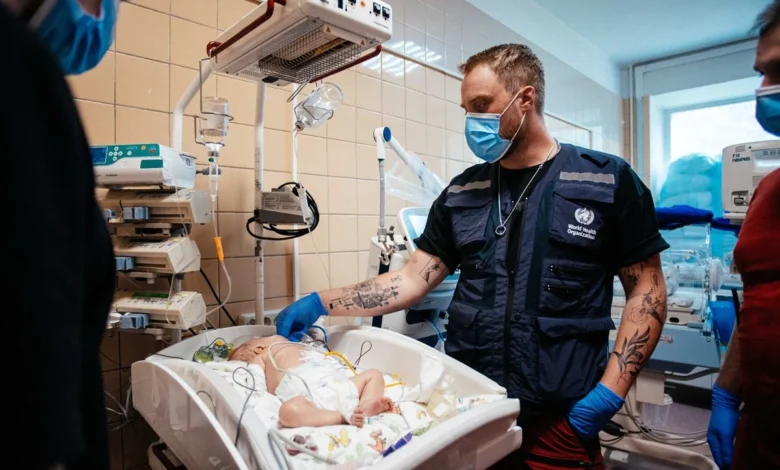
The most immediate and severe impact of the withdrawal will likely be felt in the world’s most vulnerable regions. WHO programs currently provide essential vaccinations for millions of children, coordinate disaster relief in war-torn regions like Syria and Ukraine, and support the strengthening of primary healthcare systems in the Global South.
In regions where the U.S. and the WHO have jointly operated, such as the polio-endemic zones of the Middle East and Africa, the loss of U.S. funding could lead to a resurgence of diseases that were previously on the path to elimination. The logistical network, which relies on the U.S. as a primary financier for cold-chain storage for vaccines, may face significant disruption, potentially stalling years of progress in infant mortality reduction.
Moving Toward Constructive Dialogue
The WHO leadership has expressed a clear desire for the United States to reconsider its position. In official statements, the organization has characterized the partnership as a "constructive dialogue" that must be maintained for the collective well-being of the human population. The focus in Geneva remains on the "health for all" mandate, which proponents argue cannot be achieved if the world’s most significant scientific and economic power is absent from the table.
The path forward remains uncertain. Diplomacy often operates on the assumption that institutional partnerships are more durable than political cycles. Whether the current administration or future U.S. governments choose to re-engage depends on a broader assessment of the value of multilateralism versus bilateral health initiatives.
Analytical Perspective on Future Risks
A fact-based analysis of the situation suggests that the U.S. withdrawal may lead to a fragmentation of global health leadership. Other nations may be forced to increase their financial contributions to cover the shortfall, or the WHO may be forced to scale back its ambitious goals. Furthermore, the absence of U.S. participation may reduce the leverage the organization has in demanding transparency from other member states, as the collective weight of the assembly is diminished.
The coming months will be a period of intense diplomatic activity. The WHO will likely continue to lobby for the benefits of membership, emphasizing that American institutions have historically gained as much from the WHO as they have contributed. By participating in the organization, the U.S. gains access to global data sets, influence over international health standards, and a seat at the table where the rules of global health security are written.
As the international community watches these developments, the consensus among global health scholars is that the withdrawal represents a significant setback for the architecture of collective security. Whether this is a temporary realignment or a fundamental change in the world order remains to be seen. What is clear is that the health of the global population, now more interconnected than ever, relies on the ability of nations to set aside political grievances in favor of the shared goal of preventing the next pandemic. The WHO remains committed to engaging in a constructive dialogue, hoping that the long history of U.S.-WHO collaboration will eventually prevail over the current trend toward diplomatic disengagement. The stakes, according to public health experts, are nothing less than the future of global health security itself.
Related posts: