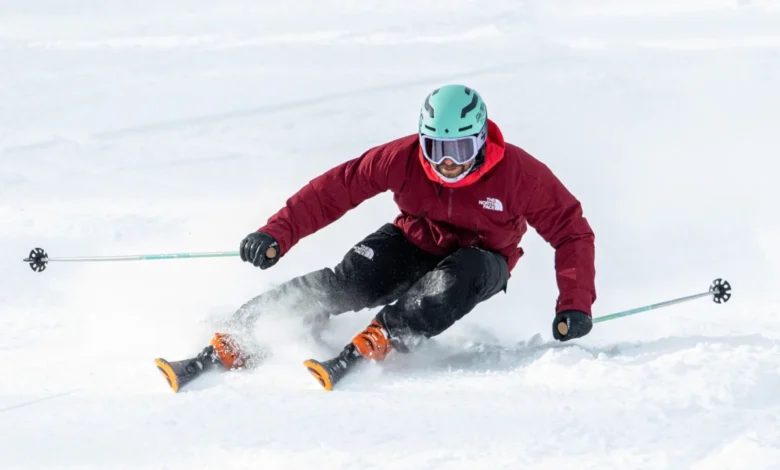
For the millions of skiers and snowboarders who rely on prescription eyewear, the mountain experience has historically been defined by a frustrating compromise: endure the physical discomfort of frames pressed against the temples or accept the distorted, limited vision of wearing contacts in sub-zero, high-altitude environments. However, the advancement of Over-the-Glasses (OTG) goggle technology has reached a turning point, offering frames specifically engineered to accommodate daily prescription eyewear without sacrificing the integrity of the seal or the clarity of the optic.
The evolution of snow goggles mirrors the broader trend in outdoor gear toward specialized, user-centric design. Historically, skiers wearing glasses faced significant safety hazards, including "goggle fog"—a byproduct of trapped heat between the face, the glasses, and the lens—and the physical pain caused by traditional goggle frames exerting pressure on the bridge of the nose and the temples. According to industry data from the National Ski Areas Association (NSAA), as the average age of the skiing population trends upward, the demand for equipment that addresses vision correction and comfort has surged. Manufacturers have responded by integrating deeper frame profiles, specialized venting channels, and hypoallergenic materials designed specifically for the intersection of eyewear and technical gear.
A Chronology of Optical Innovation in Winter Sports
The integration of prescription glasses into high-performance ski gear is a relatively recent development in the grand timeline of alpine sports. In the 1980s and 1990s, the primary solution for vision-impaired skiers was the use of bulky, often ill-fitting "goggle inserts" or simply suffering through the discomfort of wearing standard glasses under goggles not designed for them.
By the early 2010s, manufacturers began to recognize that the "one-size-fits-all" approach to goggle geometry was failing a significant market segment. Brands began utilizing 3D modeling to carve out specific notches in the goggle frame’s foam, allowing the arms of a pair of prescription glasses to slide in without catching or bending. This decade saw the rise of anti-fog treatments that were not just coatings, but structural elements of the lens construction. Today, in 2026, the industry has shifted toward high-contrast lens technology—such as Dragon’s Lumalens or Bollé’s photochromic offerings—ensuring that those who wear glasses receive the same visual sharpness as those with 20/20 vision.
Evaluating Performance: The 2026 Testing Standards
To determine the most effective OTG options, gear testers from professional alpine publications conducted extensive field evaluations in late 2026. The testing methodology focused on four key performance indicators (KPIs): optical clarity, fog mitigation (ventilation efficacy), structural comfort (pressure distribution), and the ease of integration with helmet systems.
Dragon DX3 L: The Entry-Point for Accessibility
The Dragon DX3 L has established itself as the benchmark for budget-conscious skiers. By utilizing a simplified frame geometry, Dragon provides an accessible entry point to the OTG market. The inclusion of Polartec microfleece face foam is a critical differentiator; it minimizes the friction typically associated with taking goggles on and off over glasses. From an analytical perspective, the DX3 L performs exceptionally well in temperate conditions, though it lacks the advanced multi-lens magnetic swapping systems found in premium models. Its value proposition is high, particularly for the casual skier who spends perhaps 10 to 15 days on the mountain per season.
ROKA Niseko: Engineering for the Wide-Face Demographic
The ROKA Niseko represents the premium tier of OTG engineering. The primary challenge for manufacturers designing for large-frame glasses is maintaining a secure seal around the periphery of the face. The Niseko addresses this through a robust, oversized chassis that effectively "floats" the glasses within the goggle cavity. Its MagStorm magnetic lens system is not merely a convenience feature; it is a tactical advantage for users who need to swap lenses rapidly as light levels shift during the day. Testing data suggests that for those with larger facial structures, the Niseko provides a field of view that is statistically wider than most standard-fit goggles, significantly reducing the "tunnel vision" effect that often plagues OTG wearers.
Giro Revolt Pro: The Ergonomic Gold Standard
Giro has long focused on the synergy between helmets and goggles, and the Revolt Pro is the culmination of that research. The "Revolt" series features triple-layer face foam that is specifically contoured to prevent the "pinch points" commonly felt behind the ears when wearing glasses. Industry feedback indicates that the Revolt Pro’s internal volume is among the largest on the market, which is the most critical factor in preventing fogging. By increasing the internal air capacity, the goggle allows for greater air circulation, which helps dissipate the moisture vapor rising from the skin through the glasses. While the lens-swap mechanism requires a learning curve, the comfort profile is arguably the highest among current 2026 offerings.
Bollé Cerro: The Photochromic Advantage
The Bollé Cerro introduces a different solution: rather than swapping lenses, the user relies on a single, highly adaptable photochromic lens. This lens chemistry reacts to UV radiation, darkening in bright sunlight and clearing in low-light, flat-day conditions. For the glasses-wearer, this is a significant advantage, as it removes the need to fumble with delicate lenses while keeping their prescription glasses secured under the goggle. The Cerro’s Flow Tech venting system is engineered to work in tandem with the photochromic layer, ensuring that the visual experience remains consistent even when moving rapidly between shaded tree runs and exposed, high-glare ridgelines.
The Broader Impact on Mountain Safety and Accessibility
The implications of these advancements are twofold: safety and longevity. When a skier’s vision is obscured by fog—a common occurrence when glasses trap heat—their reaction time to terrain changes, icy patches, or other skiers is significantly delayed. By perfecting the OTG interface, manufacturers are effectively lowering the barrier to entry for the sport and increasing the safety margins for those who require vision correction.
Industry analysts observe that as gear becomes more specialized, the cost of entry remains a point of contention. While premium models like the ROKA Niseko provide superior optics and magnetic utility, they represent a significant investment. However, the market currently offers a tiered approach, allowing skiers to choose between the high-utility photochromic tech of the Bollé Cerro or the raw, reliable comfort of the Giro Revolt Pro.
Strategic Recommendations for Consumers
When selecting an OTG goggle, consumers should consider their specific glasses frame dimensions. A standard, thin-wire frame will fit in almost all of the aforementioned goggles, but larger, fashion-forward frames may require the specific high-volume cavity of the ROKA Niseko. Furthermore, it is highly recommended that skiers test their chosen goggles in conjunction with their specific helmet, as the "goggle gap" (the space between the top of the goggle and the brim of the helmet) can influence ventilation and, consequently, the tendency for glasses to fog.
As of the 2026 season, the technology has reached a point where "OTG" is no longer a secondary category of gear, but a standard feature of high-performance optics. Whether one is a recreational skier or a frequent mountain-goer, the current generation of goggles ensures that the transition from a chairlift to a steep descent no longer requires a choice between visual clarity and physical comfort. By prioritizing frame volume, ventilation efficiency, and specialized foam density, these four models—Dragon DX3 L, ROKA Niseko, Giro Revolt Pro, and Bollé Cerro—provide a comprehensive overview of how modern engineering has successfully solved one of the most enduring problems in winter sports.