Pedro Pascal Initiated Contact for Bad Bunny’s Super Bowl Halftime Show Appearance, Driven by Admiration and a Volunteer Spirit

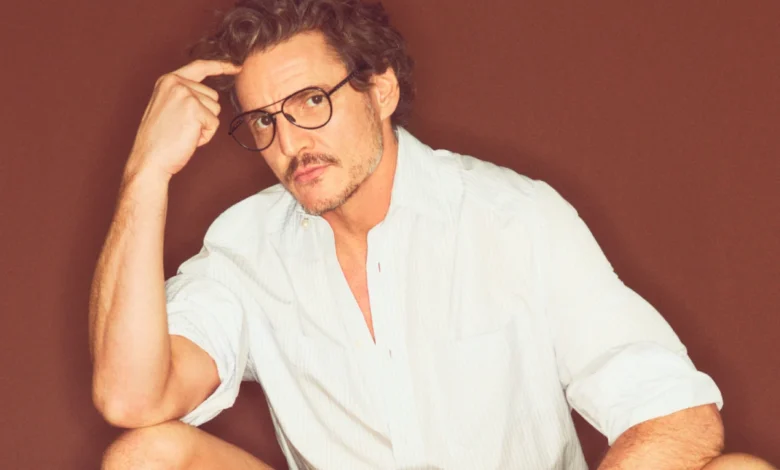
The dynamic energy of Super Bowl LVIII’s halftime show, headlined by global music sensation Bad Bunny, was amplified by an unexpected, yet enthusiastically sought-after, participation from acclaimed actor Pedro Pascal. Far from passively awaiting an invitation, the star of "The Last of Us" and "The Mandalorian" proactively reached out to Bad Bunny’s team, expressing a keen desire to contribute in any capacity, even as a volunteer. This revelation, shared in a candid interview with Fantastic Man magazine, underscores Pascal’s genuine admiration for the Puerto Rican artist and his impact on contemporary culture.
Pascal’s proactive approach stemmed from a deep respect for Bad Bunny’s ability to fuse cultural representation with grand-scale celebration. "I wanted to participate in any way – literally a volunteer position, like serving coffee if needed – and I put the feelers out through people I work with," Pascal disclosed in the interview. He elaborated on his admiration for Bad Bunny, whose real name is Benito Antonio Martínez Ocasio, stating, "When it comes to representation synchronized with celebration, there’s no one better than Benito at the moment, and that fills me with inspiration outside of just being super into his music." This sentiment highlights Pascal’s recognition of Bad Bunny as a significant cultural figure, capable of creating moments that resonate deeply with diverse audiences.

The initial outreach, however, did not yield an immediate response. Pascal recounted a period of waiting after wrapping up his role in Tony Gilroy’s upcoming film, "Behemoth." In a moment of playful exasperation, he sent an email to a contact containing a selfie with his tongue sticking out, accompanied by the caption, "It’s really me." This lighthearted gesture proved to be the catalyst. Within a mere 25 minutes, his efforts were rewarded with a callback and an invitation to appear at the Super Bowl. "They called me back and they were like, ‘We want you to come to the show,’" Pascal recalled, marking a swift turn of events that led to his memorable cameo.
A Surprise Cameo and the "Casita" Revelation
The Super Bowl LVIII halftime show, held on February 11, 2024, at Allegiant Stadium in Las Vegas, Nevada, was a highly anticipated event. Bad Bunny’s performance was a vibrant showcase of his musical prowess and cultural influence, featuring a medley of his hits. The spectacle was further elevated by guest appearances, adding layers of star power and cultural significance. Pascal’s presence, though initially shrouded in mystery for the audience, was a carefully orchestrated element of the performance.
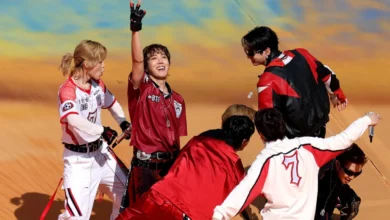
Pascal’s only instruction for his appearance was to wear beige, a seemingly simple directive that belied the unfolding narrative of his involvement. "We’re up in the stands watching the game and somebody pulls me from my seat and takes me backstage," Pascal described. The backstage area was a constellation of stars, including Cardi B, Young Miko, Karol G, and Jessica Alba. Following a wardrobe check, the directive was clear: "OK, so the vibe is: you’re dancing." It was at this critical juncture, moments before taking the stage, that Pascal had a sudden realization. "I started to realize right before they started, and I was like, ‘It’s the Casita. I’m such a fucking idiot. Oh my god, I’m going to be in the Casita,’ as I was being marched out into the field," he confessed. This "aha!" moment explains the "deer in headlights" expression that viewers might have observed, as he connected his presence to the iconic "Casita" imagery, likely referencing a segment within Bad Bunny’s performance that evoked a sense of home and community. The "Casita," often symbolizing warmth, family, and cultural roots, became a poignant backdrop for his unexpected dance.

Navigating Fame and Maturity in the Spotlight
Pascal’s interview also delved into his unique experience of achieving widespread fame later in life. Having celebrated his 51st birthday on April 2, he reflected on the advantages of maturing into the spotlight rather than experiencing it at a younger age. "I think there are two ways of looking at it," Pascal mused. "There’s a universal feeling of imposter syndrome that we all can experience when we’re being unkind to ourselves, especially if it’s somehow uncomfortable to get what you want. Then the kinder side of it is that, as old as I feel, and as silly as some of it can be – because of ‘What is a 50-year-old man doing dancing in La Casita?’ – I’m incredibly grateful for having been a fully developed character before experiencing any kind of large-scale exposure. I’m kind of out of the oven, already baked."
This perspective is rooted in his extensive career prior to his major breakthrough roles. Pascal recalled his early years in New York City, where he juggled various survival jobs, including waitering and bartending, to make ends meet. "It was paycheck to paycheck, but the theatre work became somewhat consistent for a few years," he shared. "And then you always felt like it was this enormous score if you got an episode of ‘Law & Order’ or something. I was scraping by. I got bailed out a lot over the years by my sister and friends." His first significant role that garnered widespread recognition was Oberyn Martell in HBO’s "Game of Thrones," a part he secured at the age of 38. This foundational period, marked by financial struggles and consistent artistic pursuit, appears to have provided him with a grounded perspective that informs his current success.
The Signature Mustache and Evolving Identity
A distinct feature often associated with Pascal is his signature mustache. He revealed that this facial hair choice is not merely a stylistic preference but a response to his own perceived limitations. "I’d never had the courage to sport facial hair of any kind because I felt like I grew such weak facial hair. To this day, I can’t grow a proper beard," he admitted. His foray into styled facial hair began with the role of Oberyn Martell, where he received assistance with grooming. Subsequently, for his role in "Narcos," a mustache felt appropriate for the period. "So now I sort of cling a little to the vanity of having some definition in the face with my very weak, patchy facial hair. But if the role calls for it, it can all disappear," he explained, indicating a willingness to adapt his appearance for his craft.

Advocacy and the Imperative of Compassion
Beyond his acting career and public persona, Pedro Pascal has become increasingly vocal about his progressive political views. He articulated the reasons behind his outspokenness, emphasizing the moral imperative to speak out. "I think staying quiet is the harder path," the actor asserted. "I would have too hard of a time living with myself. It’s the way I was raised. Decency and compassion. The idea of the vulnerable being scapegoated and terrorized in this way is unspeakably painful." This stance reflects a deep-seated commitment to social justice and a belief that silence in the face of suffering is not an option. His advocacy aligns with a broader cultural conversation about the role of public figures in addressing societal issues, suggesting that for Pascal, influence comes with a responsibility to champion causes he believes in.
The interview with Pedro Pascal in Fantastic Man magazine offers a multifaceted portrait of an actor who, while experiencing unprecedented levels of fame, remains grounded in his artistic journey, personal values, and a genuine enthusiasm for cultural moments. His proactive engagement with Bad Bunny’s Super Bowl performance and his thoughtful reflections on fame, identity, and social responsibility underscore a complex and compelling public figure. The full interview is available on fantasticman.com.