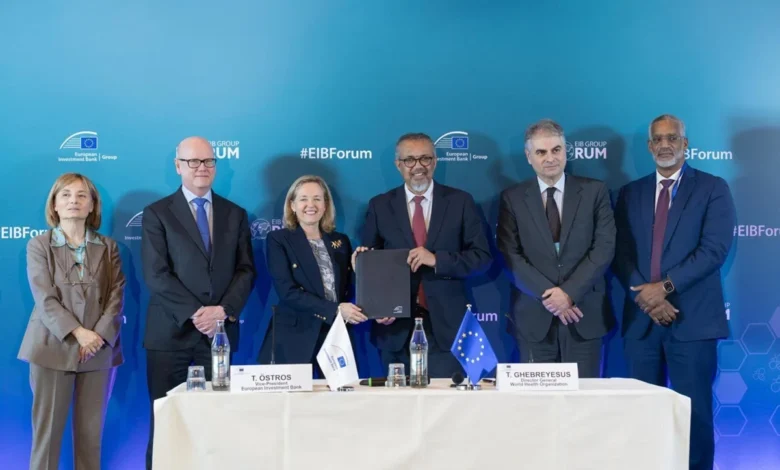
On 6 March 2025, at the prestigious EIB Group Forum held in Luxembourg, a pivotal agreement was solidified between two of the world’s most influential international institutions. Dr. Tedros Adhanom Ghebreyesus, Director-General of the World Health Organization (WHO), and Thomas Östros, Vice-President of the European Investment Bank (EIB), formally signed a grant agreement worth €10 million. This financial injection is specifically earmarked for the stabilization and modernization of Lebanon’s fragile public health infrastructure, an initiative that comes at a time of profound economic and logistical distress for the Mediterranean nation.
The Strategic Focus of the Initiative
The core objective of this €10 million grant is dual-pronged: the physical reconstruction of the Central Public Health Laboratory (CPHL) and the immediate procurement of essential medications for vulnerable populations. The CPHL serves as the backbone of Lebanon’s epidemiological surveillance, diagnostic capabilities, and national quality control for pharmaceuticals and food. Its restoration is considered a prerequisite for any long-term recovery of the Lebanese healthcare system, which has been severely degraded by years of economic stagnation and infrastructure decay.
Beyond infrastructure, the partnership addresses an urgent humanitarian crisis. The initiative is set to provide critical medical support to over 50,000 individuals suffering from non-communicable diseases (NCDs), including diabetes, cardiovascular diseases, and various forms of cancer. In a country where hyperinflation has rendered life-saving medication inaccessible to a significant portion of the population, this targeted intervention represents a lifeline for patients who have faced interrupted treatment cycles and severe medicine shortages.
A Chronology of Crisis and Response
Lebanon’s healthcare trajectory has been marked by a series of cascading crises that necessitated this international intervention. The timeline of this collapse provides context for the urgency displayed by the WHO and EIB Global:
- 2019–2020: The onset of a severe financial crisis in Lebanon leads to a rapid devaluation of the national currency, making the import of essential medicines prohibitively expensive.
- August 2020: The Beirut Port explosion causes catastrophic damage to medical facilities and warehouses, further straining the already weakened public health network.
- 2021–2023: The collapse of the national power grid forces hospitals to rely on expensive, unreliable diesel generators, leading to the frequent suspension of diagnostic and surgical services.
- March 2024: Negotiations between the WHO and EIB Global intensify as epidemiological data suggests a spike in mortality rates related to preventable NCD complications.
- 6 March 2025: The signing of the €10 million grant agreement at the EIB Group Forum, marking the start of the implementation phase for laboratory restoration and pharmaceutical procurement.
Supporting Data: The Scale of Need
The necessity for this funding is underpinned by harrowing statistics regarding the state of health in Lebanon. According to World Bank and WHO reporting, the healthcare sector in Lebanon has seen a flight of medical professionals—an estimated 40% of physicians and 30% of nurses have emigrated since 2019.
Furthermore, the cost of NCD treatment has become a barrier for over 60% of the population, according to recent household surveys. Diabetes, which affects roughly 15% of the adult population in Lebanon, requires consistent insulin access and blood glucose monitoring. When these supplies are disrupted, the risk of acute complications such as diabetic ketoacidosis or long-term systemic organ failure increases exponentially. By focusing the grant on these 50,000 patients, the WHO and EIB aim to stabilize the most critical cases, thereby preventing a secondary surge in emergency hospital admissions that the current infrastructure would be unable to support.
Official Perspectives and Institutional Alignment
While the primary announcement was issued via the EIB press office, the significance of the partnership reflects a broader strategic alignment between European development finance and global health security.
EIB Vice-President Thomas Östros emphasized the necessity of "resilience-focused financing." In the context of the EIB’s mandate, such grants are not merely charitable donations but investments in regional stability. By securing the CPHL, the EIB is essentially mitigating the risk of future infectious disease outbreaks, which have the potential to spill over borders and destabilize regional trade and travel.
Dr. Tedros Adhanom Ghebreyesus has frequently highlighted that the WHO’s strategy in "fragile, conflict-affected, and vulnerable" (FCV) settings involves shifting from reactive emergency aid to sustainable system-building. The re-establishment of the CPHL is the embodiment of this philosophy. By providing the state with the tools to manage its own diagnostics, the WHO reduces the dependency on short-term international NGO interventions, moving toward a model of localized public health sovereignty.
Fact-Based Analysis of Broader Implications
The impact of this agreement extends beyond the immediate provision of drugs and the refurbishment of a laboratory. The broader implications can be analyzed through three lenses:
1. Strengthening Governance and Trust:
The restoration of the Central Public Health Laboratory is a signal to the Lebanese public that the state’s regulatory and diagnostic functions are being reactivated. Trust in the public health system has been severely eroded, leading many citizens to rely on private providers or go without care. A functioning CPHL provides the technical authority required to regain public confidence.
2. Regional Health Security:
Lebanon’s geographical position makes it a critical node in the Middle East’s public health network. The failure of its laboratory system carries regional risks, particularly regarding the monitoring of antimicrobial resistance (AMR) and the surveillance of emerging pathogens. By upgrading the CPHL, the WHO is enhancing regional health security, ensuring that Lebanon is once again a reliable partner in the global disease-monitoring framework.
3. Economic Efficiency through Prevention:
From an economic perspective, the cost of managing advanced chronic disease complications—such as strokes, heart failure, or end-stage renal disease—far outweighs the cost of preventative maintenance and consistent medication. By ensuring 50,000 patients maintain their current health status through regular treatment, the initiative prevents a surge in high-cost emergency interventions that would otherwise place an unsustainable burden on the state’s remaining healthcare budget.
Future Outlook and Sustainability
The success of the €10 million initiative will depend heavily on the logistical environment in Lebanon. The EIB and WHO have indicated that the project will be governed by strict monitoring and evaluation protocols to ensure the funds are utilized with maximum transparency.
The implementation phase will likely face challenges related to energy supply and supply-chain logistics. However, the involvement of the EIB suggests that there may be further opportunities for technical assistance, particularly in the energy sector, which could indirectly benefit the health sector by providing more reliable power to hospitals and labs.
In conclusion, the partnership signed on 6 March 2025 is a critical intervention that addresses the most acute symptoms of a national health crisis. While €10 million is a finite amount in the context of the total reconstruction needed, the strategic selection of the CPHL and the focus on high-risk chronic disease patients suggest a highly targeted approach designed to yield maximum impact. As the project rolls out, the global health community will be watching closely to see if this model of "system-building through targeted infrastructure support" can serve as a blueprint for other nations facing similar cycles of institutional decay and economic crisis. The collaboration between the WHO and the EIB marks a significant step toward reversing the tide of medical insecurity in Lebanon, providing a foundation upon which future healthcare recovery can be built.
Related posts: