The Lived-In Universe of James Gunn and the Significance of Carol Ferris in the HBO Series Lanterns

The structural philosophy behind the newly launched DC Universe, spearheaded by James Gunn and Peter Safran, marks a distinct departure from the origin-story-heavy narratives that characterized previous iterations of the superhero genre. By prioritizing a world that feels established and historically dense, the production team has bypassed the common pitfalls of exposition-heavy storytelling. In the theatrical release of Superman, audiences were introduced to a Clark Kent already embedded within the professional and social fabric of Metropolis; there were no sequences dedicated to the minutiae of job interviews at the Daily Planet or the initial stages of his professional introduction to Lois Lane. This "lived-in" aesthetic has become a hallmark of the new creative strategy, and it is most prominently displayed in the HBO series Lanterns.
The Chronological Fabric of Lanterns
Lanterns is primarily a narrative focusing on the dynamic between John Stewart, portrayed by Aaron Pierre, and Hal Jordan, played by Kyle Chandler. However, the series operates across multiple timelines, necessitating a sophisticated approach to character history. The narrative utilizes a split timeline, with significant events occurring in 1996, 2016, and 2026. This structure allows the show to treat the Green Lantern Corps as an entity with a long, fraught history rather than a nascent organization.
In the 1996 timeline, Hal Jordan is already established as Earth’s premier Green Lantern. By the time the story progresses to 2016, Jordan is tasked with the mentorship of Stewart. This twenty-year gap provides a fertile ground for off-screen development, implying a history of extraterrestrial conflicts, cosmic threats, and personal sacrifices that shaped the characters long before the viewer begins their journey. The series does not need to explain these events in real-time; instead, it relies on the audience’s acceptance that these heroes have been operating in the shadows of the DC Universe for decades.
This approach also highlights the contrast between the various figures bearing the Green Lantern title. Nathan Fillion’s portrayal of Guy Gardner, introduced in the 2025 Superman film, serves as a point of comparison for the status of the mantle. The inclusion of Gardner—an eccentric and often abrasive figure—adds a layer of internal political tension within the Corps, forcing viewers to ask why the mantle resides with specific individuals during different eras.

The Funeral of Hal Jordan: A Catalyst for Reflection
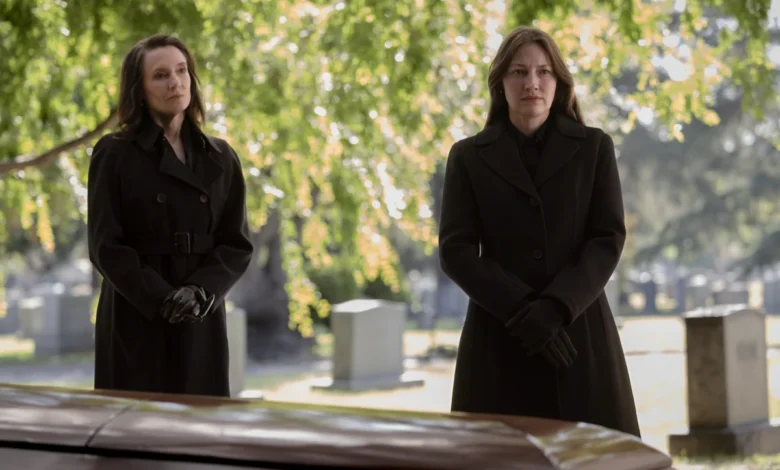
The 2026 timeline serves as the narrative anchor for the series, triggered by the death of Hal Jordan. Following a catastrophic event in Rushville and a subsequent decade of incarceration, Jordan’s demise serves as a focal point for the series’ exploration of legacy. His funeral is not merely a somber event but a narrative device that illuminates his isolation and the consequences of his long-term service.
The attendance at this funeral is telling. While Jordan lacks a conventional family unit, the appearance of Carol Ferris, played by Amie MacKenzie, provides a critical link to his past. The inclusion of Ferris is not incidental; it is a deliberate nod to one of the most significant romantic and psychological arcs in DC Comics history.
The Historical Context of Carol Ferris and Star Sapphire
To understand the weight of Carol Ferris’s presence, one must look at the source material established in 1959’s Showcase #22. Carol Ferris is the daughter of Carl Ferris, the founder of Ferris Aircraft, the company where Hal Jordan worked as a test pilot. In the canonical comics, their relationship is defined by a complex interplay of professional partnership and romantic tension.
Carol Ferris eventually ascends to the presidency of Ferris Aircraft, a position that frequently conflicts with her emotional ties to Jordan. Their dynamic is further complicated by the Zamarons, an all-female race of extraterrestrial beings from Oa. Unlike the Guardians of the Universe—the diminutive, blue-skinned figures responsible for the creation of the Green Lantern Corps and their problematic predecessors, the Manhunters—the Zamarons operate on a philosophy driven by emotion and passion.
The Zamarons identified Carol Ferris as a conduit for their power, granting her the Star Sapphire gemstone. This stone possesses the ability to tap into the wielder’s suppressed emotions, often resulting in a volatile transformation. Historically, this has forced Carol into a trance-like state where she acts as an antagonist to Hal Jordan, driven by the Zamarons’ intent to challenge the Guardians. This "on-again, off-again" dynamic between Jordan and Ferris has persisted for decades in print, evolving from a standard damsel-in-distress trope to a more nuanced exploration of power, betrayal, and redemption.

The Broader Implications for the DC Universe
The inclusion of the Star Sapphire lore within the live-action landscape of Lanterns suggests that the DC Universe is willing to engage with the more cosmic, fantastical elements of the comic source material. By grounding the show in a realistic, gritty setting—such as the legal and social fallout of Jordan’s imprisonment—and juxtaposing it with high-concept sci-fi lore like the Zamarons, the showrunners are creating a tone that is both grounded and expansive.
Furthermore, the history between Carol Ferris and Kyle Rayner, another prominent Green Lantern, suggests that future iterations of the DC Universe may explore the interconnected romantic histories of the Corps. The decision to feature these relationships implies that the creative team views the personal lives of these characters as equally important to their superhero exploits.
Official Perspectives and Production Strategy
While James Gunn has not provided specific plot spoilers regarding the future of the Star Sapphire storyline, the deliberate casting and inclusion of key figures from the Green Lantern mythos point toward a cohesive, long-term plan. The production’s commitment to "lived-in" characters suggests that audiences should expect more "history-heavy" encounters in upcoming projects.
The narrative choice to have John Stewart read a eulogy written by Hal Jordan himself underscores the theme of pre-determined legacy. It implies that Jordan, aware of the volatility of his life, had prepared for his own absence. This level of character foresight is consistent with the portrayal of a seasoned hero who understands the gravity of his responsibilities.
Analysis of Narrative Impact
The success of this approach hinges on the audience’s ability to accept a world that is already in motion. By bypassing the traditional "origin story" format, Lanterns is able to focus on the psychological consequences of the characters’ pasts. The presence of Carol Ferris is a prime example of this: she represents not just a love interest, but a historical tether that anchors Hal Jordan’s character.

The juxtaposition of the Guardians’ clinical, detached nature with the Zamarons’ emotional, passion-driven interference creates a dualistic conflict that permeates the series. As the audience learns more about the Manhunters—and the failures of the Guardians to control them—the role of individual Lanterns like Jordan and Stewart becomes more critical. They are not merely soldiers in a cosmic army; they are individuals forced to navigate the moral ambiguities of an ancient, intergalactic political machine.
In conclusion, the inclusion of Carol Ferris and the detailed historical timeline established in Lanterns signal a move toward a more sophisticated and interconnected superhero narrative. By treating the characters as fully formed entities with decades of history, the DC Universe is positioning itself to explore themes of legacy, regret, and the burden of power in a way that feels both authentic and inherently expansive. This narrative strategy ensures that every character—no matter how small their screen time—contributes to the overarching architecture of a living, breathing cinematic universe.