WHO Director-General Dr. Tedros Adhanom Ghebreyesus Concludes High-Level Jordan State Visit Focused on Regional Health Resilience and Humanitarian Aid

The Director-General of the World Health Organization (WHO), Dr. Tedros Adhanom Ghebreyesus, has concluded the first day of a critical two-day State visit to the Hashemite Kingdom of Jordan, a diplomatic mission designed to reinforce the strategic partnership between the UN health agency and the Jordanian government. The visit, which underscores Jordan’s pivotal role as a regional anchor for stability and medical excellence, focused on the integration of universal health coverage (UHC), the advancement of mental health services, and the management of large-scale humanitarian health crises.
A Meeting at the Highest Level: Strengthening Ties
The centerpiece of the visit was a high-level consultation between Dr. Tedros and His Majesty King Abdullah II. This meeting served as a vital forum for discussing the Kingdom’s proactive health strategy, which has long prioritized the expansion of health services despite the intense pressures of hosting millions of refugees. Discussions centered on the mechanics of strengthening national health systems to ensure that they are both resilient against external shocks and capable of providing universal, high-quality care to all residents, including refugees from Syria and the displaced populations from Gaza.
King Abdullah II has historically championed health as a cornerstone of national security and regional stability. During the session, the two leaders evaluated the efficacy of the "Medical Corridor" initiative—a specialized humanitarian pipeline managed by Jordan that facilitates the transfer of critically ill and injured children from conflict-torn regions, particularly Gaza, to specialized care facilities within the Kingdom.
Chronology of the State Visit: Day One and Beyond
The first day of the visit was characterized by a rigorous schedule of site visits and high-stakes diplomatic meetings:
- Morning Sessions: Dr. Tedros held bilateral discussions with the Jordanian Minister of Health to review the roadmap for UHC. The focus was on Jordan’s primary health care model, which is recognized globally for its successful integration of mental health screenings into routine clinical practice.
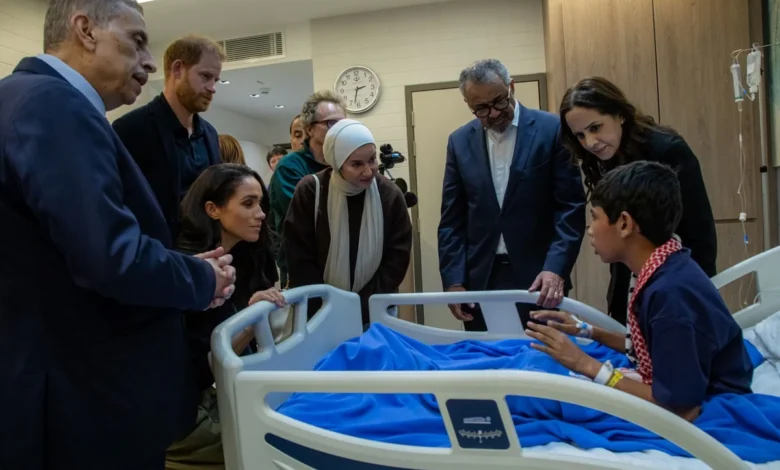
- Medical Site Inspection: The Director-General toured a WHO-supported hospital where he met with pediatric patients evacuated from Gaza. These patients represent the most vulnerable demographic of the current conflict, many suffering from trauma, oncology-related complications, or severe physical injuries.
- Donor and Partner Convening: Dr. Tedros presided over a multisectoral meeting involving UN agencies, philanthropic foundations, and donor states. The objective was to secure sustained financial commitments to bolster Jordan’s healthcare infrastructure, which is currently operating under the strain of a significant refugee burden.
- Forthcoming Itinerary: The second day of the visit is slated to include a tour of the National Center for Rehabilitation of Addicts, a meeting with the Jordanian Hashemite Fund for Human Development, and a visit to the King Hussein Cancer Center. These engagements are designed to highlight Jordan’s specialized medical capabilities and its role as a regional leader in oncology and rehabilitation.
Humanitarian Context and Supporting Data
Jordan’s healthcare system is currently managing a demographic reality that few other nations face. According to United Nations High Commissioner for Refugees (UNHCR) and local data, Jordan hosts over three million refugees, a figure that includes a massive influx of Syrians and, more recently, displaced individuals from the Gaza conflict. Providing for this population requires an enormous fiscal outlay and a sophisticated logistical network.
The WHO’s collaboration with Jordan is not merely symbolic; it is a technical partnership aimed at scaling up capacity. For instance, the Director-General’s Special Initiative for Mental Health is currently being stress-tested in Jordan to determine how to provide psychological support in emergency settings. With mental health often relegated to the periphery of humanitarian aid, Jordan’s attempt to integrate these services into primary care offers a scalable model for other countries in the Middle East and North Africa (MENA) region.
The Role of Archewell Philanthropies
The State visit was bolstered by the participation of Prince Harry, Duke of Sussex, and Meghan, Duchess of Sussex. As founders of Archewell Philanthropies, the couple has been vocal proponents of WHO initiatives, particularly regarding equitable access to medical resources. Their presence served to amplify the visibility of the humanitarian crisis and underscored the importance of mental health as a fundamental human right.
Prince Harry, an advocate for mental health awareness, emphasized the necessity of addressing the psychological wounds of war. "Mental health is fundamental to recovery, dignity, and long-term peace," the Duke stated during the proceedings. The involvement of high-profile philanthropies is intended to bridge the gap between emergency medical funding and long-term psychosocial support, which is often under-resourced in international humanitarian response budgets.
Analysis: Implications for Regional Health Security
The visit highlights a critical shift in how international bodies view the role of "host" countries like Jordan. Rather than viewing Jordan solely as a temporary shelter for refugees, the WHO is treating the Kingdom as a vital medical hub. The "Medical Corridor" model suggests a future in which regional power centers are supported by international agencies to act as regional hospitals for conflict zones.
However, this model presents significant challenges. The sustainability of such a system is entirely dependent on sustained international donor support. During his meetings, Dr. Tedros acknowledged that the international community must move beyond sporadic, crisis-based funding. Instead, the WHO is advocating for institutional investment in Jordan’s health systems, ensuring that when the Kingdom provides care for a refugee, the standard of that care does not degrade the quality of services available to the host Jordanian population.
Official Statements and Future Outlook
Dr. Tedros praised the "solidarity and generosity" of the Jordanian people, noting that the Kingdom’s health sector provides a blueprint for resilience. "Jordan continues to show the world what it truly means to put health and humanity first," he remarked during the press briefing.
From the perspective of the Ministry of Health, the visit serves as a formal validation of the Kingdom’s current trajectory. By aligning with the WHO’s global standards for Universal Health Coverage, Jordan is signaling to the international donor community that it is a responsible and transparent steward of humanitarian aid.
As the visit moves into its final phase, the expected outcomes include a reinforced commitment from global health donors and a more defined operational framework for the medical evacuation of patients from conflict zones. The success of these initiatives will rely heavily on the continued stability of Jordan’s internal healthcare infrastructure and the willingness of the global community to view regional health as a shared global responsibility.
The culmination of these efforts will likely result in a joint communiqué from the WHO and the Jordanian government, outlining specific benchmarks for mental health support and the expansion of oncology services for refugees. This State visit serves as a definitive statement that in an era of protracted conflict, the partnership between the UN and stable host nations remains the most effective tool for preventing the total collapse of health services in the most vulnerable regions of the world.