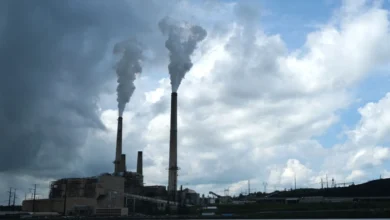
The Global Glacier Extinction Explorer provides a stark visual timeline for the inevitable disappearance of the world’s ice reserves

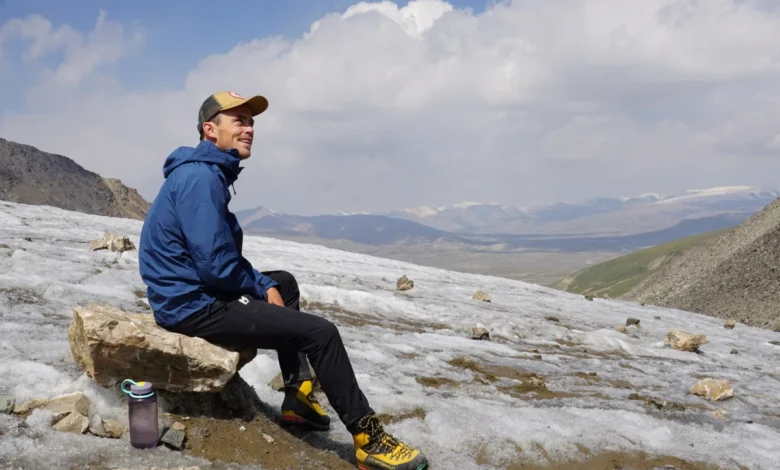
In mid-October, a woman reached out to glaciologist Lander Van Tricht with a poignant inquiry. She had visited a specific glacier during her childhood at the age of 10, a formative experience that tethered her memory to a frozen landscape. Using the newly launched Global Glacier Extinction Explorer, she discovered that the very ice mass she once stood upon is projected to vanish entirely within less than 40 years. This interaction represents the primary ambition of Van Tricht, a postdoctoral researcher at ETH Zürich and Vrije Universiteit Brussels: to bridge the vast chasm between dense, academic climate modeling and the lived experience of the general public.
The Global Glacier Extinction Explorer is an interactive digital platform that allows users to examine individual glaciers on a global map. By clicking on specific ice formations, users can retrieve localized projections regarding the glacier’s longevity based on various global warming scenarios. The tool is underpinned by a comprehensive 2026 study published in the journal Nature, which provides high-resolution, glacier-by-glacier data on the impacts of atmospheric temperature increases.
The Science of Terminal Decline
The findings of the 2026 study, led by Van Tricht, paint an unequivocal picture of environmental transition. Even under the most optimistic climate target—a scenario where global temperature rise is strictly capped at 1.5° Celsius (2.7° Fahrenheit) above pre-industrial levels—the planet is set to lose roughly half of its current glaciers.
This projection is not a warning of a distant future but a record of a process already in motion. The study clarifies that the "decision" for these glaciers to disappear has largely been made by past and current carbon emissions. Because glaciers operate on a delayed response time to temperature shifts, many of the smaller ice formations in mountain ranges like the Alps, the Caucasus, and the Pyrenees are already on a trajectory toward total extinction, regardless of immediate mitigation efforts.

A Chronology of Retreat
To understand the scale of the crisis, it is necessary to view it through a chronological lens. For decades, glaciologists have tracked global ice volume to calculate sea-level rise. However, the 2026 research marks a shift in focus toward the "extinction" of individual, named glaciers—a metric that provides a more relatable, albeit harrowing, narrative for the public.
- The Early 2000s: The baseline period for the current mapping, providing a snapshot of glacier distribution before the acceleration of recent warming trends.
- The Present Day: Mountain ranges such as the Pyrenees contain only about 15 remaining glaciers. Projections indicate that these will likely disappear within the next 10 to 15 years.
- 2026–2050: A critical window where mid-latitude glaciers, including those in the Alps, will experience rapid, terminal thinning.
- The Latter Half of the 21st Century: Even high-latitude regions, such as the Russian Arctic, Svalbard, and the periphery of the Greenland ice sheet, which have historically been viewed as "healthy," will begin to witness the systemic loss of individual glacier units.
Implications for Local Communities and Economies
The implications of this mass deglaciation extend far beyond the loss of aesthetic natural landmarks. Glaciers act as natural water towers, storing winter precipitation and releasing it slowly as meltwater during the dry summer months. This cycle is vital for agricultural irrigation, hydropower generation, and drinking water security for millions of people residing in downstream valleys.
For communities dependent on mountain tourism, the disappearance of glaciers presents an immediate economic challenge. Ski resorts and alpine villages that rely on "glacier-certified" skiing or the visual prestige of ice-capped peaks face an existential dilemma: should they continue to invest in infrastructure that may be rendered obsolete within a generation?
Van Tricht notes that the tool serves as a decision-support mechanism. A village in the Alps, for instance, can now consult the Explorer to determine if their local glacier will remain a viable tourism asset for the next 20, 50, or 75 years. This data allows for more prudent long-term planning, shifting focus away from industries that will soon be devoid of their foundational resource.
Data-Driven Projections and Scenarios
The Global Glacier Extinction Explorer utilizes four distinct warming scenarios, mirroring those established by the Intergovernmental Panel on Climate Change (IPCC):

- 1.5° Celsius: The target established by the Paris Agreement. Even here, the loss of 50% of global glaciers is expected.
- 2° Celsius: An alternative threshold also discussed under international climate policy.
- 2.7° Celsius: The current trajectory based on existing global policy and emission commitments. Under this scenario, the Alps and Caucasus are expected to be almost entirely "de-glacierized."
- 4° Celsius: The most pessimistic scenario, under which even massive, stable glaciers—such as the Aletsch Glacier in the Swiss Alps, which currently holds 15 cubic kilometers of ice—are projected to vanish before the end of the century.
The contrast between these scenarios is stark. While 1.5° Celsius of warming might preserve approximately 400 glaciers in the Alps, a 4° Celsius increase would leave behind fewer than 20. These figures underscore the non-linear relationship between warming and ice retention; every fraction of a degree in mitigation directly translates to the preservation of specific, localized water sources.
Bridging the Gap: From Academia to Public Policy
The motivation for creating this tool was born from a realization that traditional academic publishing often fails to influence public behavior or local policy. By translating complex simulations into an intuitive map, Van Tricht and his colleagues are attempting to move the climate conversation from abstract percentages to tangible reality.
"What I really hoped was that scientific results are shared beyond the academic world," Van Tricht stated. The success of the tool is already evident in the feedback he receives, such as the message from the woman who, upon seeing the projected 2063 extinction date for her childhood glacier, was forced to confront the permanence of climate-driven loss.
However, the researcher remains pragmatic about the limits of such tools. While visualization is a powerful catalyst for awareness, it does not stop the melting. The only mechanism for preservation, according to the study, is the rapid, global reduction of greenhouse gas emissions to stabilize the climate system. While some localized interventions exist—such as covering glaciers with geotextiles to reflect sunlight and slow melting—these are expensive, environmentally disruptive, and typically reserved for high-value tourist sites rather than ecological conservation.
Broader Impact and Future Outlook
The "de-glacierization" of the planet is a profound indicator of Earth’s changing climate health. As individual glaciers flicker out of existence on the digital map, they represent a permanent loss of biodiversity, historical climate data stored in ice cores, and essential water security for mountain-dwelling populations.

The Global Glacier Extinction Explorer serves as a sobering mirror. It reflects a world that is rapidly losing its cryosphere and forces stakeholders to reckon with a future that requires adaptation as much as it requires mitigation. As the scientific community continues to refine these models, the focus will likely shift from documenting the loss to managing the consequences of a landscape that is fundamentally being rewritten.
For the general public, the tool offers a way to navigate this transition. By providing a clear, interactive, and data-backed view of the timeline of extinction, it removes the ambiguity of climate projections and replaces it with a specific, local, and immediate call to attention. As Van Tricht observed, when the "holy grail" glaciers of Europe are no longer invincible, the urgency for a global response becomes not just a matter of scientific debate, but a necessity for the survival of mountain ecosystems worldwide.
Related posts: