Every November 29 since 2018, the global conservation community observes International Jaguar Day, a date dedicated to highlighting the critical status of Panthera onca, the largest feline species in the Americas. While the jaguar holds profound cultural and ecological significance, its survival is currently tethered to a shrinking geographic footprint and an intensifying struggle against human encroachment. As populations become increasingly fragmented, the species faces a paradoxical reality: while they demonstrate remarkable resilience by appearing in historical peripheries, the core of their habitat continues to suffer from systemic degradation.
A Historical Contraction of Range
The historical range of the jaguar was once vast, encompassing approximately 19 million square kilometers (7.3 million square miles) of diverse ecosystems, stretching from the southwestern United States down to the temperate regions of central Argentina. Today, that range has been reduced by more than 50%, covering roughly 9 million square kilometers (3.5 million square miles).
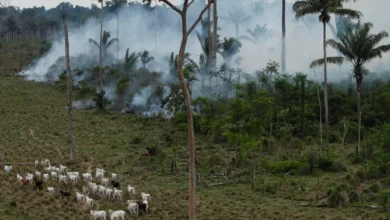
This 10-million-square-kilometer loss represents one of the most significant declines in apex predator territory in the modern era. The primary drivers of this contraction include the conversion of forests into agricultural land, cattle ranching, infrastructure development, and retaliatory killings by livestock owners. Currently, the most robust populations reside within the "stronghold" corridor that links the Amazon Rainforest with the Pantanal wetlands, the Chaco dry forest, and the Llanos grasslands of Colombia and Venezuela. However, even these areas are not immune to the pressures of deforestation and climate-induced environmental stress.
The Survival of Peripheral Populations
Despite the broad contraction, recent observational data suggest that jaguars are persisting in the fringes of their former territory, providing a glimmer of hope for potential range expansion or, at the very least, genetic preservation.
In Brazil’s eastern Atlantic Forest and the arid Caatinga region, the situation is dire. It is estimated that fewer than 250 adult jaguars remain in these fragmented landscapes. The scarcity of the population has forced scientists to move beyond traditional habitat conservation, leading to the initiation of advanced genetic banking. Researchers are currently exploring high-stakes interventions, including in-vitro fertilization and cloning, to prevent the total collapse of these isolated gene pools.
At the northernmost extent of their reach, the U.S.-Mexico border remains a site of intense interest. In late 2025, a male jaguar dubbed "Cinco" was captured on camera in southern Arizona. This sighting marked the fifth individual recorded in the region over a 15-year period. While the presence of these individuals does not constitute a breeding population, it confirms that the species retains the biological drive to explore historical northern corridors, provided the landscape remains traversable.
Similarly, in Honduras, the Sierra del Merendón—a mountain range spanning the border with Guatemala—recently yielded a rare data point. Camera traps recorded a young male jaguar at an altitude of 2,200 meters (7,200 feet), the first such sighting in that specific area in over a decade. This elevation is significant, as it suggests the species is capable of navigating high-altitude corridors that were previously thought to be less hospitable.
Conservation Perspectives and Expert Analysis
The resilience of the jaguar is often cited by conservationists as a testament to the species’ adaptability. Allison Devlin, who directs the jaguar program at the conservation NGO Panthera, notes that the ability to travel through high-elevation areas confirms the species’ tenacity. "The fact that they are able to travel through these high-elevation areas also shows how resilient they are," Devlin stated.

From an institutional standpoint, the findings in the Merendón mountains are being used to advocate for better transboundary management. Marcio Martinez, a coordinator at Honduras’s National Institute of Forest Conservation (ICF), emphasized the importance of these sightings: "It reaffirms that there are dispersed populations in the northwestern part of the country. These corridors are essential for maintaining the connectivity of jaguar populations across international borders."
The implications for international cooperation are clear. Because jaguars do not recognize political boundaries, the preservation of the species requires a unified strategy between the U.S., Mexico, Central American nations, and the South American strongholds. Without corridors that allow for the movement of individuals, local populations risk inbreeding and eventual local extinction.
The Ongoing Threat of Illegal Wildlife Trade
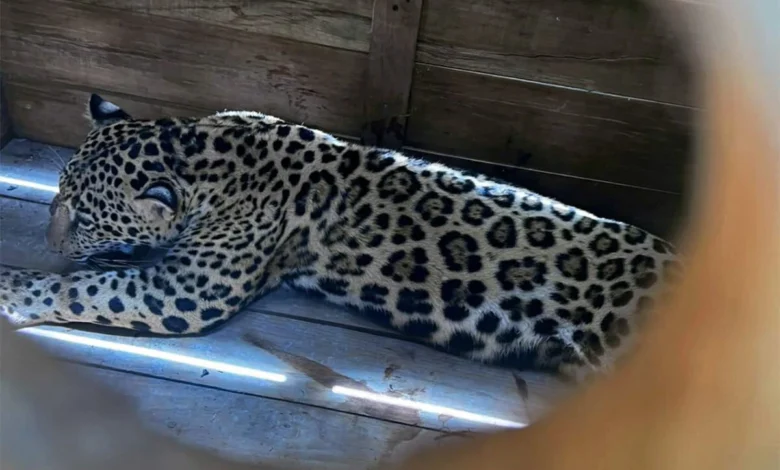
While habitat loss remains the primary long-term threat, illegal wildlife trafficking continues to undermine conservation efforts in real-time. In May 2026, Honduran authorities conducted a raid on a private property in the Olancho department, which resulted in the seizure of a female jaguar estimated to be approximately one year old.
The animal was found alongside other trafficked wildlife, including a capuchin monkey, two parrots, and a python. Preliminary investigations suggest the jaguar was likely captured in the Mosquitia forests—a critical stronghold for the species—before being sold into the illegal pet trade. This incident highlights the intersection of local economic desperation and the illicit global market for exotic animals. The seized feline is currently housed in a rehabilitation facility operated by the Honduran armed forces, where experts are assessing whether she can be successfully reintroduced into the wild.
Broader Implications and Future Outlook
The current status of the jaguar serves as a barometer for the health of the Americas’ ecosystems. As an apex predator, the jaguar regulates prey populations, which in turn maintains the health of vegetation and water sources. When jaguars disappear, the resulting trophic cascade can lead to the degradation of entire habitats.
The strategy for the next decade must shift from simple monitoring to active corridor restoration. The "Jaguar Corridor Initiative," which seeks to connect the jaguar’s range from Mexico to Argentina, remains the most viable framework for long-term survival. However, this initiative faces stiff competition from economic interests such as industrial agriculture and mining.
A Chronology of Critical Jaguar Conservation Milestones
- 2018: The first International Jaguar Day is observed on November 29, formalizing global awareness efforts.
- 2025 (Late): A male jaguar nicknamed "Cinco" is documented in southern Arizona, marking the fifth recorded sighting in 15 years in the U.S.
- 2025 (December): Brazilian scientists announce advanced research into IVF and cloning to save the Atlantic Forest and Caatinga populations.
- 2026 (April): A young male jaguar is captured on camera at 2,200 meters in the Honduran Sierra del Merendón, indicating the use of high-altitude corridors.
- 2026 (May): Honduran authorities seize a juvenile female jaguar from an illegal private collection in Olancho, sparking renewed debate over wildlife trafficking enforcement.
Conclusion: The Path Forward
The survival of the jaguar is not merely a matter of biological preservation; it is a test of regional environmental policy. The resilience demonstrated by the species in the Merendón mountains and the Arizona borderlands proves that, given the right conditions, jaguars can navigate and survive in fragmented landscapes. However, resilience is not a substitute for robust, protected habitats.
To ensure that International Jaguar Day remains a celebration of a living species rather than a commemoration of a lost one, governments must prioritize the enforcement of anti-trafficking laws and the creation of protected wildlife corridors. The technological advancements in genetics and the dedication of field researchers provide the tools for survival, but the political will to protect the vast, interconnected forests of the Americas will ultimately decide the fate of the jaguar. The species has survived for millennia, but the next century will prove to be the most decisive in its evolutionary history.
Related posts: