Crisis of Sovereignty and Survival: Escalating Illegal Invasions Threaten Isolated Indigenous Peoples in Brazil’s Ituna/Itatá Territory

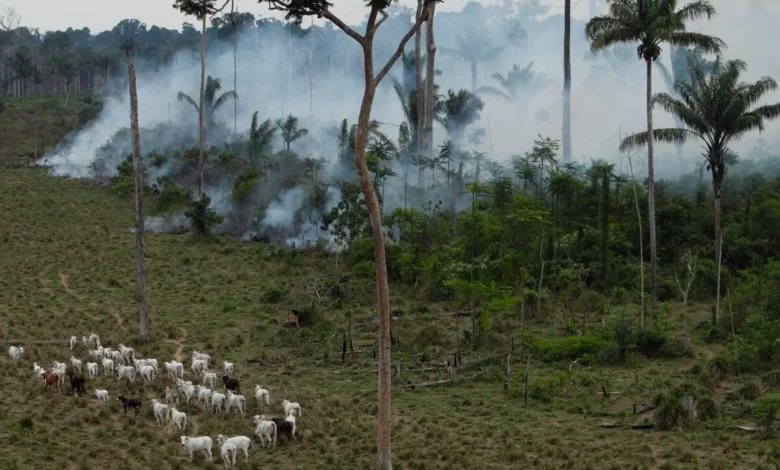
The Ituna/Itatá Indigenous Land, a vital bastion of biodiversity and a sanctuary for the Igarapé Ipiaçava people living in voluntary isolation, is currently facing an unprecedented existential crisis. Over the past several weeks, an estimated 500 individuals have illegally breached the borders of this federally protected territory in the state of Pará, engaging in systemic land-clearing, the construction of clandestine roads, and acts of intimidation against federal agents. This incursion, characterized by the deliberate use of heavy machinery and the tactical ignition of forest fires, has created an urgent humanitarian and environmental emergency, prompting the Federal Public Prosecutor’s Office (MPF) to take aggressive legal action against the federal government for its sluggish response.
A Chronology of Escalation
The current crisis represents the culmination of mounting tensions that have been brewing throughout the 2026 dry season. While the territory has long been a target for illegal land-grabbers, the situation deteriorated rapidly in late August following the passage of a controversial state law.
On August 26, responding to alarming reports of widespread deforestation and threats to personnel from the National Indigenous People Foundation (Funai), a federal court issued a mandatory injunction. The ruling ordered the federal government to deploy the National Public Security Force to the Ituna/Itatá region within 48 hours to halt the invasion and protect the isolated inhabitants. Despite the judicial urgency of the order, by September 11, the security reinforcements had failed to materialize on the ground.
The vacuum left by the lack of law enforcement has emboldened the invaders. Evidence presented by the MPF includes harrowing audio recordings circulating among the occupying groups. In one instance, an agitator is heard mobilizing between 100 and 200 individuals to surround a Funai field team, threatening to incinerate their vehicles and force the officials to retreat on foot. Following inspections by the Brazilian Institute of the Environment and Renewable Natural Resources (IBAMA) in late August—during which agents successfully destroyed some of the illegal machinery—the invaders retaliated by setting deliberate fires to the surrounding forest, a tactic described by authorities as a clear campaign of intimidation and defiance of federal authority.
The Legislative Conflict: Weaponizing Legal Ambiguity
At the heart of this conflict lies a contentious piece of state legislation: the creation of the Bacajá Environmental Protection Area (APA Bacajá). While the state government of Pará framed this law as a measure to formalize private land rights, allowing for home construction and livestock grazing, its implementation has had catastrophic consequences for federal land rights.
The geographic boundaries of the APA Bacajá completely overlap with the federally protected Ituna/Itatá Indigenous Land. Legal experts and federal prosecutors argue that this overlap is being weaponized by land-grabbers. By citing the state law, illegal occupants attempt to provide a veneer of legitimacy to their activities, claiming their presence is sanctioned by local authorities. This "legal confusion" has served as a strategic tool for organized land-grabbers who seek to convert protected forest into cattle pastures.
The federal government has cited the lack of cooperation from the Pará state government as a primary obstacle to the deployment of security forces. Officials in Brasília have argued that they require state authorization to operate effectively in the region. However, the MPF has categorically rejected this defense, asserting that the Ituna/Itatá territory is federal land. Under Brazilian law, the federal government possesses the constitutional mandate and the authority to deploy its security forces to protect federal assets and Indigenous rights without requiring the consent of state-level administrations.
Ecological Volatility and the Threat of El Niño
The human-induced environmental destruction occurring within the Ituna/Itatá territory is being exacerbated by a brutal climatic reality. Helena Palmquist, deputy coordinator of the Observatory of Isolated and Recently Contacted Indigenous Peoples (OPI), has warned that the timing of this invasion could not be more catastrophic.

"What worries us most right now is the fire situation," Palmquist stated. The Amazon is currently enduring an intense dry season, compounded by an El Niño event that climate scientists predict will be significantly more severe than in previous years. The combination of land-clearing, which fragments the forest, and the deliberate setting of fires by invaders, creates a "tinderbox" scenario. With the canopy drying out due to the drought, the fire risk is exponential, threatening to consume the very ecosystem that sustains the Igarapé Ipiaçava people. The loss of forest cover is not merely an environmental statistic; for a group living in total isolation, the destruction of their habitat is a direct threat to their food security, water sources, and physical survival.
The Economic and Legal Toll
The Federal Public Prosecutor’s Office is now seeking to compel action through financial pressure. The MPF has petitioned the federal court to impose a daily fine of 50,000 Brazilian reais (approximately $9,000 USD) on the federal government. This measure is intended to highlight the gravity of the administration’s failure to fulfill its constitutional duty to protect Indigenous lands.
Satellite imagery and aerial reconnaissance conducted by the Federal Police and Funai have documented the construction of more than 30 kilometers (18.6 miles) of illegal roads. These arteries are designed to facilitate the transport of heavy machinery, including chainsaws and tractors, deeper into the forest to clear plots for industrial-scale cattle ranching. During recent inspections, officials were shocked to discover that a cargo vehicle belonging to the state government was being utilized to support the infrastructure of the illegal settlement, fueling concerns about potential collusion or, at the very least, a lack of institutional oversight within the regional administration.
Broader Implications for Indigenous Sovereignty
The situation in Ituna/Itatá serves as a grim case study of the challenges facing Indigenous protection in the Amazon basin. When federal authorities fail to enforce court orders, they signal to land-grabbers that the protection of Indigenous lands is negotiable.
The Igarapé Ipiaçava are among the most vulnerable populations in the world. As people in voluntary isolation, they lack the immunity to fight off diseases brought by outsiders, and they have no means of navigating the complex, often hostile, legal and political systems that surround their territory. The "temporary land-use restriction order" currently in place for their protection is legally binding, yet it remains effectively unenforceable without the presence of security forces to act as a physical deterrent.
The failure of the federal and state governments to coordinate a response has resulted in a dangerous stalemate. While both the federal government and the state of Pará were approached for comment, neither provided a response by the time of publication, leaving the public and the affected Indigenous groups in the dark regarding any potential plans for intervention.
Conclusion: A Test of Institutional Will
The crisis in the Ituna/Itatá Indigenous Land is more than a localized land dispute; it is a test of Brazil’s commitment to the rule of law and its international obligations to protect the rights of its Indigenous peoples. The use of state-sponsored infrastructure for illegal activity, combined with the deliberate setting of fires in an already drought-stressed rainforest, underscores the need for immediate, decisive federal intervention.
As the fires continue to burn and the roads continue to expand, the window to prevent a permanent loss of territory and a potential humanitarian disaster for the Igarapé Ipiaçava is rapidly closing. The ongoing legal battle between the MPF and the federal government is likely to continue, but for the inhabitants of the forest, the immediate reality is one of encroachment and destruction. Whether the state will ultimately prioritize the preservation of one of the world’s most critical Indigenous sanctuaries over the interests of illegal land-grabbers remains the defining question of this unfolding crisis. The international community, observers, and human rights organizations remain fixed on the territory, watching to see if the state will act before the damage becomes irreversible.
Related posts: