Michigan Governor Gretchen Whitmer Halts State Permits for Line 5 Pipeline Tunnel Project Amid Rising Environmental Scrutiny

The regulatory future of the controversial Line 5 oil pipeline replacement project suffered a major blow on Tuesday as Michigan Governor Gretchen Whitmer announced a decisive pause on all pending and previously issued state permits. The executive action halts plans by Canadian energy giant Enbridge to construct a replacement segment of the pipeline inside a protective concrete tunnel buried beneath the Straits of Mackinac.
According to the governor’s office, regulators at the Michigan Department of Environment, Great Lakes and Energy (EGLE) must thoroughly reevaluate the full scope of environmental and ecological threats posed by the infrastructure project. This regulatory pivot was directly triggered by a landmark Michigan Supreme Court ruling handed down earlier this summer. In that decision, state justices invalidated a separate Line 5 tunnel permit issued by another state agency, ruling that the initial review of potential environmental degradation was legally insufficient and overly narrow.
The suspension of permits marks the latest chapter in a nearly decade-long battle over the aging infrastructure that bisects the Great Lakes. For environmentalists, Indigenous nations, and state officials alike, the decision represents a critical turning point in the prolonged struggle to safeguard North America’s vital freshwater ecosystems from the persistent threat of a catastrophic oil spill.
A Historical Overview and Geographic Significance
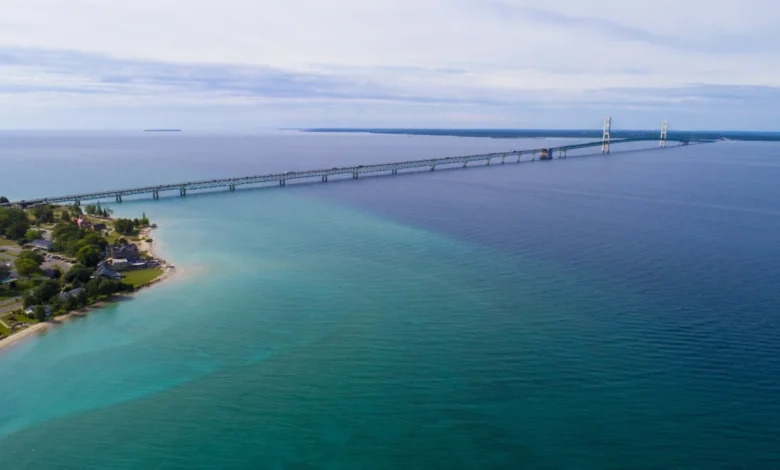
Originally constructed in 1954, Line 5 is a 645-mile pipeline operated by Enbridge Energy that transports light crude oil and natural gas liquids from Superior, Wisconsin, across the Upper Peninsula of Michigan, and through the Straits of Mackinac down to Sarnia, Ontario. While the vast majority of the pipeline is buried underground, a critical four-mile segment splits into dual pipes resting directly on the lakebed of the Straits of Mackinac—the narrow, high-velocity waterway connecting Lake Michigan and Lake Huron.
The straits represent an ecologically sensitive intersection of wetlands, fisheries, and coastal habitats vital to the biodiversity of the Great Lakes basin. Oceanographers and environmental scientists have frequently designated the straits as one of the worst possible locations for an oil spill, noting that the complex currents in the area could rapidly spread hazardous materials across hundreds of miles of shoreline, devastating local ecosystems and regional tourism economies.
Beyond its ecological significance, the region holds deep spiritual and cultural value for the Anishinaabe peoples. The Straits of Mackinac feature prominently in Indigenous creation histories and contain sacred ancestral burial grounds. For the 12 federally recognized tribes in Michigan, the continued operation of Line 5 poses an ongoing existential threat to treaty-protected resources and cultural heritage.
Chronology of the Conflict
The friction surrounding Line 5 has escalated steadily over the past decade through a combination of legal challenges, administrative hurdles, and growing public opposition:
- 1954: Line 5 begins commercial operations under the oversight of Lakehead Pipe Line Company (later acquired by Enbridge), designed to supply regional refineries with Canadian and domestic crude oil.
- 2017–2018: Public concern peaks following reports of protective anchor-strike damage to the dual pipelines in the Straits of Mackinac. In response, then-Governor Rick Snyder and Enbridge strike a preliminary deal to build a protective underground tunnel beneath the lakebed to house a replacement segment.
- 2019: Newly elected Governor Gretchen Whitmer declares her ultimate goal is to remove Line 5 from the water entirely, initiating a comprehensive review of the pipeline’s legal and environmental standing.
- 2020: The State of Michigan formally revokes and terminates the 1953 easement that allowed Line 5 to operate on the lakebed of the straits, citing safety violations and public trust doctrine breaches, which sets off a multi-year courtroom battle.
- 2021: EGLE issues key environmental permits to Enbridge for the construction of the multi-billion-dollar utility tunnel. Meanwhile, separate regulatory bodies and tribal nations mount legal challenges against the approvals.
- Summer 2024: The Michigan Supreme Court rules that state agencies failed to adequately evaluate environmental harms and public trust violations when issuing permits related to the tunnel, tossing out a foundational approval.
- Recent Weeks: Enbridge temporarily halts work on a separate Line 5 reroute project in Wisconsin following a significant 1.3-million-gallon industrial gas and liquid leak, heightening safety anxieties across the Midwest.
- Tuesday: Governor Whitmer announces a formal administrative pause on all pending and issued EGLE permits for the Line 5 tunnel project, citing the mandate set forth by the state supreme court’s summer ruling.
Corporate Response and Economic Arguments
Enbridge Energy has consistently defended the operational integrity of Line 5, maintaining that the pipeline is essential for regional energy security. The company argues that the infrastructure delivers the propane, heating oil, and petroleum products that millions of residents and industries across Michigan, Wisconsin, Ohio, and Ontario depend on daily, particularly during harsh winter months.
Following Governor Whitmer’s announcement, Enbridge spokesperson Ryan Duffy issued a formal statement emphasizing the company’s compliance record and its commitment to environmental stewardship. Duffy pointed to the extensive regulatory reviews the project has already undergone—including the pending EGLE permit renewal, which would update the original approvals granted in 2021.
"Line 5 delivers the energy people depend on every day," Duffy stated. "At Enbridge, we remain committed to that purpose and equally committed to safeguarding the Great Lakes."
Enbridge contends that building the replacement segment inside a reinforced concrete tunnel drilled deep into the bedrock beneath the straits would virtually eliminate the risk of a pipeline strike or lakebed spill, rendering the infrastructure safer and more secure than the current dual pipelines resting on the floor of the waterway.
Environmental Advocacy and Tribal Perspectives
Opponents of the pipeline, however, view the tunnel project as an unacceptable continuation of risky fossil fuel dependence. Grassroots organizations, environmental nonprofits, and tribal legal representatives have waged a tireless campaign to block the tunnel and decommission the entire pipeline network.
Ashley Rudzinski, climate and environment program director for the nonprofit Groundwork Center for Resilient Communities, praised the governor’s decision as a long-awaited and decisive step forward.
"I think this is a really, really excellent step in the right direction," Rudzinski remarked. "We’re seeing the Whitmer administration, finally, putting some real strength behind the words that she had already spoken."
For tribal communities, the stakes are deeply personal and legally binding. Laura Berglan, a senior attorney with the environmental legal nonprofit Earthjustice—representing the Bay Mills Indian Community, the Sault Ste. Marie Tribe of Chippewa Indians, and the Little Traverse Bay Bands of Odawa Indians—emphasized that the defense of the Great Lakes transcends partisan politics.
"No matter who the governor is, it’s in all of our interests to keep the Great Lakes free of oil and to transition away from Line 5," Berglan said. "We need to protect our shared resources and our tribal resources for the future."
Advocates are now looking ahead to the incoming administration of Governor-elect Jocelyn Benson, another Democrat, hoping the state’s firm legal and regulatory stance against the pipeline will remain a cornerstone of Michigan’s environmental policy.
Broader Implications and Future Outlook
The administrative freeze on state permits introduces profound uncertainty regarding the immediate timeline and ultimate viability of the Line 5 tunnel project. While the U.S. Army Corps of Engineers granted federal approvals for portions of the initiative earlier, the lack of state-level permits creates a significant regulatory roadblock that Enbridge cannot easily bypass.
Economically, the ongoing standoff highlights the broader tensions surrounding North American energy transport as regional governments attempt to balance short-term fuel supply needs against long-term climate targets and ecosystem protection. Analysts note that prolonged litigation could delay construction for years, forcing energy markets to adapt to potential supply chain re-routings or increased reliance on rail and trucking alternatives.
Legally, the case serves as a major test of state authority over interstate and cross-border energy infrastructure, as well as the practical application of public trust doctrines in environmental jurisprudence. As the legal challenges wind their way through both state and federal courts, the waters of the Straits of Mackinac remain at the center of a national debate over the future of fossil fuels in America’s most treasured natural watersheds.