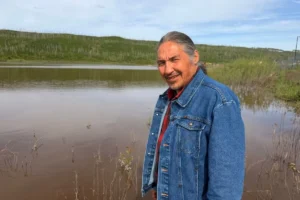
Brazil advances toward formal recognition of the Kapot Nhinore Indigenous Territory in historic victory for Chief Raoni Metuktire


In a move of significant geopolitical and environmental consequence, the Brazilian government has officially initiated the formal recognition of the Kapot Nhinore Indigenous Territory, a sprawling 362,000-hectare expanse located on the border of Pará and Mato Grosso states. This decision, announced on November 19, 2026, by President Luiz Inácio Lula da Silva, marks a long-awaited milestone for the Mebêngôkre (Kayapó) and Yudjá (Juruna) peoples. The territory holds deep cultural and historical significance, serving as the birthplace of the globally renowned Indigenous leader Raoni Metuktire, whose tireless advocacy for the Amazon has made him a central figure in the international movement for environmental preservation.
The announcement came following a poignant meeting between President Lula and the 94-year-old Chief Raoni. Currently residing in palliative care following a cancer diagnosis earlier in 2026, the Chief has spent decades campaigning for the protection of this ancestral land, where his father, Umoro, is buried. By signing the government order—a declarative ordinance—President Lula has effectively affirmed the permanent possession rights of the Mebêngôkre and Yudjá, representing a critical, if not yet final, step in the complex legal process of Indigenous land demarcation in Brazil.
A Two-Decade Struggle for Recognition
The campaign for the legal security of Kapot Nhinore is not a recent development. The Indigenous communities have been actively lobbying for the recognition of their ancestral boundaries since 2004. For over twenty years, the territory has existed in a state of legal limbo, rendering it vulnerable to encroaching agricultural interests and land speculation.
The demarcation process in Brazil is a multi-stage procedure governed by the federal constitution and managed by the National Indigenous People Foundation (Funai). While the recent ordinance serves as a robust legal acknowledgement, it is not the final step. To achieve full constitutional protection, the territory must undergo physical boundary marking on the ground, receive final presidential approval via a decree, and complete official registration in public land registries. Only upon the completion of this process are federal authorities empowered to legally remove non-Indigenous occupants, a process that is often fraught with social and economic tension in the Amazonian frontier.
The Environmental Stakes: Deforestation and Land Use
The Kapot Nhinore territory represents a vital ecological corridor in the southern Brazilian Amazon. According to data provided by Funai, approximately 83% of the region remains covered by primary forest, making it a critical carbon sink and a repository of biodiversity. However, the pressure from external actors has been relentless.
The evolution of land use in the area over the last quarter-century is stark. In 2000, deforestation within the territory was estimated at 4,178 hectares. By 2026, that figure had ballooned to 58,000 hectares. This dramatic shift highlights the rapid expansion of cattle ranching and soy cultivation, two of the primary drivers of deforestation in the Amazon basin.
Investigations by regional outlets, including the Amazon-based publication Sumaúma, have revealed a complex web of commercial interests. The research identified at least eight large-scale cattle ranches operating within the boundaries of the territory, with supply chains linked to major international meat-processing entities like JBS, either through direct or indirect procurement. Furthermore, the report identified 14 properties primarily dedicated to soy production. These findings underscore the difficulty of enforcing environmental protections in regions where agricultural commodities are integrated into global markets.
The Shadow of Land Speculation
A comprehensive report released by Greenpeace Brasil provides a sobering look at the scale of unauthorized encroachment. As of February 2026, approximately 259 registered farms and ranches were found to overlap with 95.6% of the Indigenous territory.

It is important to distinguish that these registrations, filed in the Rural Environmental Registry (CAR), are self-declared by landholders. While a CAR registration does not constitute legal title or proof of ownership, the system has inadvertently become a tool for land grabbers. By registering these areas as private farms, speculators often attempt to establish a facade of legitimacy, which in turn has been used to secure bank loans and financing for agricultural development. This cycle of "legitimizing the illegal" has become a central challenge for the current administration’s environmental policy, as it creates a paper trail that complicates the eventual eviction of squatters.
Official Responses and the Push for Reform
President Lula’s administration has framed the signing of the ordinance as a moral and legal imperative. In an Instagram post following his visit to Chief Raoni, the President emphasized the government’s commitment to the rights of Indigenous peoples, describing the ordinance as an "important step in guaranteeing the rights of the original peoples" and noting his deep, historic respect for the Chief.
However, activists and environmental groups are calling for more than just administrative signatures. They are demanding structural changes to the financial systems that facilitate the development of contested lands. Greenpeace Brasil, among other NGOs, is currently lobbying the National Monetary Council—the body responsible for setting rural credit rules in Brazil—to implement stricter safeguards.
Cristiane Mazzetti, coordinator of the Zero Deforestation campaign at Greenpeace Brasil, has argued that the current financial infrastructure acts as an incentive for destruction. "Any overlap of farms with Indigenous lands delimited, declared or placed under restriction by Funai must be grounds for denying rural credit," she stated. The logic behind this proposal is to sever the flow of capital to those who occupy, clear, and degrade Indigenous territories, effectively making the act of land-grabbing financially unsustainable.
Broader Implications for the Amazon
The recognition of Kapot Nhinore is symbolic of a larger struggle for the future of the Amazon rainforest. The area is not only a home to the Mebêngôkre and Yudjá; it is a vital buffer zone that helps maintain the local climate and hydrological cycles. The protection of this land is inextricably linked to Brazil’s international climate commitments and the government’s pledge to reach zero deforestation by 2030.
The tension between agricultural expansion and Indigenous sovereignty remains the defining conflict of the region. On one side are the powerful agribusiness interests that view the expansion of the agricultural frontier as essential to the national economy. On the other are Indigenous nations, backed by human rights organizations and environmental scientists, who argue that the forest is worth far more standing—both for its role in mitigating the climate crisis and for the survival of the cultures that have managed it for millennia.
As the government moves forward with the final stages of the demarcation process, the outcome will likely serve as a litmus test for the administration’s ability to balance competing economic interests against the constitutional mandate to protect Indigenous lands. The path ahead will require rigorous enforcement, the removal of illegal infrastructure, and the potential for legal battles with land claimants.
Ultimately, the formalization of Kapot Nhinore is a testament to the endurance of Chief Raoni Metuktire and his people. For decades, they have acted as the primary defenders of their ancestral territory, often in the face of immense political and physical pressure. The signing of the November 19 ordinance is a victory for these communities, yet the focus now shifts to the operational reality of securing the land. Whether the state can successfully translate this administrative declaration into ground-level reality will determine the fate of one of the most critical tracts of the southern Amazon. As the world watches, the demarcation of Kapot Nhinore remains a focal point for the global discourse on environmental justice, Indigenous sovereignty, and the future of our planet’s most vital ecosystem.