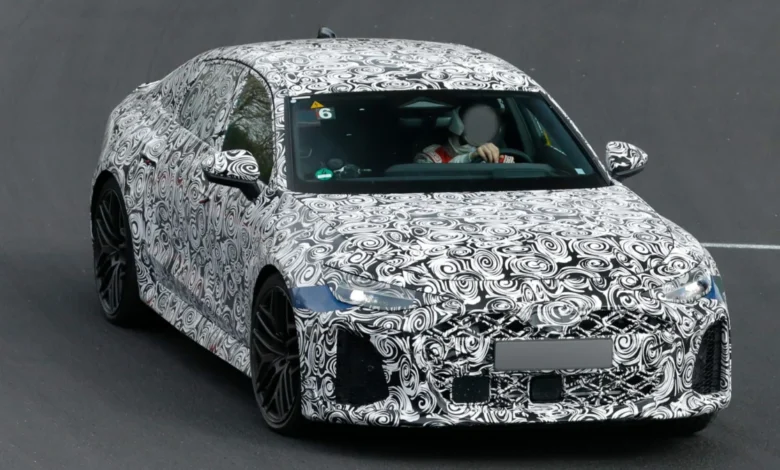
Audi Sport is preparing to revive one of its most celebrated nameplates in a move that signals a strategic shift for its high-performance division. Recent spy photographs captured at the Nürburgring reveal that the forthcoming C9-generation Audi RS6 will reintroduce a four-door sedan variant to global markets, ending an absence that began when the V10-powered C6 generation concluded production in 2010. For nearly two decades, the RS6 moniker has been synonymous exclusively with the Avant station wagon body style, which garnered a cult following among automotive enthusiasts globally. The inclusion of a dedicated sedan alongside the traditional wagon represents a direct bid to recapture market share in the high-performance executive segment, where competitors like BMW M and Mercedes-AMG have maintained a dual-body strategy for years.
The decision to expand the RS6 lineup arrives at a transformative juncture for Ingolstadt’s performance engineers. While the automotive industry accelerates its transition toward pure electrification, Audi is adopting a pragmatic bridge strategy by implementing high-output plug-in hybrid (PHEV) technology. This powertrain architecture allows the brand to comply with tightening global emissions regulations while delivering the staggering performance figures expected of an RS-badged flagship. As prototype testing enters its final phases, automotive analysts and prospective buyers alike are closely examining what this resurrection means for the future of Audi Sport’s internal combustion heritage.
A Chronological Look Back: The Evolution of the RS6
The lineage of the Audi RS6 traces back to 2002, when the German manufacturer sought to challenge the dominance of the BMW M5 and Mercedes-Benz E55 AMG. Based on the C5-generation A6, the original RS6 was developed in collaboration with GmbH subsidiary Quattro GmbH (now Audi Sport GmbH) and was offered in both sedan and Avant configurations. Powered by a 4.2-liter twin-turbocharged V8 engine producing 444 horsepower, the vehicle established a reputation for effortless Autobahn velocity and understated styling.
When the C6 generation debuted for the 2008 model year, Audi escalated the horsepower wars by installing a monstrous 5.0-liter twin-turbocharged V10 derived from Lamborghini’s Gallardo powerplant. Generating an immense 573 horsepower and 479 lb-ft of torque, the C6 RS6 was offered as both a sedan and an Avant. However, shifts in consumer demand, particularly in North America where executive sedans heavily favored domestic or rival German alternatives, led Audi to discontinue the sedan variant after 2010.
Subsequent iterations—the C7 generation introduced in 2013 and the C8 generation launched in 2019—were produced exclusively as Avants. This exclusivity elevated the wagon to legendary status among enthusiasts, culminating in Audi’s historic decision to finally export the C8 RS6 Avant to the United States market for the 2021 model year. With the introduction of the upcoming C9 generation, Audi is rewriting its own playbook by reinstating the four-door sedan format, addressing a vocal segment of the performance community that has long clamored for a direct rival to the BMW M5.
Engineering the C9 RS6 Sedan: Design and Aerodynamics
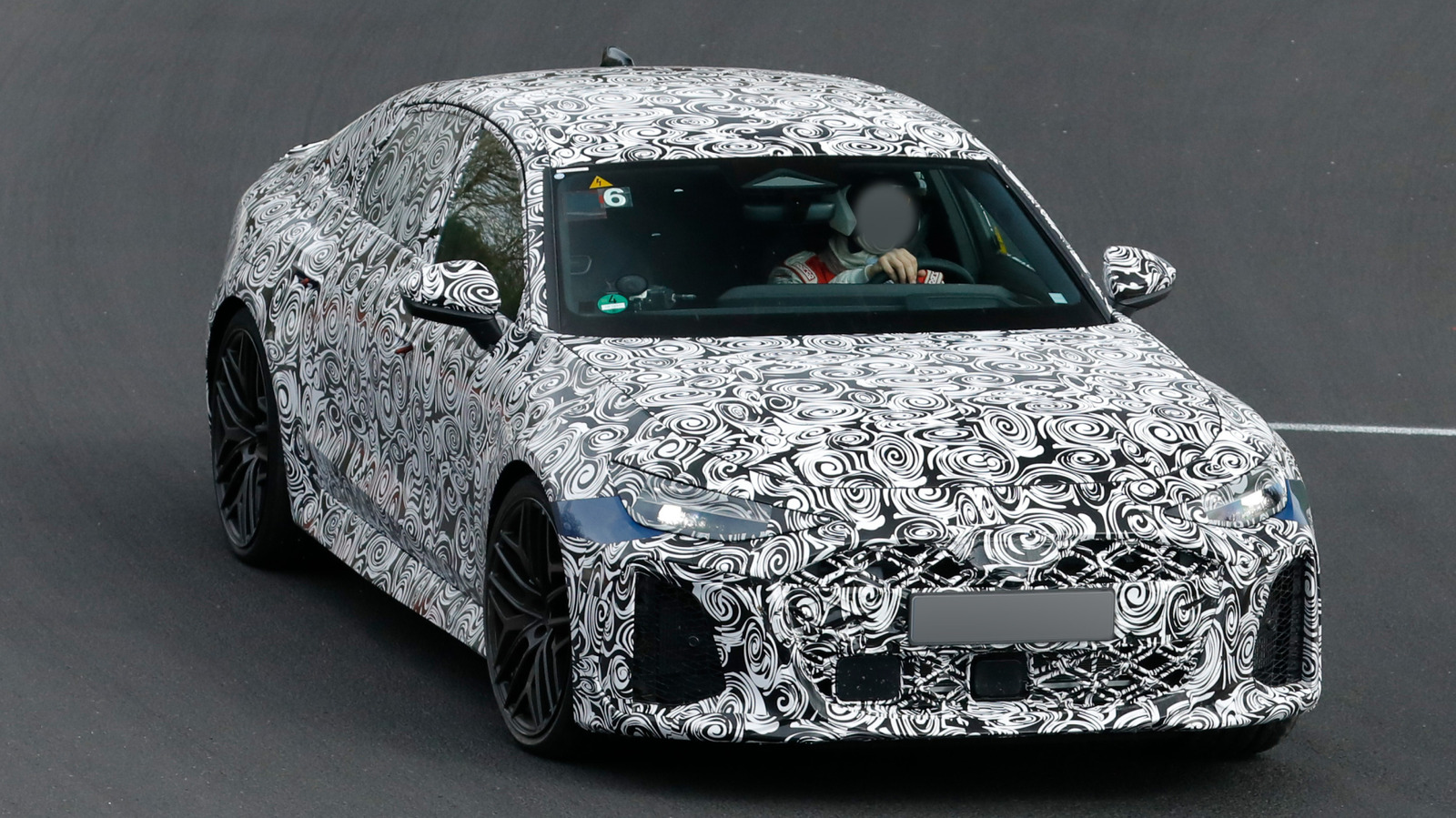
The recently captured prototype vehicles undergoing dynamic evaluation at the Nürburgring provide a clear indication of Audi Sport’s design direction for the C9 RS6 sedan. Free from heavy, deceptive body panels, the test mules display a significantly more aggressive stance than standard A6 variants. The RS6 sedan’s track width has been substantially increased, characterized by flared wheel arches designed to accommodate rolling stock measuring an estimated 22 inches in diameter.
At the front, the vehicle features a revised iteration of Audi’s signature Singleframe grille, sporting a complex double-diamond mesh pattern flanked by enlarged air intakes intended to feed cooling air to the heavily stressed powertrain components. Functional aerodynamic elements are evident along the front fenders, where a newly integrated extraction vent sits immediately ahead of the front doors—a design cue shared with the newly revealed RS5. Camouflage currently conceals the front and rear lighting clusters, though industry insiders anticipate customized RS-specific daytime running light signatures and animated startup sequences.
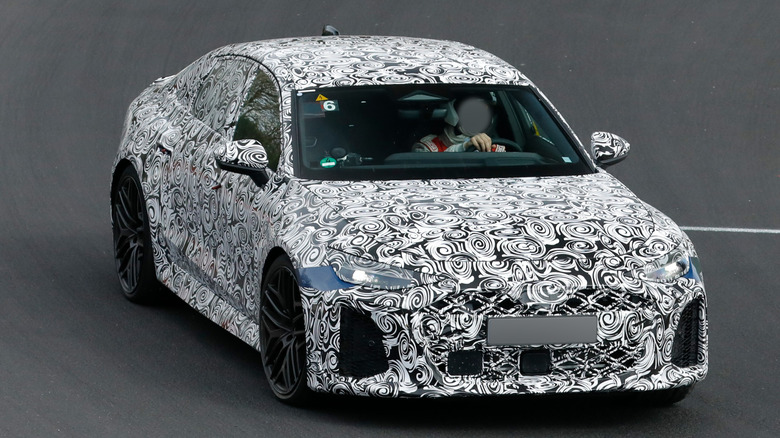
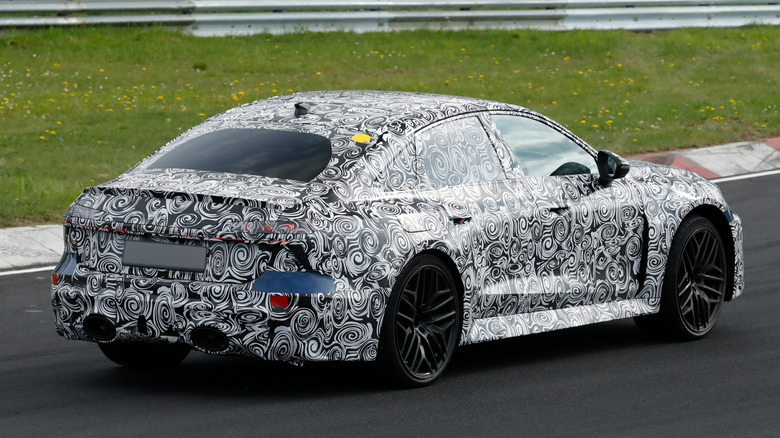
At the rear, the trunk lid integrates a subtle, cleanly molded lip spoiler designed to reduce high-speed aerodynamic lift. Below, the vehicle retains Audi Sport’s traditional design hallmark: two massive, oval exhaust outlets integrated into a prominent rear diffuser. Despite the heavy swirling camouflage wrap, the proportions of the vehicle communicate a classic three-box executive sedan silhouette imbued with the muscular visual tension characteristic of modern high-performance German engineering.
Powertrain Strategy: The Transition to High-Output PHEV
The most significant evolution of the C9 RS6 lies beneath the sheet metal. Regulatory pressures across Europe and North America have forced performance divisions to electrify their flagship offerings, and Audi Sport is no exception. Early industry speculation suggested that the upcoming RS6 might adopt a downsized twin-turbocharged V6 hybrid setup similar to configurations explored in smaller platform mates. However, engineering confirmations indicate that the RS6 will retain an updated, heavily revised iteration of the Porsche-derived V8 engine utilized in current high-end applications across the Volkswagen Group.
This internal combustion engine will be paired with a robust electrical architecture, incorporating a high-capacity lithium-ion battery pack and a powerful electric motor integrated into the transmission housing. This plug-in hybrid system is projected to deliver a combined output exceeding 700 horsepower, eclipsing the performance parameters of its non-electrified predecessors while offering a purely electric driving range capable of handling typical daily urban commutes.
The integration of a hybrid system inevitably introduces a weight penalty compared to older, purely gasoline-powered models. To counteract this mass, Audi Sport has utilized lightweight composite materials throughout the chassis and body construction, alongside advanced torque-vectoring all-wheel-drive systems and active suspension dampening designed to manage body roll dynamically across varying driving surfaces.
Market Implications and Global Availability
The return of the RS6 sedan carries profound implications for Audi’s competitive positioning in the executive performance segment. For over a decade, buyers seeking a high-performance German luxury sedan with all-weather capability have gravitated heavily toward the BMW M5—which has similarly adopted a high-output plug-in hybrid V8 architecture—and the Mercedes-AMG E63 successor. By introducing the RS6 sedan, Audi provides its global dealer network with a vital conquest tool to capture buyers who prefer a traditional trunk over a wagon layout.
Crucially, Audi has already confirmed that the upcoming RS6 Avant will maintain its availability in the North American market, easing anxieties among enthusiasts who feared regional omissions. While official regional allocations and release schedules for the RS6 sedan are expected to be finalized closer to the vehicle’s official global debut—slated for sometime in 2027—market analysts anticipate that the four-door variant will enjoy robust demand in key regions including North America, China, and the Middle East, where sedans retain strong cultural and commercial precedence over estate models.
As the automotive landscape navigates the complex intersection of stringent environmental regulations and enthusiast performance expectations, the resurrected Audi RS6 sedan stands as a testament to the endurance of the super-sedan concept. By blending historical lineage with cutting-edge electrification, Audi Sport aims to prove that the 17-year hiatus of its flagship four-door was merely an intermission rather than a permanent retirement.