Stellantis and UQI Robotics Unveiled BOW, a Driverless Electric Box Designed for Urban Deliveries

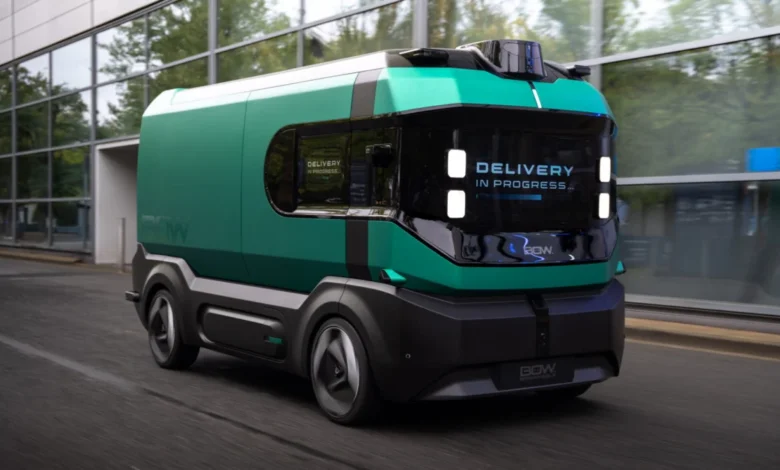
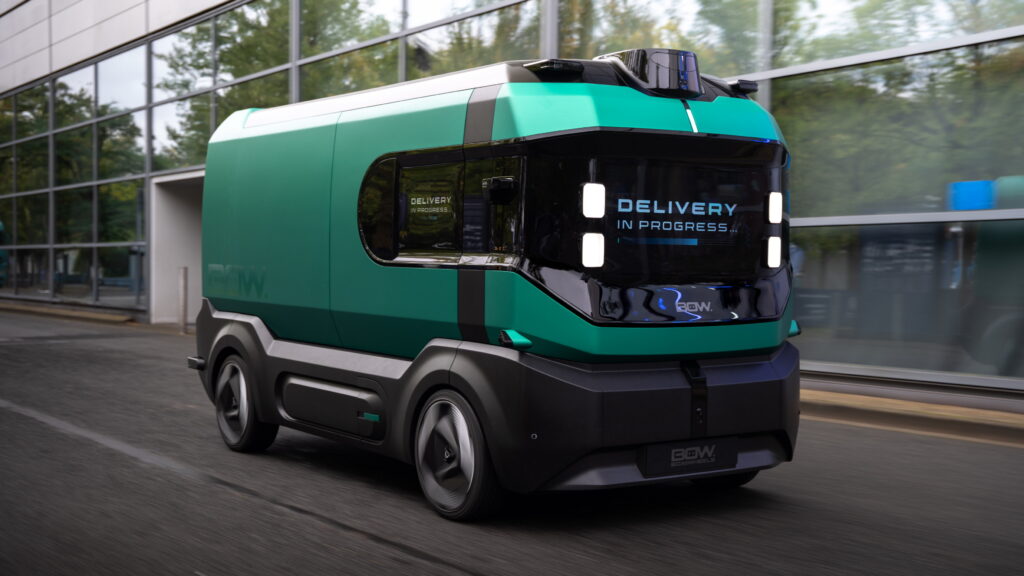
The future of urban logistics may look remarkably sparse, devoid of windscreens, driver cabins, and steering wheels. Automotive giant Stellantis, in a collaborative venture with advanced tech firm UQI Robotics, has introduced the BOW—an acronym for Box On Wheels. Formally presented to the public at the IAA Transportation exhibition in Hanover, Germany, the BOW concept represents a radical reimagining of commercial transport. Rather than modifying a conventional chassis to accommodate automation, Stellantis has stripped away the human element entirely, designing a purely electric, autonomous cargo transporter that functions essentially as a mobile, secure parcel locker.
As metropolitan centers across the globe grapple with escalating congestion, strict low-emission zones, and the soaring demand for last-mile delivery services, automakers are racing to find innovative solutions. Traditional delivery vans require vast structural footprints to accommodate a driver, safety crumple zones, and ergonomics compliant with labor laws. By eliminating the driver’s cab, the BOW concept maximizes cargo capacity relative to its exterior dimensions. However, while the physical design points toward a streamlined future for automated freight, the unveiling has also highlighted significant gaps in technical transparency, leaving industry analysts and prospective fleet operators with more questions than answers regarding its roadmap to commercialization.
Unveiling at IAA Transportation: Context and Debut
The debut of the BOW concept at the IAA Transportation show in Hanover placed it squarely in the epicenter of the commercial vehicle industry. The event, historically known as one of the world’s leading showcases for trucks, vans, and logistics innovations, provided an ideal backdrop for Stellantis to signal its strategic pivot beyond traditional vehicle manufacturing. Alongside static displays of the box-like vehicle, Stellantis orchestrated live demonstrations outside its exhibition stand, showing the autonomous unit navigating controlled pathways.
The collaboration with UQI Robotics underscores a broader industry trend: traditional original equipment manufacturers (OEMs) are increasingly partnering with technology specialists to bridge the gap between heavy automotive engineering and advanced artificial intelligence. UQI Robotics contributes its expertise in autonomous navigation software and sensor integration, while Stellantis leverages its manufacturing scale, supply chain depth, and overarching commercial strategy through its dedicated pro-vehicle division, Stellantis Pro One.
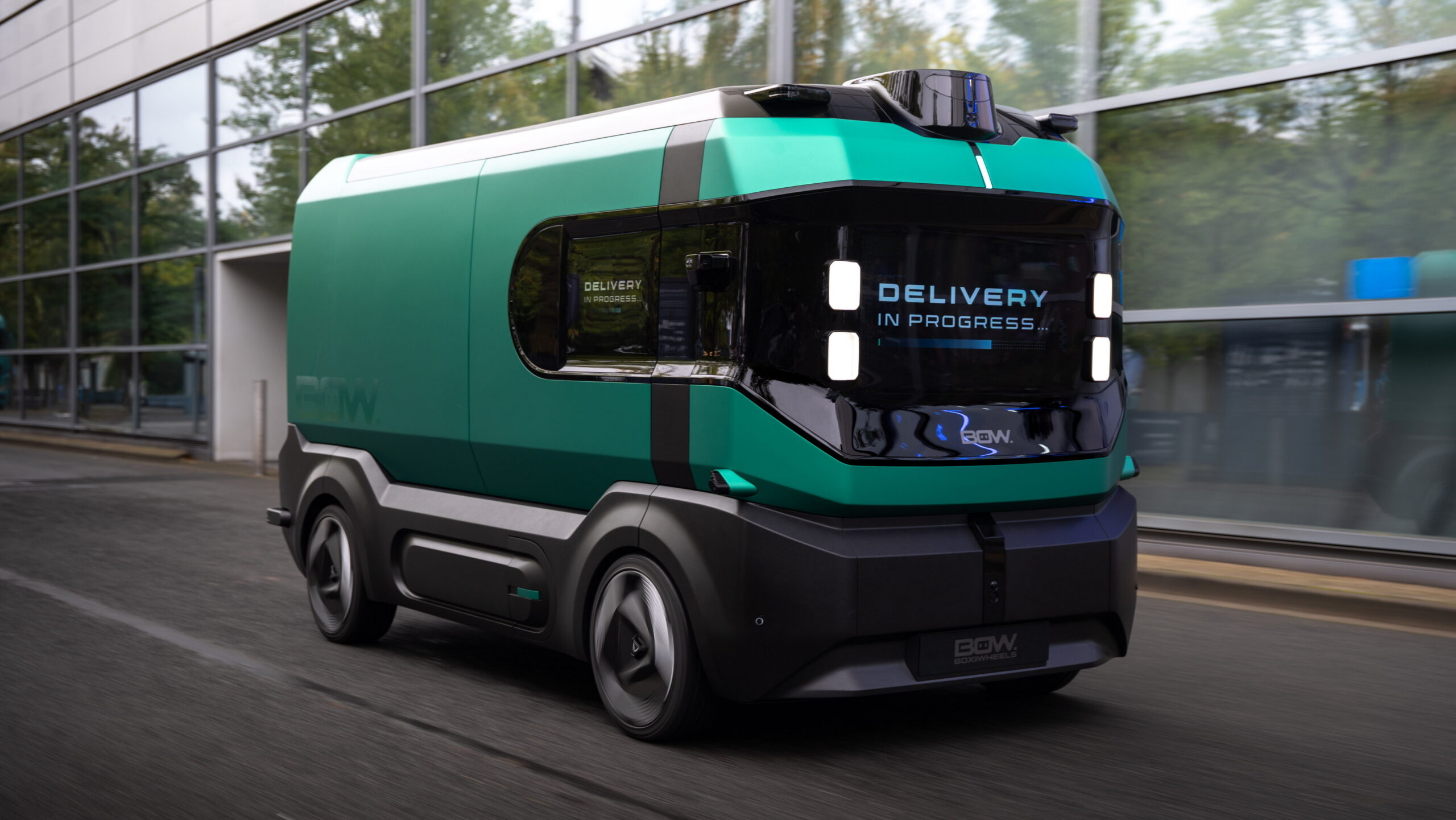
The core philosophy driving the BOW concept is straightforward. In controlled, high-density, or pedestrian-restricted environments—such as sprawling corporate campuses, hospital complexes, international airports, and tightly regulated urban cores—human-operated delivery vans are often inefficient. They consume parking space, create bottlenecks, and present safety risks in pedestrian zones. A purpose-built, highly maneuverable electric box operating at lower speeds within a connected fleet network promises to mitigate these challenges.
Anatomy of a Box On Wheels: Design and Theoretical Efficiency
At first glance, the BOW lives up to its name with uncompromising literalness. It features a rectangular, container-like body mounted on a compact electric skateboard platform. Because there is no need for forward visibility, instrumentation, climate control for a driver, or seating, the entire volume of the vehicle is theoretically dedicated to payload storage.
Traditional delivery vans allocate a substantial percentage of their total interior volume and structural weight to the cabin and its associated mechanical systems. In contrast, an autonomous cargo pod like the BOW shifts the efficiency paradigm. Without the legal and ergonomic constraints of human transport, the vehicle can optimize its center of gravity, utilize modular storage compartments for secure sorting, and interface seamlessly with automated loading and unloading infrastructure at distribution hubs.
Furthermore, the absence of a cabin alters the safety profile of the vehicle. Operating at restricted urban speeds, a vehicle with a soft-edged, monolithic box design presents a different interaction dynamic with pedestrians compared to a multi-ton commercial van with blind spots and a high seating position. Proponents of autonomous delivery pods argue that these units can integrate more harmoniously into sidewalk-adjacent bicycle lanes or pedestrian zones when properly programmed and geofenced.
The Information Gap: Missing Specifications and Operational Realities

Despite the visual novelty of the live demonstrations in Hanover, Stellantis has maintained a notably reserved posture regarding the technical specifications of the BOW concept. During the initial unveiling, key performance and engineering metrics were conspicuously absent from the corporate press materials.
As it stands, prospective fleet operators and municipal planners do not have access to verified data regarding the vehicle’s battery capacity, driving range per charge, payload weight limits, motor output, or maximum operational speed. Crucially, the exact suite of sensors—whether relying on LiDAR, radar, cameras, or a sensor-fusion matrix—has not been detailed, nor has the specific autonomy level (such as SAE Level 4 or Level 5) been officially classified.
Additionally, questions of economic viability remain unanswered. No pricing structure has been suggested, and Stellantis has not announced any pilot customers, commercial partnerships, or concrete timelines for mass production. Company representatives have stated that initial validation activities will take place exclusively within controlled environments in Europe. Beyond these initial trials, the broader commercial rollout remains speculative, categorized largely by corporate observers as an exploratory exercise rather than an imminent product launch.
The Competitive Landscape: Sidewalk Robots to Full-Scale Pods
The debut of the BOW arrives in a rapidly evolving market for autonomous last-mile delivery solutions. Over the past several years, various startups and tech giants have experimented with alternative form factors to solve the notoriously expensive last-mile delivery problem.
On one end of the spectrum are small, sidewalk-bound delivery robots, such as those developed by companies like Serve Robotics, which navigate pedestrian walkways to deliver meals and small retail packages over short distances. While effective in specific urban pockets, these sidewalk units face limitations regarding cargo volume, weather vulnerability, and regulatory pushback from municipalities concerned about sidewalk congestion.
On the other end of the spectrum are autonomous passenger-turned-cargo vehicles, such as robotaxis and dedicated delivery vans designed to operate on major public thoroughfares at normal traffic speeds. The competitive tension in this space was highlighted around the same timeframe by developments surrounding Tesla’s Cybercab and similar autonomous platforms designed to mix freely with standard traffic.
Stellantis’s BOW concept occupies a middle ground. It is too large and utilitarian for standard pedestrian sidewalks, yet its lack of a driver’s cab and restricted feature set suggest it is not intended to replace a high-speed highway freight van. Instead, it targets the liminal spaces of urban logistics: low-emission zones, pedestrianized commercial districts, and private industrial sites where volume, security, and predictability are paramount.
Strategic Implications for Stellantis and the Automotive Sector
The introduction of the BOW concept serves as a critical indicator of how legacy automakers are redefining their corporate identities. For decades, companies like Stellantis—formed through the merger of Fiat Chrysler Automobiles and Groupe PSA—built their business models around selling physical vehicles to individual consumers or commercial fleet buyers who employed human drivers.
Projects like the BOW signal a strategic evolution toward software-defined mobility and service-oriented business models. In this anticipated future, an automaker may no longer simply sell a van; instead, it may sell an integrated logistics ecosystem where the physical hardware—the box on wheels—is merely a peripheral device managed by centralized fleet software, automated logistics hubs, and artificial intelligence routing algorithms.
This shift mirrors broader macroeconomic pressures. Rising labor costs for delivery personnel, driver shortages in the logistics sector, and tightening municipal regulations against internal combustion engines—and even large commercial vehicles in city centers—are forcing fleet operators to look for systemic efficiencies. If autonomous pods can operate continuously, recharging autonomously during off-peak hours and minimizing dwell times at loading docks, the total cost of ownership could drop significantly compared to traditional human-driven fleets.

However, transitioning from concept to commercial reality involves navigating a labyrinth of regulatory hurdles. European transport authorities, while progressive in testing smart mobility solutions, maintain stringent safety certifications for any autonomous vehicle interacting with public infrastructure. Establishing liability frameworks, ensuring cybersecurity against remote interference, and gaining public trust in driverless technology will require years of rigorous testing and regulatory dialogue.
Outlook and Future Validation
As Stellantis transitions the BOW from its static and dynamic demonstrations in Hanover to preliminary validation phases in Europe, the automotive industry will be watching closely to see whether the concept matures into a production-ready utility or remains a design exercise.
The primary test for the BOW will not be its ability to roll across a convention center floor, but its resilience in unpredictable real-world conditions. Navigating unpredictable pedestrian behavior, adverse weather conditions, unmapped construction zones, and complex urban infrastructure will demand a level of autonomy that current prototype phases have yet to prove publicly.
For now, the Stellantis and UQI Robotics partnership has successfully framed a provocative question for the logistics sector: when removing the human driver from the equation, does a delivery vehicle even need to resemble a car? By answering in the negative with the BOW, Stellantis has laid down a conceptual marker for the future of urban freight, leaving the market to ponder how quickly theory can be translated into practice on public streets.