The automotive landscape is witnessing a significant pivot as luxury manufacturers, once content with car-based crossovers, begin to eye the lucrative and prestigious segment of rugged, ladder-frame off-roaders. Audi, a brand traditionally associated with the sleek sophistication of its Quattro all-wheel-drive sedans and "Allroad" wagons, is now the subject of intense speculation regarding a flagship rugged SUV. This potential shift in strategy is being visualized through new digital renderings that apply the brand’s latest "Concept C" design language to a boxy, high-clearance frame, suggesting a vehicle capable of challenging the long-standing supremacy of the Mercedes-Benz G-Class and the Land Rover Defender.
The catalyst for this renewed interest stems from Audi’s own admission in early 2024 that it was actively weighing the development of a "rugged flagship SUV." While Audi has historically utilized its MLB and MEB platforms for SUVs like the Q7 and Q8 e-tron, these architectures are unibody designs optimized for on-road comfort and handling. To create a true "G-Class rival," the company requires a more robust foundation, and the solution appears to lie within the broader Volkswagen Group’s strategic revival of the Scout brand. By leveraging the body-on-frame architecture being developed for Scout, Audi could enter the off-road segment with a credible, high-performance machine without the prohibitive costs of developing a bespoke ladder-frame chassis from scratch.
The Evolution of Audi’s Design Language
The visual identity of this hypothetical off-roader is heavily influenced by Audi’s "Concept C," a design study unveiled last year that promised to dictate the aesthetic of the brand’s next generation of vehicles. The first production-adjacent model to emerge from this philosophy was the Lamborghini Temerario-powered Nuvolari, a supercar that translated Concept C’s flat surfaces and sharp creases into a high-performance silhouette. However, industry analysts and enthusiasts have noted that while these minimalist, geometric shapes might feel unconventional on a low-slung sports car, they are perfectly suited for the utilitarian proportions of a heavy-duty SUV.
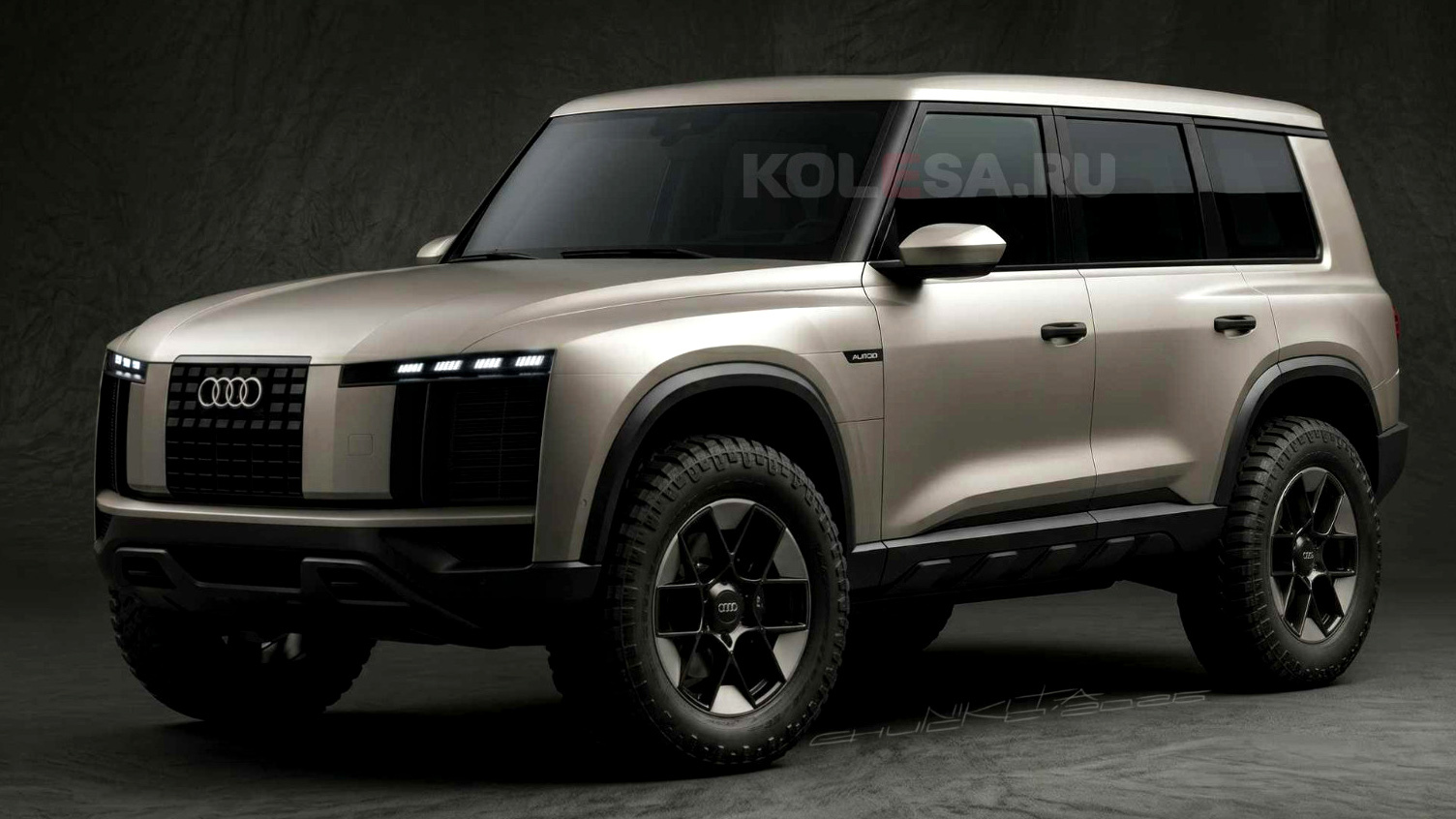
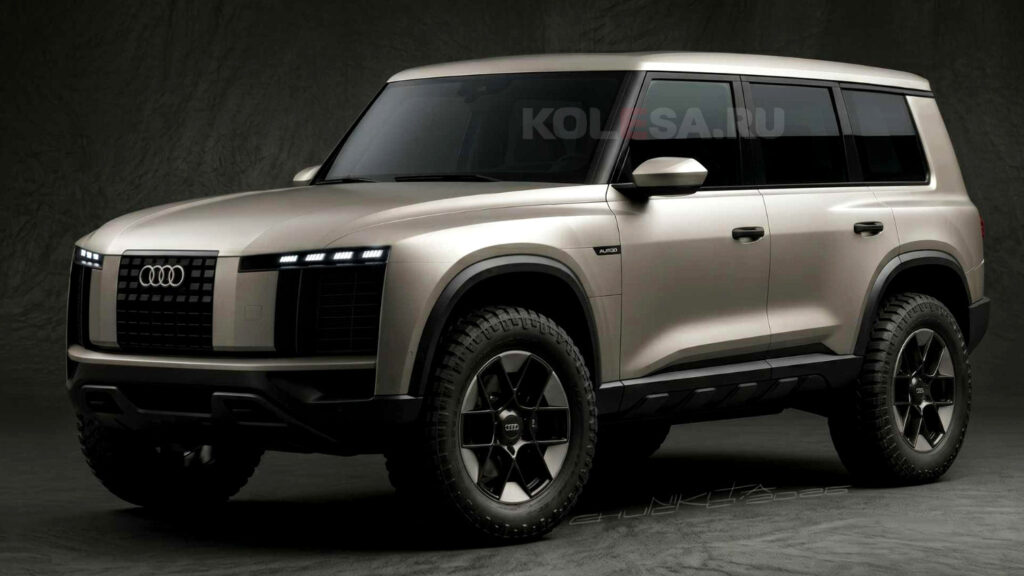
New renderings produced by digital artist Nikita Chuyko for Kolesa illustrate this transition effectively. The imagined Audi SUV adopts a stance and proportion strikingly similar to the recently redesigned Lexus GX 550—a vehicle that has been praised for its "brutalist luxury" aesthetic. The front fascia is dominated by a squared-off central grille and slim, high-mounted LED headlights that emphasize the vehicle’s width. Large, blacked-out air intakes sit beneath the lighting elements, providing a modern, aggressive look that departs from the softer curves of Audi’s current Q-series lineup.
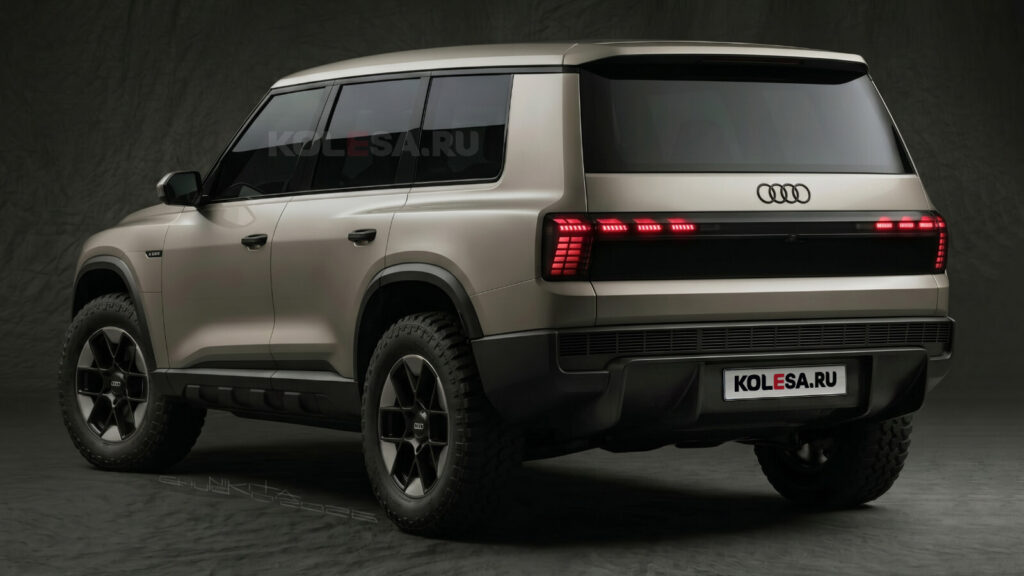
The profile of the vehicle features a high beltline and a flat, squared-off roofline, which maximizes interior volume and provides the "boxy" silhouette currently favored by luxury off-road consumers. Functional elements are integrated into the design, including a robust front bumper with an integrated skid plate, flared wheel arches to accommodate large all-terrain tires, and a rear spare wheel carrier—a hallmark of the segment. While the rear diffuser in the renders retains a hint of Audi’s racing heritage, the overall package signals a vehicle designed for the trail rather than the Autobahn.

The Scout Connection: A Shared Technical Foundation
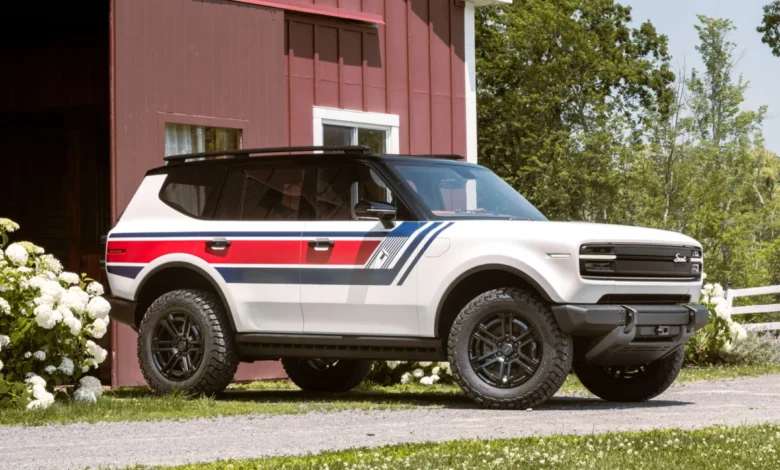
The most compelling aspect of a potential Audi rugged SUV is the hardware that would reside beneath the sheet metal. In 2022, Volkswagen Group announced the revival of the Scout nameplate as an independent American brand focused on electric off-road vehicles. Scout is developing a proprietary ladder-frame platform in Blythewood, South Carolina, designed to support both fully electric (BEV) and range-extender (EREV) powertrains.
For Audi, the Scout platform represents a "golden ticket" into the off-road market. Using this architecture would allow Audi to offer:
- Mechanical Credibility: True mechanical or advanced electronic locking differentials at the front and rear.
- Off-Road Geometry: Significant ground clearance, high approach and departure angles, and long-travel suspension.
- Powertrain Versatility: The ability to offer a range-extended version (Harvester) would alleviate the range anxiety often associated with taking electric vehicles into remote wilderness areas.
- Towing and Payload: The structural integrity of a ladder frame allows for superior towing capacities compared to unibody SUVs, a key metric for North American buyers.
By sharing the Scout underpinnings, Audi can maintain its premium brand positioning through superior interior materials, advanced infotainment (such as the Audi MMI "Digital Stage"), and sophisticated air suspension tuning, while the Scout-sourced "bones" handle the heavy-duty requirements of off-roading.
Chronology of Audi’s Off-Road Ambitions
Audi’s journey toward a dedicated off-roader has been a slow burn spanning over four decades. Understanding this timeline is essential to see why a G-Class rival is the logical next step:
- 1980: The introduction of the Audi Quattro at the Geneva Motor Show revolutionizes rally racing and establishes all-wheel drive as a core brand pillar.
- 1999: The Audi A6 Allroad Quattro debuts, offering a raised ride height and plastic body cladding, catering to "lifestyle" off-roaders.
- 2005: The Q7 is launched, marking Audi’s first serious entry into the full-size SUV market, though it remains a road-biased unibody vehicle.
- 2019: The AI:TRAIL quattro concept is shown, a futuristic vision of a rugged, electric off-roader with drone-mounted headlights.
- 2023: Audi launches the Q8 e-tron edition Dakar, a limited-production model inspired by the RS Q e-tron desert racer, signaling an increased appetite for "dirty" performance.
- 2024: Audi executives confirm that a rugged SUV platform is under active consideration, potentially utilizing Scout’s American-made architecture.
Competitive Landscape and Market Dynamics
The luxury off-road segment is currently one of the most profitable niches in the automotive industry. The Mercedes-Benz G-Class, despite its high price point and aging basic architecture, continues to see record demand, prompting Mercedes to launch the electric G 580 with EQ Technology. Similarly, Land Rover has found massive success with the new Defender, which has become the brand’s best-selling model.
Audi is not the only German manufacturer looking to disrupt this duopoly. BMW is reportedly developing its own rugged flagship under the internal codename "G74." Unlike Audi, which may use a ladder frame, BMW’s project is expected to utilize a heavily modified version of the CLAR (Cluster Architecture) platform that underpins the X5 and X7. This creates a fascinating technical divergence: Audi may opt for the "truck-based" approach for maximum durability, while BMW stays with a "car-based" approach optimized for high-speed stability.

Furthermore, the geographical center of this rivalry is shifting to the American South. BMW’s Spartanburg, South Carolina, plant is already the global hub for its SUV production. If Audi greenlights its rugged SUV to be built alongside Scout in Blythewood, South Carolina, two of Germany’s fiercest rivals will be manufacturing their flagship off-roaders just miles apart in the same state.
Broader Implications and Analysis
The move toward a rugged SUV represents a significant shift in Audi’s brand identity. For years, Audi’s "Vorsprung durch Technik" (Progress through Technology) was defined by digital cockpits, lighting technology, and aerodynamic efficiency. However, as the luxury market becomes saturated with electric crossovers that look and feel increasingly similar, "rugged luxury" offers a way to differentiate.
A ladder-frame Audi would appeal to a different demographic—one that values "overlanding" capability and a "go-anywhere" persona, even if the vehicle rarely leaves the pavement. From a financial perspective, these vehicles command high margins and often foster strong brand loyalty. For the Volkswagen Group, utilizing the Scout platform for an Audi-badged product creates economies of scale that make the Scout investment more viable.
However, there are risks. Audi must ensure that a vehicle based on a rugged platform does not compromise the "Audi-ness" of the driving experience. Customers expect an Audi to be quiet, refined, and technologically superior. If the Scout-based SUV feels too much like a traditional truck, it could alienate the brand’s core fan base. The challenge for Audi engineers will be to mask the inherent vibrations and harshness of a ladder-frame chassis with sophisticated damping and sound insulation.
Conclusion
While the images provided by Nikita Chuyko remain speculative renderings, they represent a very real possibility within Audi’s product roadmap. The combination of the "Concept C" design language and the Scout brand’s mechanical hardware provides a clear path for Audi to finally challenge the Mercedes G-Class. As the automotive industry continues to evolve toward electrification, the "rugged flagship" may become the new frontier where luxury brands prove their engineering mettle. If the project receives final approval, we can expect a production version to debut around 2026 or 2027, potentially reshaping the hierarchy of the luxury off-road world.