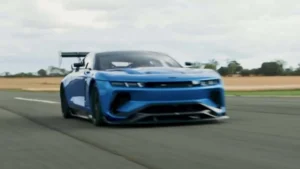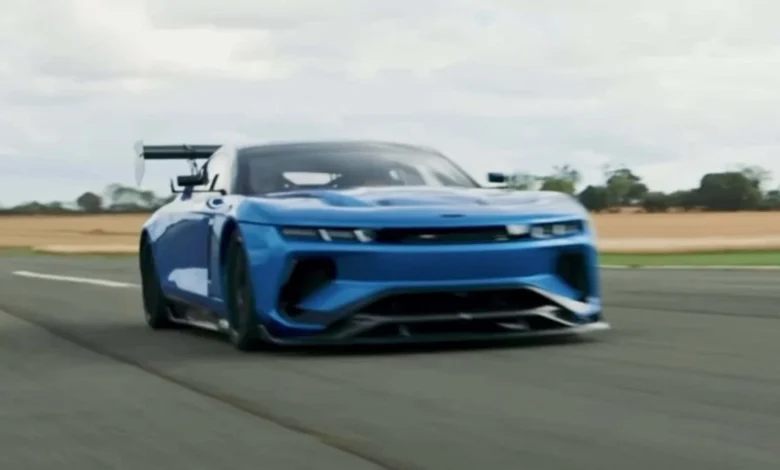
The storied British automotive marque Jensen is making a calculated return to the global performance stage with the unveiling of the Jensen Interceptor GTX, a prototype currently engineered exclusively for track use. This development signals a significant milestone for a brand that has long been synonymous with the fusion of European grand touring elegance and American muscle car potency. While the current iteration remains restricted to closed-course circuits, its existence serves as a technical showcase for the engineering capabilities of the revived company, with clear ambitions to translate these high-performance attributes into a road-legal production vehicle in the near future.
The Evolution of the Jensen Interceptor
The Interceptor nameplate holds a hallowed place in automotive history. Originally produced between 1966 and 1976, the classic Jensen Interceptor was celebrated for its unconventional marriage of a British-designed body—often styled by Italian firm Carrozzeria Touring—and massive Chrysler V8 engines. It was a vehicle that bridged the gap between luxury grand tourers and raw, unadulterated power.
The modern reincarnation of the Interceptor project has been characterized by a multi-year development cycle aimed at respecting this heritage while integrating contemporary technology. After years of speculation and intermittent announcements regarding the brand’s return, the debut of the GTX prototype represents the first tangible manifestation of the company’s current vision. By focusing initially on a track-only platform, the engineering team has been granted the liberty to prioritize raw mechanical performance, chassis rigidity, and aerodynamic efficiency without the immediate constraints of road-legal safety regulations and emissions standards.
Mechanical Specifications: A Transatlantic Powerhouse
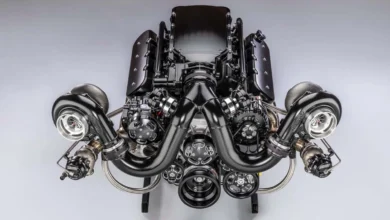
At the core of the Jensen Interceptor GTX is a potent 6.8-liter V8 engine, a powerplant that highlights the brand’s continued reliance on American automotive muscle. However, in this modern iteration, the engine undergoes an extensive transformation process before being installed in the chassis. Jensen partners with Late Model Engine (LME) in Texas, a specialist firm renowned for building high-output, reliable racing engines.
The overhaul process is exhaustive. While the engine block serves as the foundation, nearly every critical internal component is replaced or significantly upgraded to handle the stresses of high-RPM track duty. The cylinder heads are precision-engineered via CNC machining, and the valvetrain is enhanced with the inclusion of lightweight titanium valves, which facilitate better heat dissipation and higher revving capabilities. Furthermore, the rotating assembly—comprising the crankshaft, connecting rods, and pistons—is swapped for race-grade hardware designed to withstand the immense pressures of forced induction.
The induction system is managed by a sophisticated Motec engine management system, a choice that underscores the professional-grade nature of the build. This electronic brain allows for granular control over ignition timing, fuel delivery, and boost pressures. In its current track configuration, the powertrain produces approximately 973 horsepower. However, technical briefings from the development team suggest that the architecture is robust enough to support outputs reaching up to 1,200 horsepower with specific tuning adjustments, placing the GTX firmly within the category of ultra-high-performance hypercars.
Transmission and Drivetrain Dynamics
Perhaps the most notable technical decision regarding the GTX is the retention of a manual gearbox. In an era where dual-clutch transmissions and lightning-fast automatics dominate the performance landscape, Jensen’s choice to employ a manual transmission emphasizes a focus on driver engagement and mechanical purity. The transmission has been specifically reinforced to manage the gargantuan torque figures generated by the supercharged V8, ensuring that the connection between the engine and the rear wheels remains resilient under sustained track loads.
This configuration creates a driving experience that is fundamentally analog compared to the computerized assistance found in modern electric or hybrid hypercars. For the purist, this is a significant selling point, as it places the responsibility of power management entirely on the driver, reinforcing the vehicle’s identity as a driver-centric machine.
The Path to Road-Legal Production
The transition from a prototype track car to a road-legal vehicle involves a rigorous set of regulatory and engineering challenges. Jensen has articulated a clear roadmap for this transition, aiming to bifurcate the product line into two distinct variants: a grand touring (GT) model and a high-performance (GTR) variant.
The GT is envisioned as a refined, long-distance performance vehicle, likely featuring a more compliant suspension setup, a more luxurious interior, and a focus on grand touring comfort without sacrificing the V8 engine’s character. Conversely, the GTR is expected to lean further into the track-bred roots of the GTX prototype, likely featuring more aggressive aerodynamic elements, stiffer suspension, and a stripped-back cabin.
The company’s challenge, however, remains the reconciliation of these performance metrics with international homologation standards. This includes pedestrian safety regulations, noise pollution limits, and modern crash-test requirements. Jensen’s development team has indicated that the data gathered from the ongoing track testing of the GTX prototype will be foundational to these future production designs. By "stress-testing" the core platform in the most demanding environments, the company hopes to shorten the development phase for the road-legal variants.
Industry Implications and Market Positioning
The return of Jensen to the automotive market is a calculated bet on the enduring appeal of the "restomod" and boutique supercar movement. Similar to the trajectories of companies like Singer Vehicle Design or Gordon Murray Automotive, Jensen is leveraging a recognizable brand heritage to justify the high costs associated with bespoke, low-volume manufacturing.
From a market perspective, the Interceptor GTX occupies a unique niche. It is not competing directly with high-volume luxury sports cars but rather targeting the collector and enthusiast market that values rarity, visceral mechanical feedback, and a connection to 20th-century automotive history.
The financial viability of such a project is notoriously difficult, given the R&D costs associated with bringing a new vehicle to market. However, the use of established engine architecture—such as the GM-sourced V8—allows the company to minimize development overhead on the powertrain while focusing resources on chassis design and interior craftsmanship. If Jensen can successfully deliver a production version that retains the auditory character and raw power of the prototype, it will likely secure a dedicated following among those who feel that modern automotive design has become too sanitized or overly reliant on digital intervention.
Conclusion: A Sonic Statement of Intent
Beyond the technical specifications and the engineering pedigree, the Jensen Interceptor GTX serves as a "sonic statement" of intent. In an industry rapidly pivoting toward electrification and the silent efficiency of battery-electric powertrains, the choice to double down on a high-displacement, supercharged V8 is a deliberate stylistic and emotional decision.
The sound of the GTX at full throttle is more than just an engineering byproduct; it is a marketing tool that connects the brand’s past to its future. As the automotive world navigates a period of significant transition, the Interceptor GTX offers a glimpse of what is possible when modern manufacturing techniques are applied to a classic, high-displacement formula. Whether the road-legal version will be able to replicate the visceral experience of the track-only prototype remains the central question. For now, the automotive community waits to see if the British manufacturer can successfully bridge the gap between a promising prototype and a production reality that honors one of the most storied names in British performance history.
As the development timeline progresses, the industry will be watching to see how Jensen manages the complexities of modern safety and environmental compliance. Should they succeed, the Interceptor will likely stand as one of the most compelling examples of how a heritage brand can reinvent itself for a new generation of enthusiasts, proving that there is still a place for the raw, mechanical, and unapologetically loud grand tourer.