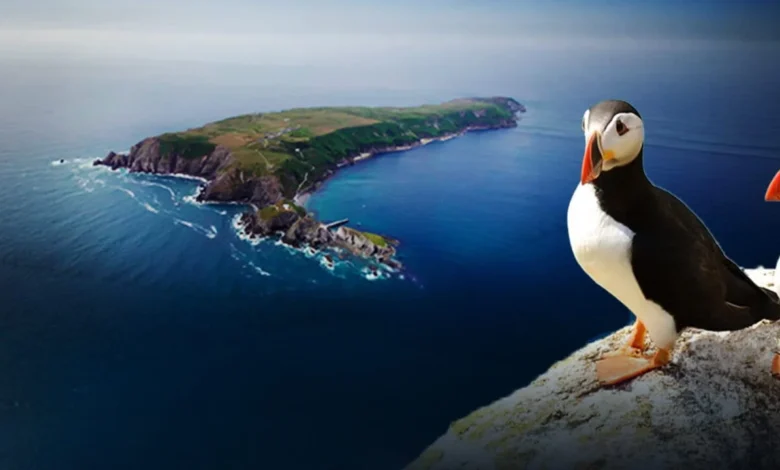
Lundy Island, a jagged granite monolith rising from the turbulent waters of the Bristol Channel, stands as a testament to the potential for ecological restoration when human industry and environmental stewardship intersect. Positioned between the coastlines of North Devon, England, and South Wales, this three-mile-long island has evolved from a site of environmental degradation into one of the United Kingdom’s most significant conservation success stories. By implementing a multifaceted strategy involving the eradication of invasive species and the establishment of the UK’s first statutory no-take zone, Lundy has demonstrated that biodiversity recovery is not only possible but economically and socially beneficial for local communities.
The Turning Point: Addressing Invasive Species
The ecological trajectory of Lundy underwent a radical shift in the early 2000s. For decades, the island’s seabird colonies—including puffins, Manx shearwaters, razorbills, and guillemots—had been in a state of precipitous decline. The primary driver of this collapse was the presence of brown rats (Rattus norvegicus), which had been accidentally introduced to the island. These predators decimated the populations of ground-nesting birds by raiding burrows and consuming both eggs and chicks. By 2002, the seabird census indicated that populations had dwindled to approximately 6,000 individuals, a figure that signaled an impending local extinction event for several key species.
In a landmark environmental initiative, conservationists and government bodies launched a comprehensive eradication program. The project was executed with clinical precision, requiring a sustained, multi-year effort to ensure the total removal of the predator population. The impact was near-instantaneous. With the threat removed, the island’s nesting birds experienced a remarkable resurgence. Data from recent surveys indicate that the seabird population has soared to over 48,000, representing an eight-fold increase. This recovery has transformed Lundy into a critical sanctuary for avian life at a time when many UK seabird species are facing severe climate-driven pressures.
The Birth of the Marine Protected Area and No-Take Zone
While the terrestrial recovery of Lundy is impressive, the island’s most innovative achievement lies beneath the waterline. The waters surrounding Lundy are characterized by diverse habitats, including deep-water caves, submerged pinnacles, kelp forests, and rocky reefs. Recognizing the ecological importance of this unique topography, authorities designated the area as the UK’s first Marine Nature Reserve in 1986. However, it was the subsequent creation of a "no-take zone" (NTZ) in 2003 that truly set the island apart.
An NTZ is a strictly regulated marine area where all forms of extractive activities, such as commercial fishing and dredging, are permanently prohibited. The implementation of the Lundy NTZ was not a top-down imposition; rather, it was the result of a rigorous, grassroots consultative process. Local fishermen, commercial divers, and marine scientists collaborated to delineate a rectangular zone on the east coast of the island. This specific design choice prioritized ease of enforcement and mapping. By fostering an environment of mutual respect, the project ensured that the local fishing industry—which relied on sustainable lobster and crab potting—remained viable while protecting the nursery grounds of more sensitive species.
Chronology of Conservation Milestones
- 1986: Lundy is formally designated as the United Kingdom’s first statutory Marine Nature Reserve (MNR), establishing the foundational framework for protected status.
- 2002: The Seabird Recovery Project commences with the initiation of an island-wide rat eradication program to protect nesting colonies.
- 2003: The UK’s first No-Take Zone (NTZ) is officially established within the marine reserve, prohibiting all forms of fishing in a designated rectangular section.
- 2004–2008: Early monitoring surveys record a significant increase in the density and size of lobster populations within the NTZ.
- 2010: Formal assessments confirm the recovery of the spiny lobster (crawfish), a species previously considered on the brink of local extinction in the region.
- 2020–Present: Long-term data demonstrate the "spillover effect," where increased biomass within the NTZ directly contributes to higher catch rates in adjacent, non-protected fishing grounds.
Supporting Data and the "Spillover Effect"
The success of the Lundy NTZ is best illustrated by the resurgence of the European lobster (Homarus gammarus). Quantitative monitoring conducted by the Inshore Fisheries and Conservation Authority (IFCA) revealed that within just five years of the zone’s inception, lobster density had reached record levels. Today, the NTZ acts as a biological "engine room." As populations within the protected rectangle reach carrying capacity, the excess individuals naturally migrate into surrounding areas.

This "spillover effect" has been a vital economic justification for the project. Commercial fishermen, who were initially wary of losing access to prime fishing grounds, have largely become the strongest advocates for the zone. The increased size and number of lobsters in the periphery allow for a more sustainable and profitable catch compared to the era of intensive trawling. Furthermore, the protection of fragile benthic structures—such as pink sea fans, which can take decades to mature—has preserved the structural integrity of the seabed, providing essential shelter for juvenile fish and crustaceans.
Collaborative Governance and Stakeholder Buy-in
The Lundy model offers a blueprint for "co-management," a system where local stakeholders are granted a seat at the table in the governance of natural resources. By involving the North Devon fishing community in the creation of the zoning boundaries, conservationists avoided the common pitfall of alienating the very people who depend on the ecosystem.
"Everyone was on board with it," notes Geoff Huelin, a retired local fisherman who participated in the initial consultations. "There are such benefits to it that I can’t see anything that would argue against it. All the fishermen are happy here, and they stand by it 100 percent." This level of consensus is rare in environmental policy and suggests that the longevity of the Lundy project is due as much to social cohesion as it is to biological science.
Implications for Future Marine Policy
The Lundy experience carries significant weight for the broader UK and international marine policy agenda. As the British government seeks to meet its "30 by 30" commitment—a pledge to protect 30% of the world’s oceans by 2030—the success of Lundy provides evidence that localized, community-led protected areas can yield rapid, tangible results.
However, the analysis also points to the necessity of sustained funding and active enforcement. The Lundy NTZ is not a "set it and forget it" solution. It requires ongoing monitoring, surveillance, and engagement with both commercial and recreational users. Furthermore, the island serves as a reminder that marine protection is inextricably linked to the health of the land. The recovery of the seabirds, for instance, provides a vital nutrient loop for the island’s ecosystem, where guano from the birds fertilizes the surrounding waters, potentially enhancing the productivity of the marine food web.
Conclusion
Lundy Island remains a beacon of resilience. It is a place where the wild spirit of the Bristol Channel is allowed to flourish through careful, science-based management and inclusive governance. As the island moves into its next decade of protection, the focus is shifting toward maintaining this delicate balance. Whether it is the continued protection of slow-growing coral species or the monitoring of climate-induced changes to the marine environment, Lundy serves as a living laboratory for the world. It provides the proof that, when given the space to recover, nature does not merely survive—it thrives. For the visitors, scientists, and local residents who frequent its rugged shores, the island stands as a quiet but powerful statement: the restoration of our natural world is not only a moral obligation but a practical, attainable goal.