The ABQ BioPark BUGarium returns to the spotlight as a center for arthropod conservation and public education following a major renovation.

For many, the quintessential zoo experience is defined by the charismatic megafauna: the towering stride of a giraffe, the commanding presence of a lion, or the complex social displays of a gorilla troop. Yet, in the heart of Albuquerque, New Mexico, the ABQ BioPark is redefining the traditional wildlife encounter by shifting the focus toward the planet’s most abundant, yet frequently overlooked, inhabitants. The reopening of the ABQ BioPark BUGarium in October 2026 marks a significant milestone in the facility’s history, signaling a renewed commitment to the essential, often misunderstood, world of insects and other arthropods.
A Year of Transformation: The $1.45 Million Renovation
The BUGarium serves as a specialized wing within the broader ABQ BioPark ecosystem, which also encompasses a sprawling aquarium, a traditional zoological park, and a lush botanic garden. Following a comprehensive, year-long closure for extensive facility upgrades, the BUGarium officially welcomed the public back in the fall of 2026. The $1.45 million investment was not merely aesthetic; it was a structural and educational overhaul designed to modernize how these delicate creatures are housed and observed.
The renovation project focused on enhancing the visibility of the exhibits while maintaining the rigorous environmental standards required to keep these species healthy. By integrating new display technologies and climate-controlled habitats, the BioPark has sought to bridge the gap between scientific observation and public engagement. This renovation reflects a broader trend in modern zoological management: the transition from viewing animals as mere curiosities to viewing them as critical components of global biodiversity that require sophisticated husbandry and conservation advocacy.
The Ecological Imperative: Why Insects Matter
The mission of the BUGarium is rooted in a sobering ecological reality: the survival of the human race is inextricably linked to the survival of insects. Insects represent the largest taxonomic group on Earth, accounting for more than 75% of all known animal species. Their roles as pollinators, nutrient recyclers, and primary food sources for countless birds, mammals, and reptiles make them the literal foundation of terrestrial food webs.
The late, renowned entomologist E.O. Wilson famously underscored this fragility, noting that if insects were to be wiped out, the rest of life—including humanity—would likely collapse within a matter of months. This sentiment is echoed by the leadership at the ABQ BioPark. Matthew Peterson, the Associate Director of the BioPark, emphasized in a formal statement that the facility is designed to move beyond the "creepy-crawly" stigma often associated with insects. Whether they are pollinating essential agricultural crops, breaking down decaying matter to enrich soil, or keeping pest populations in check, these animals perform "ecosystem services" that are valued in the trillions of dollars annually on a global scale.
Bridging the Attitudinal Gap
One of the greatest challenges for curators of arthropod exhibits is the psychological barrier presented by the general public. Alexandra Miller, the curator of entomology at the ABQ BioPark, notes that guests typically arrive at the BUGarium with a spectrum of reactions, ranging from visceral disgust or fear to profound awe.
"Our goal is to shift that narrative," Miller explained in an interview. "We want visitors to understand that these creatures are not just pests to be swatted or monsters to be feared. They are complex animals that require the same level of specialized care, dietary planning, and habitat enrichment as the gorillas or elephants in our main zoo."
To achieve this, the BUGarium employs a strategy of "meaningful connection." By placing these small animals in well-lit, architecturally designed habitats, the staff hopes to demystify the creatures. When a visitor sees a spider spinning a web or an ant colony performing complex labor, the animal is transformed from an abstract nuisance into a fascinating subject of study.
The Architecture of Cooperation: The Leaf-Cutter Ant Exhibit
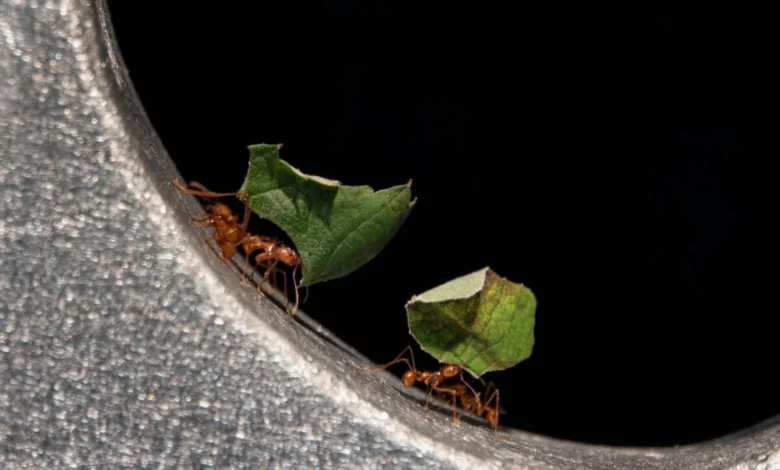
Among the most popular features at the revitalized BUGarium is the exhibit showcasing a colony of leaf-cutter ants (Atta cephalotes). Native to the rainforests of Trinidad, these ants are famous for their sophisticated agricultural practices. They do not eat the leaves they harvest; instead, they use them as a substrate to cultivate a specific type of fungus, which serves as the colony’s primary food source.

The exhibit design is intentionally immersive. The ants move through a series of interconnected, blown-glass chambers that allow visitors to track the movement of the colony from foraging areas to the fungus gardens. This structural transparency is a key element of the BUGarium’s educational philosophy. By observing the division of labor—where specific ants are designated as foragers, others as soldiers, and others as gardeners—visitors gain a tangible appreciation for the concept of eusociality and cooperative existence.
Regional Significance: The Chihuahuan Desert Connection
While the tropical leaf-cutter ants provide a window into rainforest dynamics, the BUGarium also emphasizes the local environment. New Mexico is defined by the Chihuahuan Desert, a region of incredible, yet hidden, biodiversity. The exhibit includes various species of insects and arachnids endemic to this arid landscape. By highlighting local species, the BioPark connects visitors to the backyard ecosystems they encounter in their daily lives. This localized focus is intended to empower citizens to become stewards of their own environment, encouraging the planting of native flora to support local pollinator populations.
A Rare Breed: Insect Exhibits in the U.S. Zoo Landscape
The BUGarium occupies a unique niche in the American zoo landscape. While major institutions like the San Diego Zoo and the Cincinnati Zoo have made significant strides in invertebrate education, dedicated stand-alone facilities for arthropods remain relatively rare.
The reasons for this are largely practical and historical. Maintaining a colony of live insects often requires a more specialized understanding of micro-climates, humidity, and life cycles compared to larger vertebrates. Furthermore, the public’s "vertebrate bias" has historically dictated the allocation of zoo budgets. However, as the global insect population faces unprecedented threats—including habitat loss, pesticide use, and climate change—the role of the BUGarium is becoming increasingly vital.
"Our numbers as facilities may be small, but the impact we can have is massive," Miller noted. "We are part of a growing movement to normalize the conservation of ‘the little things that run the world,’ as E.O. Wilson put it. By promoting their beauty and their necessity, we are participating in a much larger story of environmental preservation."
Broader Implications for Global Conservation
The implications of the BUGarium’s reopening extend beyond the city limits of Albuquerque. As the global scientific community reports declining insect populations—a phenomenon often termed the "insect apocalypse"—the educational work performed by such facilities becomes a tool for policy change. When children and adults alike learn to appreciate the complexity of a scorpion’s exoskeleton or the ingenuity of an ant colony, they are more likely to support conservation legislation and sustainable agricultural practices.
Furthermore, the BUGarium serves as a research hub. By monitoring the health and behavior of these species in captivity, the BioPark contributes to a wider network of entomological data that can inform conservation strategies for wild populations. The facility acts as a living laboratory, where the nuances of invertebrate biology are documented and shared with the public, effectively demystifying a group of animals that represent the vast majority of life on Earth.
Looking Ahead
The reopening of the ABQ BioPark BUGarium is a testament to the fact that size does not equate to importance. With its modernized, $1.45 million facility, the BioPark has created a space where the smallest inhabitants of the planet receive the largest possible platform for public education.
As visitors traverse the exhibits, from the desert scorpions to the rainforest leaf-cutters, they are invited to reconsider their relationship with the natural world. In an era defined by environmental uncertainty, the BUGarium offers a vital reminder: the health of the entire planet rests on the backs of the tiny, the jointed, and the often ignored. Through continued investment in these exhibits, the ABQ BioPark is ensuring that the essential stories of these arthropods are told, understood, and preserved for future generations.
Related posts: