The Silent Invasion: Brazil’s Battle Against the Rapid Proliferation of Invasive Sun Coral

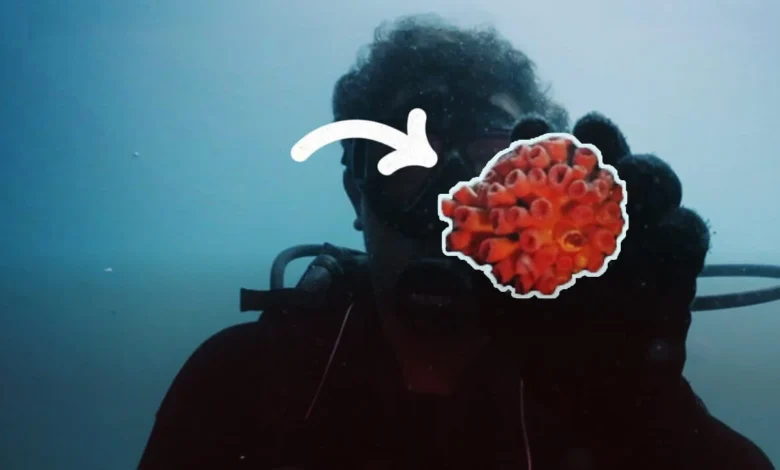
Beneath the azure waves of Brazil’s expansive coastline, a silent biological invasion is fundamentally altering the architecture of marine ecosystems. The culprits are two species of sun coral, Tubastraea coccinea and Tubastraea tagusensis, hardy, non-native organisms that have found a lucrative foothold in the Atlantic. Originally hailing from the Indo-Pacific, these corals have transformed from accidental stowaways on international shipping infrastructure into a pervasive threat to the biodiversity of the South Atlantic. As they blanket rocky reefs, they displace indigenous species, disrupt delicate food webs, and trigger a cascading decline in the health of Brazil’s coastal waters.
The Origins of an Underwater Crisis
The infiltration of sun coral into Brazilian waters is a textbook example of how globalized maritime activity can inadvertently facilitate ecological disruption. The species were first identified in Brazil during the 1980s, discovered clinging to the hulls of oil platforms and offshore structures in the state of Rio de Janeiro. Marine biologists believe these corals traveled as "biofouling"—organisms that attach themselves to the undersides of vessels or large-scale industrial infrastructure—migrating across the ocean through the ballast water and hulls of tankers and cargo ships.
Once established, the sun coral demonstrated an aggressive reproductive strategy. Unlike many native coral species that rely on specific environmental cues to spawn, Tubastraea species are prolific, releasing larvae that can travel long distances via ocean currents. With no natural predators in the Atlantic—as native species have not evolved to recognize them as food—the coral faces almost zero biological resistance. Over the past four decades, this lack of predation has allowed the coral to colonize approximately 3,500 kilometers (2,175 miles) of the Brazilian coastline, spreading at an estimated rate of two kilometers per year.
A Chronology of Ecological Escalation
The expansion of sun coral has occurred in several distinct phases, each marked by an increase in human intervention and environmental impact:
- 1980s: Initial Introduction. The first documented cases of Tubastraea were confined to the immediate vicinity of offshore industrial oil and gas structures near the Rio de Janeiro coast.
- 1990s–2000s: Rapid Colonization. During this period, the coral expanded from industrial sites to natural rocky substrates. The lack of natural controls allowed the species to outcompete native encrusting organisms for precious reef space.
- 2010s: Ecosystem Thresholds. As the coral reached high-density populations, researchers began identifying significant declines in native biodiversity. By the mid-2010s, it became clear that the invasion was no longer localized but a national environmental emergency.
- 2018: Formal Intervention. Recognizing the impending collapse of local reef ecosystems, the Brazilian government launched the National Plan for the Prevention, Control and Monitoring of the Sun Coral. This initiative represented a paradigm shift, moving from passive observation to active, state-sponsored removal.
The Mechanisms of Displacement
The threat posed by sun coral is multifaceted. The primary mechanism of dominance is spatial competition; Tubastraea species are highly efficient at occupying the "real estate" of a rocky reef. By covering these surfaces, they prevent the larvae of native brain and star corals from settling and growing.
Furthermore, the threat is chemical as well as physical. Sun corals secrete potent allelopathic substances—chemical compounds that are toxic to neighboring organisms. These chemicals can damage or kill indigenous coral colonies, effectively creating a "scorched earth" policy on the reef. Research has indicated that once the sun coral achieves a 45% coverage rate on a rocky reef, the ecosystem enters a state of irreparable decline. In such environments, the structural complexity of the reef is reduced, leading to the disappearance of small reef-dwelling invertebrates and a subsequent drop in the fish populations that rely on these organisms for survival.
The Front Line: Efforts in the Cagarras Islands
The Cagarras Islands, an archipelago situated just five kilometers off the coast of Rio de Janeiro’s famous Ipanema Beach, have become the focal point of the battle against the invasion. Recognized as a "Hope Spot"—a designation by the Sylvia Earle Alliance for areas critical to the ocean’s health—the islands serve as a vital refuge for diverse marine life.
Leading the frontline efforts is Adriana Gomes, a marine biologist with the Chico Mendes Institute for Biodiversity Conservation (ICMBio). Under the auspices of the national plan, Gomes and a team of volunteer divers perform manual removal operations. This is a grueling, labor-intensive process that requires the careful scraping of coral colonies from the rock, ensuring that no fragments are left behind, as even small pieces can regenerate and start new colonies.

"The work is constant," notes a conservationist familiar with the project. "Because the larvae are so pervasive, we are essentially weeding a garden that grows back faster than we can pull it. However, in sensitive areas like the Cagarras, even a partial reduction in sun coral density can provide enough of a window for native species to recover."
Institutional Responses and Scientific Analysis
The Brazilian government’s 2018 National Plan was an essential response to the failure of previous, uncoordinated efforts. By bringing together public authorities, academic researchers, and non-governmental organizations, the plan has streamlined data collection and resource allocation. However, experts warn that the scope of the invasion exceeds the capacity of manual removal alone.
"We are dealing with a species that is inherently resilient," says one researcher associated with the initiative. "The challenge for policymakers is that this is not just an environmental issue; it is an economic and regulatory one. Stricter regulations on ship hull cleaning and ballast water management are essential to prevent the spread to new, as-yet-uncolonized areas."
Analytical models suggest that the invasion is now so widespread that complete eradication is unlikely. Instead, the current strategy focuses on "containment and suppression." By prioritizing high-biodiversity zones and protected areas, the government aims to preserve the genetic diversity of Brazil’s native marine fauna, even if the surrounding regions remain permanently altered.
Broader Implications for Global Marine Health
The situation in Brazil serves as a cautionary tale for coastal nations worldwide. The global maritime trade network is the primary vector for the translocation of invasive species, and as shipping traffic increases, the risk of similar biological invasions rises in kind. The sun coral crisis highlights the need for international cooperation on biofouling standards. Currently, many international regulations focus heavily on ballast water, but the physical hulls of vessels remain a significant, often under-regulated, pathway for invasive species.
Moreover, the resilience of the sun coral is being studied in the context of climate change. Some researchers hypothesize that warmer ocean temperatures may further facilitate the expansion of Tubastraea, as these species are well-adapted to fluctuating conditions. If the current trend continues, the ecological footprint of the sun coral may shift from a regional concern to a global one.
The Path Forward: Conservation and Community
Despite the grim statistics, the efforts led by ICMBio and local volunteers offer a template for community-led conservation. Public awareness campaigns have encouraged recreational divers and fishermen to report new sightings of sun coral, creating a citizen-science network that acts as an early warning system.
The integration of video documentation, such as the efforts supported by environmental journalism outlets, plays a critical role in this mission. By visualizing the underwater struggle, these reports bridge the gap between abstract scientific data and the public’s understanding of marine health. As the sun coral continues its slow, silent march along the coast, the dedication of those working to protect the Cagarras Islands remains a testament to the ongoing effort to preserve the integrity of the world’s oceans.
In the final analysis, the battle against the sun coral is a war of attrition. While total victory may remain out of reach, the persistence of the national program ensures that Brazil’s unique marine heritage is not entirely subsumed by this invasive force. Protecting the reefs of the South Atlantic requires a sustained commitment to research, rigorous policy enforcement, and the active participation of the public, ensuring that the "silent invasion" does not result in a silent ocean.
Related posts: