Harvesting Ruby Gold Beneath the Sun: How Massachusetts Cranberry Bogs Are Pioneering the Future of Agrivoltaics

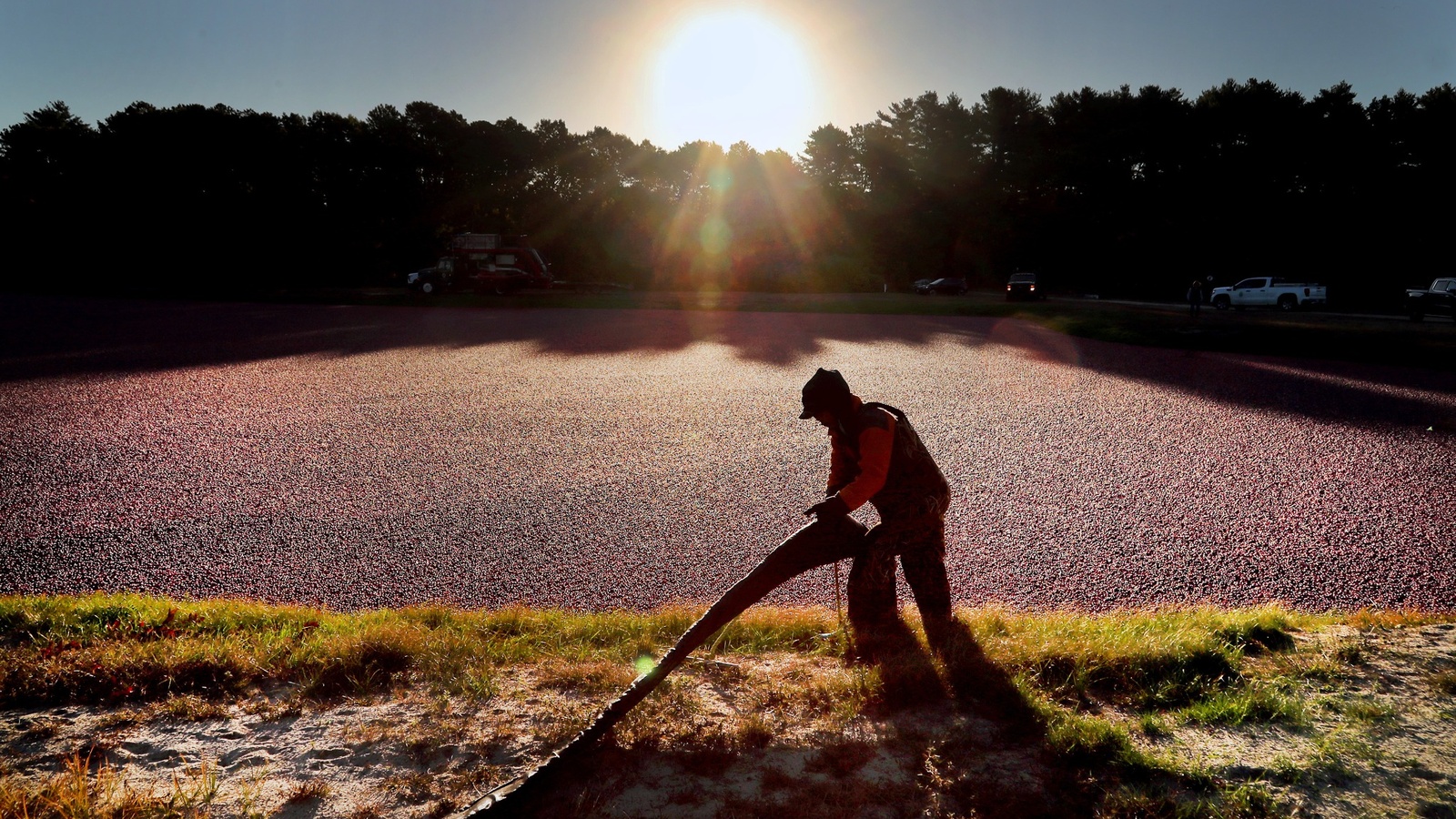
It is the peak of the autumn harvest season in southeastern Massachusetts, where historic cranberry bogs burst into a vibrant display of ruby-red berries destined for holiday tables, juice cartons, and jellied sauces across the nation. Yet, at a pair of innovative farms in the towns of Kingston and Plymouth, the familiar seasonal routine looks remarkably different. Workers navigating specialized harvesting equipment must now steer around sturdy metal support poles, operating entirely within the dappled shade of overhead solar photovoltaic panels.
These two pioneering agricultural sites represent a historic milestone as the first cranberry bogs in the United States—and likely the world—to successfully cultivate crops beneath an operational commercial solar installation. This autumn marks the second consecutive harvest season where farmers have successfully gathered fruit grown under the shadow of clean energy infrastructure, bridging the gap between modern climate technology and centuries-old agricultural traditions.
"We are literally proving it can be done," stated Prateek Tare, co-founder and executive vice president of Distributed Energy Infrastructure, the clean energy engineering firm that constructed both pioneering local projects. The Kingston installation features a robust 4.4-megawatt solar array paired with a massive 13.5-megawatt-hour battery storage system, while the neighboring Plymouth location houses a complementary 1-megawatt solar array.
The intersection of renewable energy generation and traditional farming in the Bay State is not a coincidence, but rather the result of targeted state policies, geographic pressures, and an urgent quest for climate resilience. As Massachusetts marches aggressively toward its statutory mandate to achieve net-zero carbon emissions by the year 2050, the rapid deployment of solar energy infrastructure has emerged as a cornerstone of state environmental policy. However, the physical reality of siting vast solar arrays within a densely populated, heavily wooded state has sparked intense local debates and regulatory hurdles.
The Siting Dilemma and the Rise of Agrivoltaics
Finding suitable land for utility-scale solar projects is a persistent challenge across the United States, but the friction is particularly acute in Massachusetts. Constructing large arrays on urban rooftops, commercial properties, and parking structures often involves prohibitive structural engineering costs and significantly restricted power generation capacities. Conversely, proposals to clear undeveloped forests or open spaces routinely trigger fierce opposition from local residents concerned about community character, suburban sprawl, and the disruption of local ecosystems.
While pre-cleared agricultural land offers an attractive canvas for solar developers due to its flat topography and lack of obstructive tree cover, converting productive farmland into industrial energy sites raises serious food security and economic concerns. Removing agricultural acreage from active production threatens local farming communities and diminishes the state’s agricultural self-sufficiency.
To bypass this false choice between clean energy and agricultural preservation, Massachusetts policymakers and industry leaders have increasingly championed agrivoltaics—frequently referred to as dual-use solar. This innovative framework integrates photovoltaic infrastructure directly into active agricultural operations, allowing landowners to generate electricity above livestock grazing pastures, row crops, and specialty perennials without sacrificing farming revenues.
Recognizing the immense potential of this dual-use model, Massachusetts made history in 2018 by becoming the first U.S. state to implement specialized financial incentives tailored specifically to agrivoltaic projects. Under the state’s current solar incentive framework, participants receive a guaranteed baseline rate for every kilowatt-hour of electricity fed into the electrical grid. Mid-sized arrays ranging from 1 megawatt to 5 megawatts earn a base compensation rate of approximately 23.17 cents per kilowatt-hour. Crucially, certified agrivoltaic projects receive an additional financial boost of 9 cents per kilowatt-hour, providing a powerful economic incentive for developers and farmers alike.
These supplemental subsidies frequently provide the critical financial margin necessary to convince developers to lease agricultural properties or acquire them outright while legally binding the land to ongoing farming commitments. Furthermore, participating farmers are typically retained under service contracts to manage the surrounding landscape, maintaining vegetation and ensuring the dual-use property remains productive on both fronts.
Engineering a Wetland Revolution
In Kingston and Plymouth, renewable energy developer Greenbacker Renewables acquired the properties—which had functioned as commercial cranberry operations for decades—from multigenerational farmers who were prepared to exit the industry. Greenbacker subsequently partnered with Distributed Energy Infrastructure to design and construct the sophisticated solar arrays. To oversee the day-to-day agricultural operations beneath the panels, the developers hired Iain Ward, an experienced local solar consultant and veteran cranberry grower. Both installations operate under a community solar business model, allowing local residents and businesses to subscribe to the clean energy generation and receive direct utility bill savings alongside documented environmental benefits.
For Massachusetts cranberry growers, who produce more of the tart fruit than any other state in the country outside of Wisconsin, solar development offers a uniquely advantageous financial lifeline. While traditional family farms specializing in corn, dairy, or livestock are frequently sold off to residential and commercial real estate developers when agricultural margins decline, cranberry bogs occupy legally protected wetlands. Under state and federal environmental protection laws, these bogs cannot be drained, filled, or converted into housing developments, even if commercial farming operations cease entirely.
While not every wetland bog possesses the necessary topography or proximity to electrical transmission lines to make grid interconnection economically feasible, those that do find themselves uniquely positioned to benefit from solar integration. "This is a farm viability opportunity," noted Iain Ward, emphasizing the economic rescue package that agrivoltaics provides to an otherwise constrained agricultural sector.
Adapting photovoltaic technology to a flooded, boggy wetland environment, however, required overcoming unprecedented engineering hurdles. Prateek Tare noted that developing the Kingston and Plymouth sites involved solving a complex succession of design puzzles.
The primary challenge centered on foundational structural integrity. Standard solar installations typically rely on steel pilings driven 8 to 10 feet into dry, stable soil. In contrast, a cranberry bog features a saturated, peaty substrate that demands pilings be driven significantly deeper to locate a sufficiently dense and stable subterranean layer capable of supporting the heavy metal framework. Engineers required extensive trial and error to identify and modify specialized heavy machinery capable of sinking structural piles to the necessary depths without destabilizing the fragile wetland ecosystem. Furthermore, standard underground electrical wiring methods were rendered impossible by the waterlogged conditions, requiring engineers to design specialized overhead wiring configurations.
"You’re trying to figure it out from a farmer’s perspective," Tare explained, highlighting the collaborative design process he maintained with Ward.
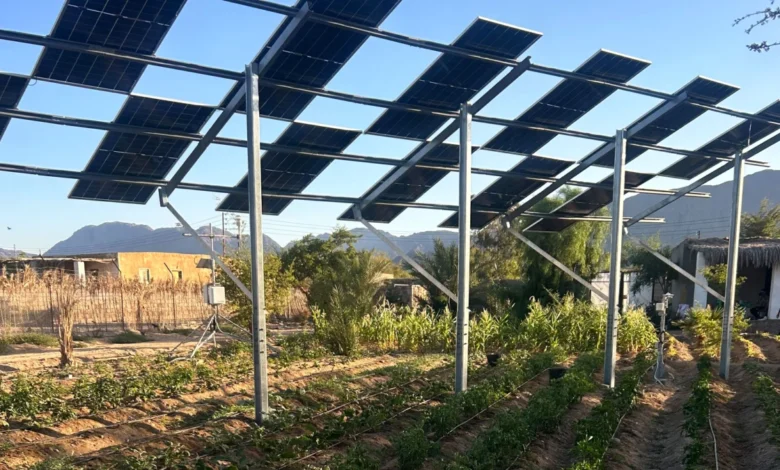
The resulting architectural solution features photovoltaic panels elevated a full 10 feet above the ground on a single-axis tracking system designed to slowly tilt throughout the daylight hours, maximizing solar energy absorption. Crucially, the structural support pilings are spaced significantly farther apart than standard commercial layouts, providing wide lanes that allow heavy harvesting tractors and equipment to maneuver through the bog unhindered.
A Growing Movement and Future Outlook
The early successes registered in Kingston and Plymouth have catalyzed broader industry interest, unlocking new agrivoltaic opportunities for Distributed Energy Infrastructure across the region. Tare’s firm is currently developing similar dual-use solar projects tailored to apple orchards, cattle grazing pastures, and Christmas tree farms, alongside preliminary planning phases for an additional cranberry bog installation.
Meanwhile, the broader agricultural community is actively looking to revive stalled projects that laid the groundwork for the current wave of innovation. Approximately five years ago, a different pair of cranberry bogs in the nearby town of Carver were slated to become the nation’s very first commercial cranberry agrivoltaic venture. Although the solar arrays were successfully erected and cranberry vines began flourishing beneath the panels, the original development company collapsed into bankruptcy before the systems could be interconnected to the electrical grid.
Today, those pioneering bogs have changed hands, and the new property owner is moving forward with renewed momentum. According to Ward, the current owner harbors "every intention to finish them," proving that initial financial setbacks do not spell permanent defeat for agricultural innovation.
"They’re not a failure," Ward emphasized, reflecting on the arduous path toward commercial viability. "There is an opportunity for them to be finished."
Industry analysts and project developers anticipate that future cranberry agrivoltaic installations will benefit significantly from the hard-won engineering lessons of the past few years, streamlining construction timelines and reducing capital expenditures. Although industry momentum has encountered understandable friction as regulators, environmentalists, and farmers adjust to the novel paradigm, stakeholders remain optimistic about rapid acceleration in the coming years.
"It is picking up steam, and the lessons learned have been significant," Ward concluded. "When you change a paradigm, it takes a little time." As the autumn harvest continues beneath the quiet hum of solar inverters, Massachusetts is successfully demonstrating that agricultural heritage and renewable energy generation can not only coexist, but thrive together.