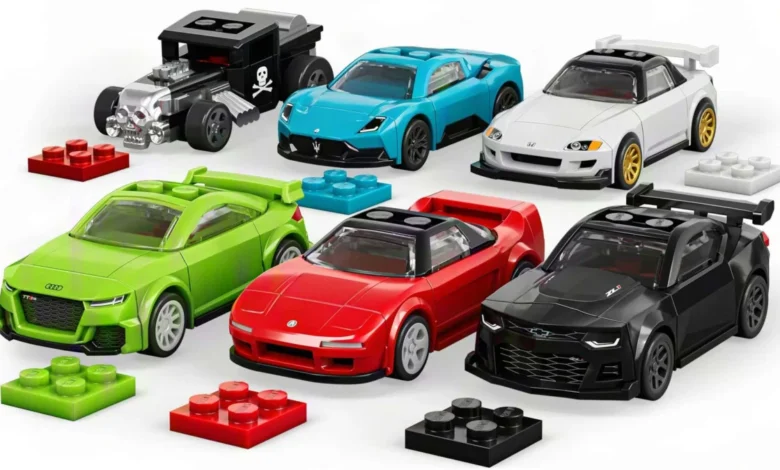
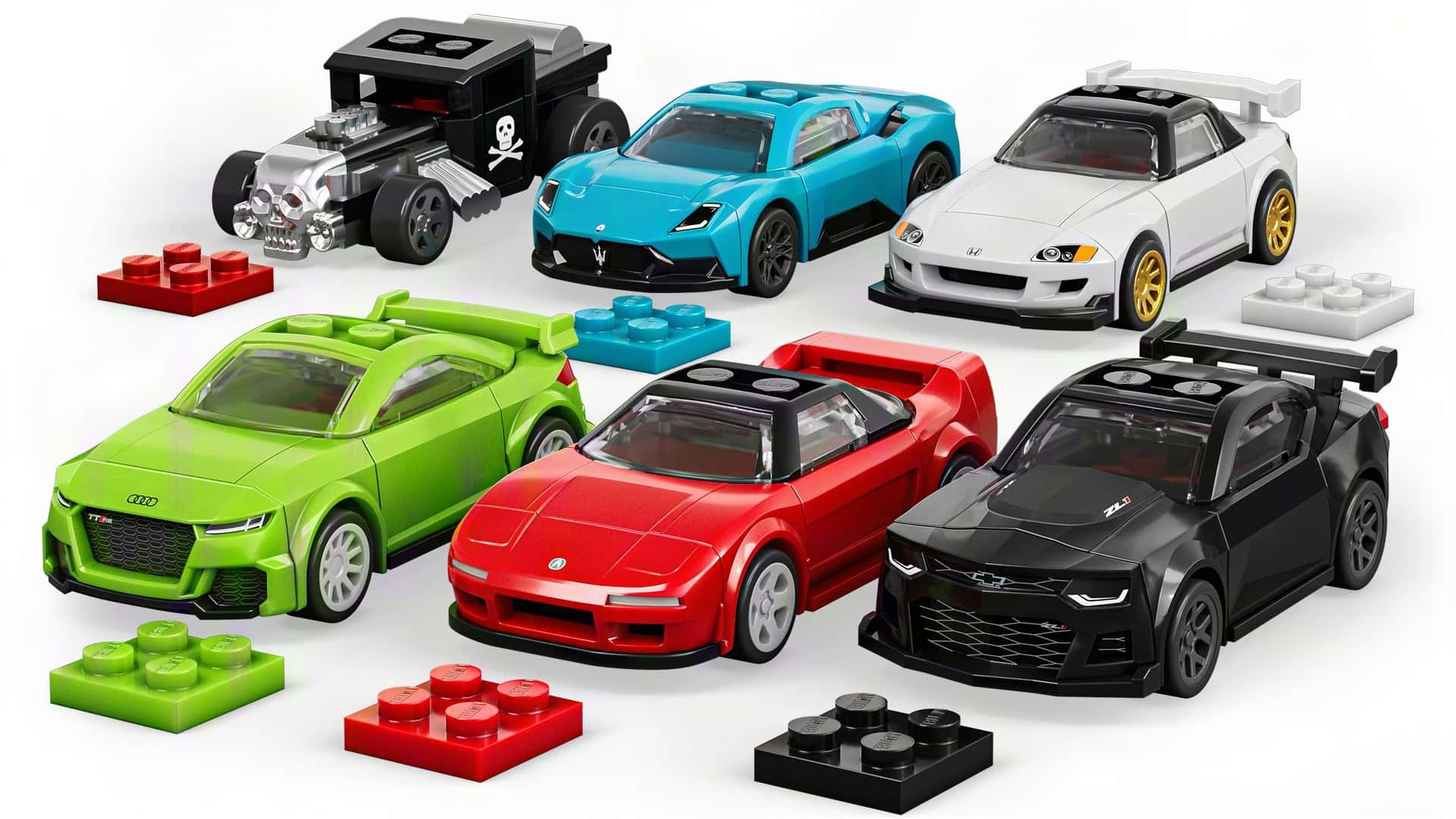
The debut lineup, scheduled for a retail release in January, includes a diverse cross-section of automotive culture. Enthusiasts will be able to assemble a 2024 Chevrolet Camaro ZL1, a 2018 Audi TT RS, a 2026 Maserati MCPura, a 1991 Acura NSX, and a 1999 Honda S2000. Rounding out the initial offerings is the "Bone Shaker," an original Hot Wheels design that has become a cornerstone of the brand’s identity, celebrated for its aggressive hot rod aesthetic. While these initial six models serve as the foundation, Mattel has confirmed an ambitious roadmap that aims to scale the collection to 20 distinct vehicles by the conclusion of 2027, ensuring a steady stream of new content for collectors.
Engineering the 1:64 Brick Experience
The technical specifications of the Brick Shop Racer Series are designed to maintain the integrity of the 1:64 scale, a standard that has defined the Hot Wheels brand since its inception in 1968. Despite being construction kits, these models are engineered to function as true toys. Each set contains between 27 and 29 individual pieces, with the assembly process designed to be intuitive for users aged six and older.
Crucially, Mattel has avoided the pitfall of creating purely static display models. Each vehicle features a robust metal base plate, functional metal axles, and rolling wheels paired with rubber-like tires. This combination ensures that once assembled, the vehicles retain the tactile "playability" that has defined the Hot Wheels brand for generations. The use of specialized, smooth-finished resin bricks allows for the replication of complex body lines and aerodynamic silhouettes that are often difficult to achieve at this miniature scale. By providing detailed, step-by-step instructions, the company is also lowering the barrier to entry for younger enthusiasts, positioning the product as an educational tool that promotes fine motor skills and spatial reasoning alongside automotive appreciation.
Strategic Positioning in the Toy Market
The move into the small-scale construction market is not merely a product extension; it is a direct challenge to the market dominance of established competitors like The Lego Group, which has successfully captured the automotive enthusiast demographic through its "Speed Champions" and "Technic" series. Historically, Mattel has maintained a presence in the construction category through larger-scale, more complex kits, but these were often perceived as high-investment, time-consuming projects. By pivoting to the 1:64 format, Mattel is leveraging its most valuable asset—the Hot Wheels brand equity—to offer a more accessible, high-volume alternative.
The $4.99 price point is central to this strategy. In an inflationary economic environment, where consumer spending on luxury collectibles is often subject to scrutiny, an affordable entry point allows for "impulse" collecting. Unlike larger building sets that can retail for upwards of $50 or $100, the Racer Series allows consumers to build a substantial collection without a significant financial commitment. This strategy mirrors the traditional Hot Wheels model, where the low price point facilitates the "hunt" for specific models, encouraging repeat visits to retailers and fostering a sense of community among collectors who enjoy sharing their builds online.
Industry Implications and Market Growth
The intersection of die-cast collecting and construction toys is a burgeoning niche. For decades, these two hobbies existed in parallel, often with little overlap in the consumer base. Die-cast collectors prioritized accuracy, finish, and historical significance, while construction enthusiasts prioritized the process of assembly and the ability to customize. The Brick Shop Racer Series effectively merges these priorities.
Market analysts suggest that this hybridization is a response to the shifting interests of younger demographics. Today’s consumers are increasingly looking for "hybrid" play experiences that offer both the thrill of collecting and the satisfaction of creation. By incorporating a metal chassis—a hallmark of the premium Hot Wheels experience—into a buildable set, Mattel is bridging the gap between the two worlds. This approach also allows the company to tap into the "crossover" potential of automotive enthusiasts who may not have previously considered themselves "builders."
Furthermore, the decision to expand the lineup to 20 vehicles by 2027 indicates that Mattel is committed to a long-term strategy rather than a one-off product launch. This sustained commitment is essential for building a dedicated fan base. If the initial launch in January proves successful, the company has the infrastructure to license additional automotive brands, potentially expanding the series to include classic muscle cars, modern hypercars, or even cinematic vehicles, further cementing its position in the toy aisle.
A Chronology of Innovation
The development of the Brick Shop Racer Series follows a period of rapid innovation for Mattel. Over the past several years, the company has heavily invested in diversifying the Hot Wheels ecosystem. Key milestones in this trajectory include:
- 2023: Expansion of the "Brick Shop" range, focusing on larger-scale, display-focused automotive sets aimed at adult collectors.
- 2024: Increased integration of digital components and collector-exclusive lines, such as the Red Line Club (RLC), which focuses on high-end, limited-run models.
- Early 2025: Announcement of the 1:64 scale Racer Series, marking the brand’s first major foray into small-scale, affordable construction sets.
This timeline reflects a clear intent to move beyond the traditional "toy car" identity and toward a broader, lifestyle-oriented automotive brand. By controlling the entire lifecycle of the product—from the initial licensing deals with manufacturers like Acura and Maserati to the final retail distribution—Mattel is maximizing its margins while maintaining the high quality expected of the Hot Wheels name.
Analyzing the Competitive Landscape
While the Lego Group remains the incumbent leader in the construction sector, Mattel’s pivot to the 1:64 scale creates a distinct competitive advantage. Most Lego automotive sets are scaled significantly larger, often focusing on the 1:20 or 1:24 range to accommodate detail. By operating exclusively in the 1:64 space, Mattel avoids direct, size-for-size competition while simultaneously offering a product that fits perfectly into the existing storage and display solutions already owned by millions of Hot Wheels collectors.
The inclusion of the Bone Shaker in the launch lineup is also a masterstroke of branding. As one of the most recognizable Hot Wheels designs in history, its presence signals to longtime collectors that this is a "real" Hot Wheels product, despite the deviation in manufacturing materials. This helps to mitigate potential skepticism from purists who might otherwise view building blocks as a departure from the brand’s core die-cast identity.
Conclusion and Future Outlook
The launch of the Brick Shop Racer Series marks a significant milestone in the history of the Hot Wheels brand. By successfully integrating the tactile, assembly-based nature of construction toys with the iconic, accessible 1:64 scale, Mattel has created a product line that is well-positioned for both immediate market success and long-term sustainability. The low entry price, combined with a clear roadmap for expansion, suggests that Mattel is not merely testing the waters but is instead fully committed to disrupting the construction-toy market.
As the industry continues to evolve, the ability to blend tradition with innovation will be the primary indicator of long-term survival. For the consumer, this translates into more choice, more engagement, and, ultimately, a more dynamic hobby. Whether one is an avid collector of die-cast metal or a fan of modular building, the Racer Series offers an approachable, high-quality entry point that demonstrates exactly why the Hot Wheels brand has remained relevant for nearly six decades. With 20 vehicles planned by 2027, the coming years promise to be a transformative era for fans of both miniature cars and the bricks used to build them. As Mattel prepares for the January rollout, the automotive toy sector will be watching closely to see if this hybrid model can indeed capture a larger slice of the lucrative construction-toy market.