The Resurrection Of A Legend: Ultra-Low Mileage 1970 Oldsmobile 442 With Modern Upgrades Hits The Market For $59,900

While household automotive nomenclature of the classic American muscle car era frequently centers around ubiquitous nameplates such as the Ford Mustang, Chevrolet Camaro, or Dodge Charger, true connoisseurs of high-performance engineering have long reserved a special reverence for the Oldsmobile 442. Among the uninitiated, the Oldsmobile badge may evoke images of comfortable, stately cruisers designed for suburban commutes and highway touring. However, automotive historians and performance enthusiasts understand that the 442 was a formidable competitor on both the drag strip and the boulevard, possessing a mechanical pedigree that easily matched its cross-town rivals.
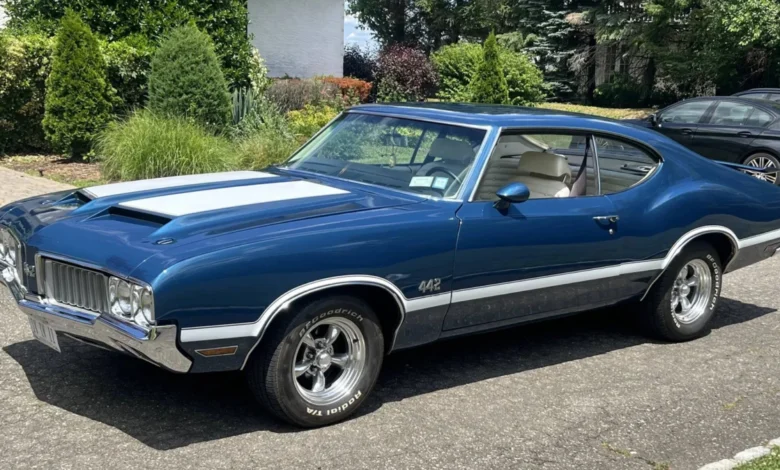
This duality of luxury and raw, unbridled power reached its zenith at the dawn of the 1970s. Today, finding a pristine, numbers-matching example from this golden era is an increasingly rare occurrence. Even scarcer is discovering a vehicle that bridges the gap between vintage aesthetic preservation and modern mechanical reliability. Currently listed on Hemmings with an asking price of $59,900, a Twilight Blue Metallic 1970 Oldsmobile 442 located in Bayville, New York, presents a fascinating study in automotive preservation. Displaying a mere 3,039 miles on its odometer, this particular vehicle challenges the traditional dichotomy between museum-quality static displays and usable, daily-drivable classics. Equipped with a meticulously fortified powerplant alongside carefully integrated comfort modernizations, this 442 offers a compelling proposition for collectors and enthusiasts alike.
Main Facts Of
The Offering
The centerpiece of this automotive offering is a 1970 Oldsmobile 442 boasting an extraordinarily low odometer reading of just 3,039 miles. Finished in an elegant Twilight Blue Metallic exterior paint scheme complemented by contrasting white decals and a striking white interior, the vehicle presents a visual aesthetic that defined early 1970s American performance design.
Underneath the sculpted hood lies Oldsmobile’s legendary 455 cubic-inch (7.0-liter) V8 engine. While factory literature from 1970 conservatively rated this massive powerplant at 370 horsepower—a figure deliberately deflated to appease corporate insurance underwriters and regulatory bodies—automotive historians widely acknowledge that actual output significantly exceeded official specifications. In this specific vehicle, the original 455 block has been professionally rebuilt and bored, now featuring high-compression pistons, high-flow cylinder heads, a performance intake manifold, and Holley carburetors.
To make the vehicle more tractable for contemporary driving conditions, the owner has introduced several tasteful, hidden modernizations. These include a Vintage Air climate control system to manage cabin temperatures, a modern stereo system discreetly hidden within the glove box, and a Tremec five-speed manual transmission replacing the original factory setup. Crucially, the sale includes the iconic original Muncie M-21 four-speed manual transmission and a period-correct 8-track player, ensuring that the next custodian retains the option of returning the vehicle to factory-spec configuration. Adding a unique regional touch, the car is currently registered with a distinctive New York license plate reading "IV IV II"—a subtle nod to its numerical nomenclature.
Historical Context And The Evolution Of The Oldsmobile 442
To fully appreciate the significance of a 1970 Oldsmobile 442, one must examine the evolutionary trajectory that brought General Motors’ upscale division into the muscle car wars. The designation "4-4-2" originated in 1964 as an optional package for the Oldsmobile Cutlass. The numerical nomenclature was derived from a specific formula: a four-barrel carburetor, a four-speed manual transmission, and dual exhausts.
As the horsepower race escalated throughout the mid-to-late 1960s, Oldsmobile recognized that a mere appearance and handling package would no longer suffice against heavy-hitters like the Pontiac GTO, Chevrolet Chevelle SS, and Buick Gran Sport. By 1968, the 442 graduated from an option package to a distinct, standalone model within the Oldsmobile lineup, cementing its status as a dedicated muscle car entry.
The watershed moment for the 442 arrived in 1970. Prompted by General Motors’ decision to lift a corporate-wide ban limiting intermediate-sized passenger cars to engines displacing no more than 400 cubic inches, Oldsmobile immediately dropped its largest engine—the massive 455 cubic-inch V8—into the 442 chassis. This displacement bump transformed the car into an absolute torque monster. Producing a factory-claimed 500 lb-ft of torque at a low 3,200 RPM, the 1970 442 was capable of effortless acceleration across any gear.
However, the 1970 model year also marked the beginning of the end for the unbridled muscle car era. Rising insurance premiums, impending federal safety regulations, and the looming shadow of strict emissions standards meant that high-compression, high-output V8 engines were living on borrowed time. By 1971 and 1972, compression ratios were drastically lowered to run on unleaded fuel, and horsepower figures plummeted. Consequently, the 1970 model year is universally regarded by automotive historians as the absolute pinnacle of Oldsmobile high-performance engineering.
Chronology And Provenance
The history of this specific 1970 Oldsmobile 442 is defined largely by its extraordinary preservation. While many muscle cars from this era were subjected to rigorous quarter-mile drag racing, street abuse, or harsh winter driving conditions, this vehicle clearly experienced a sheltered existence.
- 1970: The vehicle is manufactured at a General Motors assembly plant and delivered to its first owner, commencing a lifestyle of extreme preservation.
- Decades 1–5: Through successive periods of ownership, the car is driven with extreme sparingness, allowing it to accumulate a mere 3,039 total miles over more than fifty years of existence. The vast majority of its factory-installed components remain intact, untouched by the elements.
- Recent Years: The owner elects to perform a mechanical refresh. The legendary 455 block is pulled, rebuilt, and bored out with high-compression pistons, high-flow heads, a performance intake, and Holley carburetion to unlock modern performance capabilities without altering the car’s classic visual footprint.
- Modern Upgrades Integration: Subtle driver-focused enhancements are installed, including the Vintage Air climate control system, a concealed modern audio unit, and a Tremec five-speed manual transmission that replaces the factory Muncie unit for superior highway cruising capability.
- Present Day: The vehicle is officially listed on Hemmings in Bayville, New York, commanding an asking price of $59,900, accompanied by its original Muncie M-21 transmission and historical artifacts such as its period 8-track player.
Supporting Data And Market Analysis
Pricing a classic muscle car involves balancing objective metrics—such as mileage, documentation, and mechanical condition—against subjective factors like color combination and market sentiment. At $59,900, this 1970 Oldsmobile 442 sits slightly above the baseline market average for standard, average-condition 442 models from the same year, but industry analysts suggest the valuation is defensible when examining the underlying data.
According to collector car valuation data compiled by entities like Hagerty and Hemmings Market Trends, an investment-grade 1970 Oldsmobile 442 in Concours condition can easily command upwards of $80,000 to over $100,000. Conversely, driver-quality examples with higher mileage routinely trade in the $35,000 to $45,000 range.
This specific vehicle occupies a unique middle ground:
- Ultra-Low Mileage Body: The chassis and structural integrity benefit from having traversed fewer than 3,100 miles, preserving the factory assembly tolerances and minimizing structural fatigue.
- Interior Preservation: While the front white seat covers and carpeting have been refreshed to combat natural aging, the dashboard and door panels remain original factory installations. The Twilight Blue Metallic paint shows only minor, age-appropriate chips, maintaining a high level of aesthetic authenticity.
- Engine Fortification Value: The upgraded 455 powerplant bridges the gap between vintage reliability concerns and modern horsepower demands. Rebuilding and upgrading a high-compression 455 V8 with top-tier components represents a significant financial investment that would easily cost a buyer thousands of dollars to replicate independently.
- Transmission Flexibility: The inclusion of both the modern Tremec five-speed and the original numbers-matching Muncie M-21 four-speed protects the car’s long-term collector value while maximizing immediate drivability.
Expert Perspectives And Collector Implications
Automotive restoration specialists and market analysts generally view modified classic cars with a degree of caution, as heavy alterations can often detract from a vehicle’s residual collector value. However, a distinct philosophical shift has taken place within the classic car hobby over the past decade, heavily favoring what the industry terms "Restomods" or driver-focused preservation builds.
Speaking broadly on market trends within the vintage American performance sector, automotive preservationists note that younger collectors increasingly demand the reliability, thermal comfort, and highway gearing of modern engineering packaged inside iconic vintage sheet metal. A classic car that requires constant mechanical tinkering or struggles with modern highway speed limits due to low rear-end gear ratios often sees less actual road use.
In the case of this 1970 Oldsmobile 442, industry observers suggest that the modifications are entirely reversible. Because the original Muncie M-21 transmission is included in the sale, a future purist collector possesses the capability to return the drivetrain to strict factory specifications. Meanwhile, modifications like the Vintage Air system and the concealed audio player do not permanently compromise the vehicle’s interior architecture, preserving the visual integrity of the Twilight Blue cabin while drastically improving user comfort.
Furthermore, the engine upgrades executed on the 455-cubic-inch block address the inherent limitations of running modern low-octane fuel through high-compression vintage engines. By incorporating modern high-compression pistons and high-flow heads, the engine is optimized to run efficiently and powerfully within contemporary fuel parameters, reducing the risk of engine knock or thermal degradation during extended operation.
Broader Impact And Future Outlook
The appearance of this ultra-low-mileage, heavily fortified 1970 Oldsmobile 442 on the open market underscores a broader evolution in how classic vehicles are valued and utilized. For decades, the conventional wisdom of the hobby dictated that significant financial appreciation was strictly tied to static preservation—locking a low-mileage car away in a climate-controlled bubble and letting it sit untouched.
However, a cultural shift among enthusiasts emphasizes that automotive engineering is fundamentally designed for motion. With an odometer reading resting at just 3,039 miles, this 442 has spent the vast majority of its existence being meticulously babied. Industry commentators frequently echo a singular sentiment regarding machines of this caliber: they are quite simply begging to be driven.
Whether the next custodian chooses to preserve its delicate balance of originality and modern comfort or opts to unleash its heavily fortified 455 V8 on winding back roads, this vehicle serves as a rolling testament to the golden age of American muscle. As strict environmental regulations continue to steer the global automotive market toward electrification, internal combustion icons like the Oldsmobile 442 occupy an increasingly cherished niche in automotive history. For the discerning buyer willing to meet its $59,900 asking price, this Twilight Blue artifact offers a rare opportunity to experience the uncompromising power of 1970s Detroit engineering, backed by the mechanical reliability required for the twenty-first-century highway.