While contemporary political debates occasionally attempt to scapegoat immigration for modern urban congestion, the historical ledger of automotive engineering reveals a starkly different reality—one profoundly shaped by foreign-born innovators. Among the most influential figures in American automotive history is Zora Arkus-Duntov, an immigrant whose vision, technical brilliance, and unrelenting tenacity transformed the Chevrolet Corvette from a tepid, fiberglass-bodied boulevard cruiser into a bona fide American supercar. Although his name is inextricably bound to the heritage of American muscle, Arkus-Duntov’s journey to the upper echelons of General Motors was circuitous, spanning continents, global conflicts, clandestine manufacturing ventures, and world-class motorsport competition.
Born in Brussels, Belgium, in 1909 to Russian-Jewish parents, Arkus-Duntov grew up in St. Petersburg before his family returned to Western Europe ahead of the political upheavals in Russia. He spent his formative young adult years navigating the geopolitical tremors of pre-World War II Europe, eventually studying mechanical engineering at the prestigious University of Charlottenburg in Berlin. His ultimate success at Chevrolet—a brand coincidentally named after Louis Chevrolet, a Swiss-born racing driver and immigrant—cemented a legacy that persists today. Notably, Arkus-Duntov was among the earliest automotive pioneers to champion the layout of a mid-engined Corvette, a design philosophy that finally materialized decades later with the introduction of the C8 generation. Yet, this milestone represents merely one chapter in a remarkable 86-year life defined by resilience, ingenuity, and a relentless pursuit of speed.
From Wartime Europe to American Industry
Arkus-Duntov’s disdain for the burgeoning Nazi regime in Germany was absolute, and as the clouds of World War II gathered across Europe, he actively contributed to the anti-fascist defense. Following the outbreak of hostilities, he enlisted and served a brief, hazardous stint as a tail gunner in the French Air Force. When the German Wehrmacht breached French defenses in 1940, Arkus-Duntov found himself stationed in Toulouse, while his wife, Elfi Arkus-Duntov, was stranded in Paris. Displaying a formidable mechanical aptitude and resourcefulness of her own, Elfi executed a perilous, four-day journey across the secondary roads of war-torn France behind the wheel of a pre-war MG roadster, successfully reuniting with her husband.
Accompanied by Zora’s brother, Yura Arkus-Duntov, the couple secured passage to Lisbon and boarded a refugee ship bound for New York, arriving toward the end of 1940. Shortly after passing through Ellis Island, Arkus-Duntov pivoted back to the war effort, establishing a military contracting firm with his brother known as Ardun Mechanical. Operating out of New York, Ardun quickly scaled to employ approximately 300 workers, producing critical munitions for the Allied military. It was within the workshops of Ardun Mechanical, however, that Arkus-Duntov first planted the seeds of his future impact on the American high-performance automotive landscape—though initially, his sights were set not on General Motors, but on Ford.
Engineering High-Performance Cylinder Heads for Ford Powerplants
Before the onset of the war, Arkus-Duntov had cultivated his credentials as an automotive enthusiast, competing in various minor-league European racing events while nurturing ambitions to scale the motorsport ladder. His time at the University of Charlottenburg had provided the rigorous theoretical framework necessary to complement his instinctive mechanical talents. As World War II drew to a close and military contracts subsided, Arkus-Duntov redirected his manufacturing enterprise toward the burgeoning American hot-rod community.
Among Ardun Mechanical’s most significant non-munitions endeavors was the development of cast-aluminum cylinder heads designed to drastically improve the performance of Ford’s ubiquitous flathead V8 engines. In stock configuration, the flathead engine’s valves were positioned adjacent to the cylinders, a layout that inherently restricted airflow and capped the engine’s volumetric efficiency and horsepower potential. Arkus-Duntov’s revolutionary Ardun heads effectively reconfigured the architecture by introducing overhead valves and a hemispherical combustion chamber.
Although these aftermarket heads were technologically advanced, they arrived slightly ahead of their time. The primary demographic of young, mechanically inclined drivers was still deployed overseas with the armed forces. Consequently, Ardun initially marketed the cylinder heads primarily to heavy-duty truck fleets seeking enhanced durability and power. It was only after the war concluded, as millions of veterans returned home to reignite American car culture, that the Ford flathead V8 equipped with Ardun heads became a legendary icon of early hot-rod history.
International Motorsport Success: Le Mans and Porsche
Despite his commercial pursuits in engineering, Arkus-Duntov never relinquished his personal ambitions as a professional racing driver. In the immediate post-war years of 1946 and 1947, he attempted to qualify a pre-war Talbot racing car for the Indianapolis 500 and piloted similar machinery on American Automobile Association (AAA) sanctioned dirt tracks. However, when financial pressures forced the closure of Ardun Mechanical, Arkus-Duntov relocated to London to collaborate with Sydney Allard, a British constructor renowned for building rugged sports cars. This partnership proved fruitful, leading Allard to enlist Arkus-Duntov as a works driver for the grueling 24 Hours of Le Mans in 1952 and 1953.
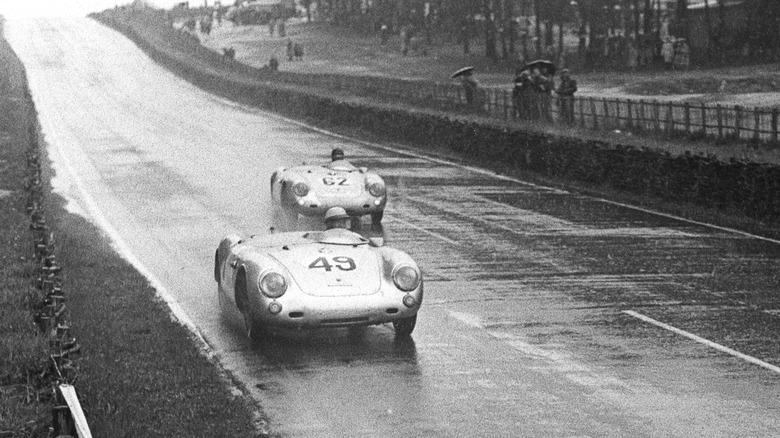
While those initial endurance campaigns with Allard did not yield a podium finish, Arkus-Duntov’s exceptional pace and technical feedback caught the attention of Porsche’s factory racing division. Impressed by his capabilities, Porsche signed him for the 1954 endurance season. Driving a nimble Porsche 550 Spyder, Arkus-Duntov rewarded the German manufacturer by securing a decisive class victory and a remarkable 14th-place finish overall at the 1954 Le Mans. He followed this performance by helping Porsche climb to 13th overall in 1955.
These racing exploits presented a unique corporate conundrum. Arkus-Duntov had already been hired by General Motors in early 1953, following a series of persuasive communications with top-tier executives. The prospect of a salaried GM engineer actively competing—and winning—behind the wheel of a rival European manufacturer’s race car raised eyebrows within corporate headquarters in Detroit. Nevertheless, Arkus-Duntov’s primary focus was rapidly shifting toward a new domestic obsession: the Chevrolet Corvette.
The Definitive Missive: The "Duntov Letter"
The trajectory of the Chevrolet Corvette shifted permanently due to a combination of persistent correspondence and corporate timing. Following his attendance at the 1952 Le Mans race, Arkus-Duntov initiated contact with Ed Cole, then Chevrolet’s chief engineer, by submitting a comprehensive technical critique of the brand’s direction. Although Cole’s initial response was measured, Arkus-Duntov accepted a position with Fairchild Aviation on Long Island to remain close to the American industrial base.
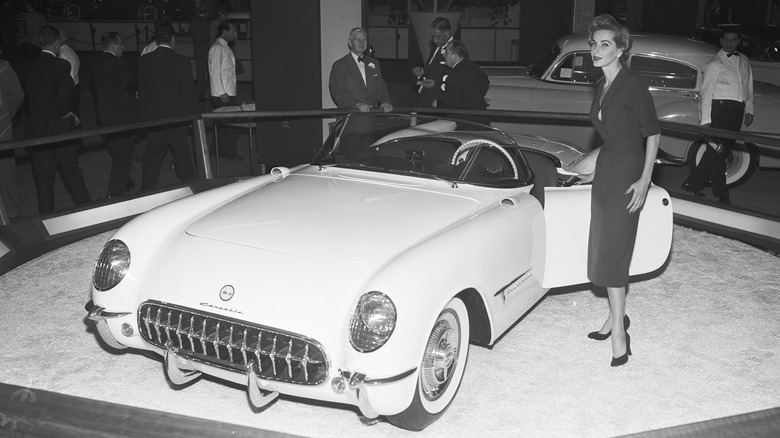
In January 1953, General Motors hosted its high-profile Motorama exhibition in New York City, where the newly introduced Chevrolet Corvette served as the central attraction. Captivated by the car’s aesthetic promise but deeply critical of its lackadaisical dynamic performance—which relied on a modest Blue Flame inline-six engine and a two-speed Powerglide automatic transmission—Arkus-Duntov renewed his pursuit of employment with Chevrolet. On May 1, 1953, GM officially brought him on board as an assistant staff engineer, recognizing his formidable mechanical intellect.
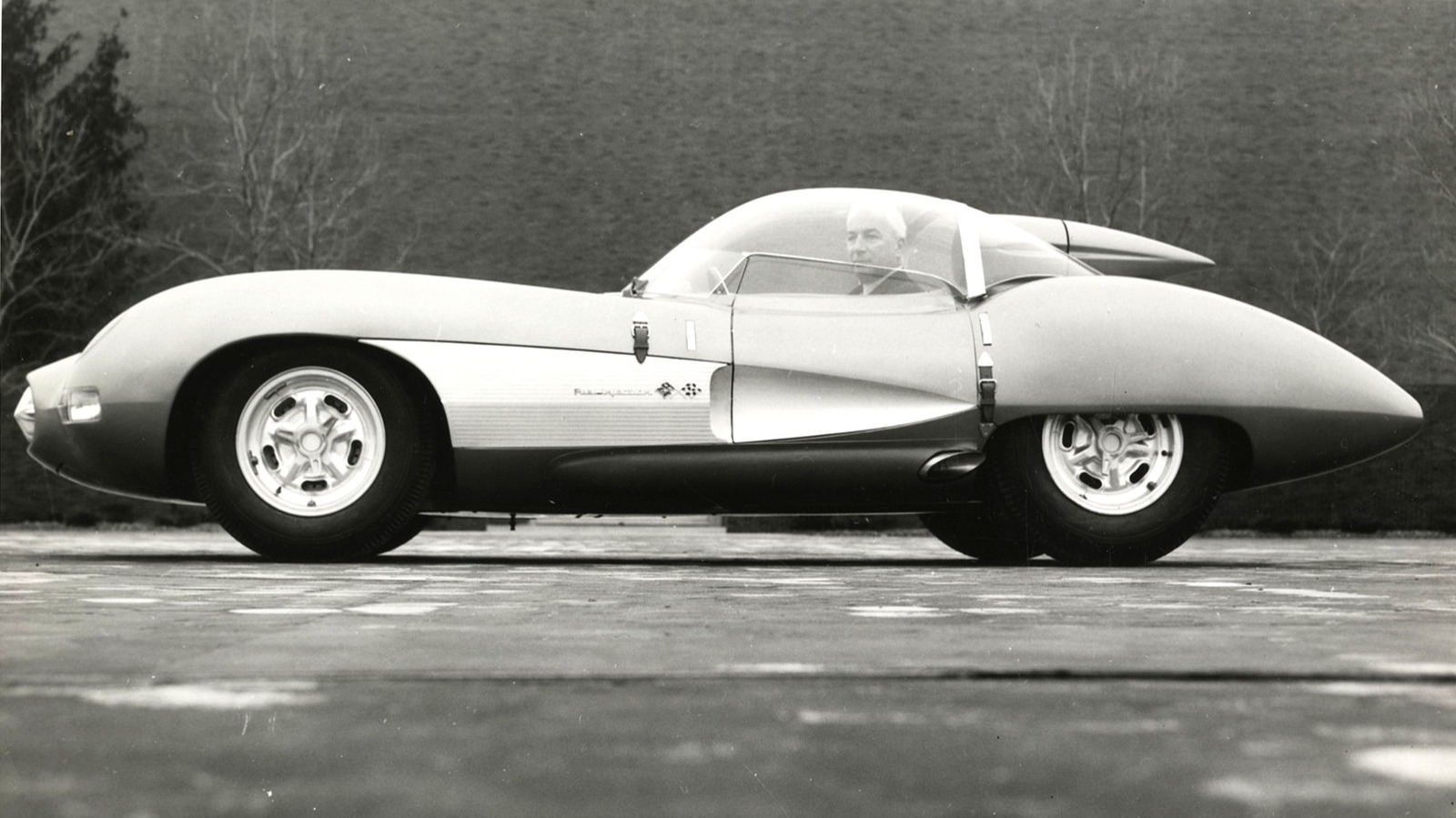
Shortly after his employment began, Arkus-Duntov authored the historic document now universally recognized in automotive lore as the "Duntov Letter." Addressed in December 1953 to Maurice Olley, GM’s director of research and development, the three-page analytical missive argued forcefully for the integration of high-performance V8 engines into the Corvette. Arkus-Duntov detailed how Chevrolet could capitalize on the burgeoning American hot-rod movement, transforming the Corvette from a stylistic novelty into a legitimate sports car capable of competing on both the street and the racetrack. His recommendations laid the direct groundwork for the introduction of the small-block V8 in the 1955 Corvette, an integration that saved the model from cancellation and secured its long-term viability.
Mechanical Preferences and Personal Garage
Arkus-Duntov remained with General Motors until his retirement in 1975, witnessing the evolution of the Corvette through its first four generations before his passing in 1996. Throughout his tenure, he evaluated countless iterations of America’s sports car, yet he consistently maintained that his favorite model was the second-generation 1965 Corvette. He frequently lauded the 1965 model as the most mechanically refined iteration of his tenure, specifically praising its advanced Ramjet fuel-injection system.
Ironically, 1965 marked the final year of availability for the Chevrolet Ramjet fuel-injection setup due to its unfavorable cost-to-performance ratio. While the fuel-injected 327-cubic-inch small-block V8 generated an impressive 375 horsepower, it commanded a hefty $538 premium over the base vehicle price, which hovered just above $4,000. For consumers seeking value, carbureted alternatives—such as a 365-horsepower small-block or a massive 425-horsepower 396-cubic-inch big-block—offered superior performance metrics at a fraction of the cost, rendering the fuel-injection option economically obsolete.
Despite his lifelong dedication to engineering the platform, Arkus-Duntov personally owned only a single Corvette throughout his entire life. Acquired around the time of his retirement in 1975—whether purchased independently or presented as a formal parting gift from General Motors remains a point of minor historical ambiguity—the vehicle was a 1974 Chevrolet Corvette Stingray. Unlike the high-output, manual-transmission sports cars he engineered for the track, Arkus-Duntov’s personal car was heavily optioned for comfort, featuring a 454-cubic-inch big-block V8 paired with an automatic transmission, power steering, power brakes, and air conditioning. Furthermore, the car originally left the factory painted Dark Green before being subsequently refinished in a blue two-tone scheme. Arkus-Duntov retained the vehicle until 1989, when he sold it to a private collector; the car was eventually donated to the National Corvette Museum following his death.
The Perils of Proximity: The Rosenberg Connection
Beyond his technical achievements and wartime service, Arkus-Duntov’s early American business ventures intersected with one of the most notorious espionage cases of the Cold War era. During the operation of Ardun Mechanical alongside his brother Yura, the firm accepted a routine industrial metal-grinding contract in 1946 from an unassuming customer named Julius Rosenberg. Several years later, Rosenberg, alongside his wife Ethel, was arrested, tried, and executed in 1953 for passing classified atomic-bomb blueprints to the Soviet Union.
The association drew intense scrutiny from the Federal Bureau of Investigation. Federal agents detained Yura Arkus-Duntov for extensive questioning regarding the nature of his interactions with Rosenberg. While investigators briefly considered bringing Zora in for interrogation as well, testimony provided by Yura cleared his brother of any direct involvement in illicit activities. Yura acknowledged that Rosenberg had visited the Ardun workshop on multiple occasions—once meeting briefly with Zora—ostensibly to discuss machining contracts related to Rosenberg’s own business ventures. However, Yura candidly admitted to federal investigators that it was entirely possible Rosenberg had attempted to extract technical information during these visits.
Ultimately, the FBI closed the inquiry without taking further action against the Arkus-Duntov brothers. Had the investigation escalated, the trajectory of both men—and by extension, the entire history of the Chevrolet Corvette—could have been irrevocably altered. Instead, Zora Arkus-Duntov was permitted to continue his ascent within American industry, leaving behind an engineering legacy that fundamentally redefined domestic automotive performance.
Related posts: