Virgil van Dijk faces uncertain future at Liverpool as contract expiry looms amid career-best form

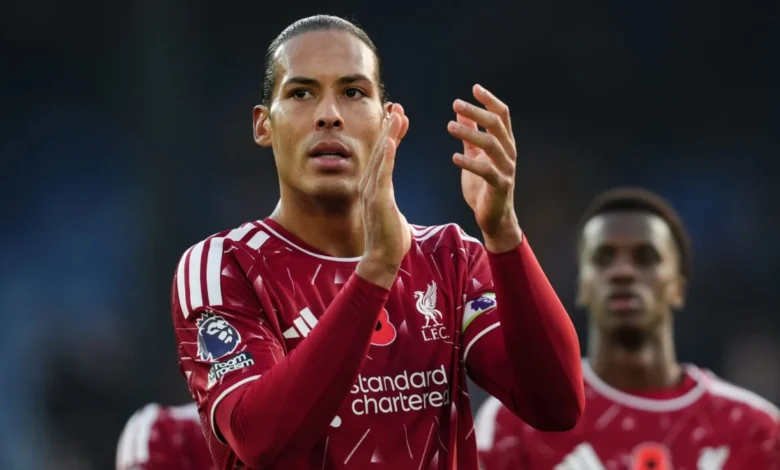
The Liverpool captaincy remains a position of significant scrutiny as Virgil van Dijk, the cornerstone of the club’s defensive success over the past decade, faces an impending contract expiration that has sparked widespread speculation regarding his future at Anfield. With his current deal set to conclude in the summer, the 35-year-old Netherlands international has openly acknowledged the uncertainty surrounding his tenure, maintaining a stoic focus on his immediate professional responsibilities while acknowledging that his long-term path remains undecided.
Van Dijk, who has been instrumental in securing two Premier League titles and a Champions League trophy during his tenure, addressed the media with a sense of measured pragmatism. While he expressed total confidence in his physical condition and his capacity to perform at the elite level for several more years, he emphasized that no formal decision regarding a contract extension or a potential departure has been finalized.
A Legacy at Anfield: The Context of a Decade
Since his arrival from Southampton in January 2018 for a then-world-record fee for a defender, Virgil van Dijk has transformed the defensive landscape of Liverpool Football Club. His leadership, composure, and tactical awareness provided the necessary stability for manager Arne Slot’s predecessors to build an era of dominance. Over nearly ten years, Van Dijk has not only been a tactical lynchpin but a symbolic figure for the supporters, representing the club’s return to the pinnacle of European football.
The timeline of his success is well-documented: he was the defensive catalyst for the 2019 Champions League triumph and the historic 2019/20 Premier League title win. His influence has often been measured by defensive metrics—clean sheets, aerial duels won, and pass completion rates—but his impact on the team’s psychological resilience has been equally profound. As he approaches the final months of his current contract, the looming possibility of his exit marks a potential watershed moment for the club, signifying the end of an era for the current squad.
Current Performance and the Rise of Jeremy Jacquet
Despite the uncertainty surrounding his contract, Van Dijk’s on-pitch performances have remained exemplary. Central to his form this season has been the development of a burgeoning partnership with 21-year-old centre-back Jeremy Jacquet. The arrival of the young Frenchman has provided a fresh dynamic to the Liverpool backline, with Van Dijk acting as both a defensive partner and a mentor.
In recent comments, Van Dijk spoke at length about the maturity Jacquet has displayed in his transition to the Premier League. "He’s been outstanding so far," Van Dijk noted, highlighting the technical and mental requirements of playing in the English top flight. "Very young, but he plays like a mature player. He’s still 21, and there is so much room for him to grow."
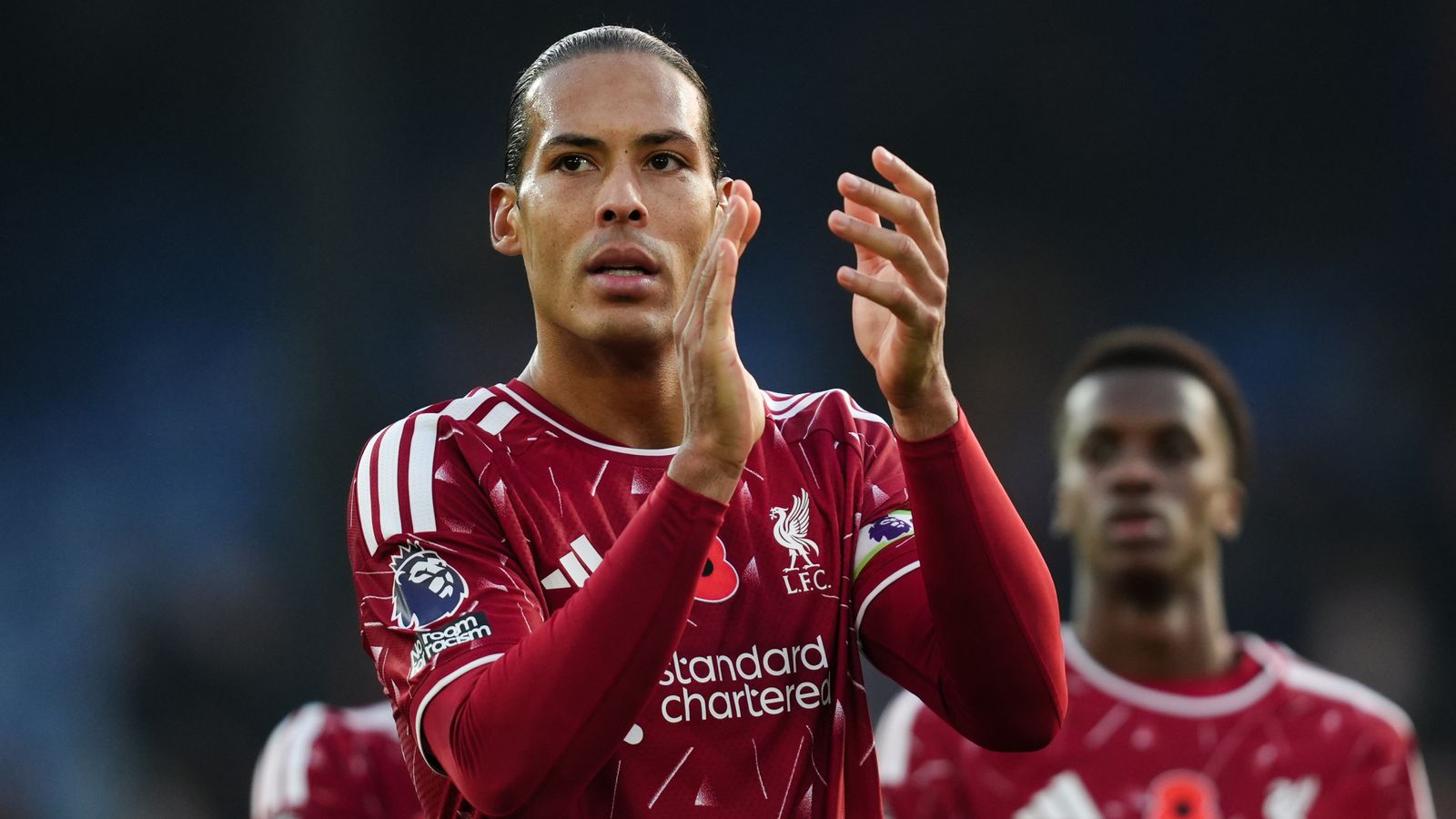
This mentorship role is crucial for Liverpool’s long-term strategy. By fostering a connection with younger talent, Van Dijk is ensuring that the defensive standards he established are maintained, regardless of whether he remains at the club beyond the current campaign. The synergy between the veteran and the newcomer has been characterized by consistent communication, with Van Dijk focusing on refining Jacquet’s positioning and decision-making during high-pressure scenarios.
The Dynamics of Contract Negotiations
The lack of a contract renewal at this stage of the season is a standard, albeit high-profile, aspect of modern football administration. Clubs and players of this caliber often delay final negotiations until the midway point of the season, allowing both parties to evaluate performance, injury status, and future project alignment.
For Liverpool, the decision involves a delicate balance between respecting the legacy of a club legend and managing the squad’s wage structure and age profile. For Van Dijk, the decision is arguably more personal. Having reached the age of 35, he must weigh the desire to continue at the highest level of European competition against the potential for new challenges or a different lifestyle.
"I’m relaxed with it," Van Dijk told Sky Sports. "If you know me, I only focus on what I can control. That’s the Manchester United game, then the Champions League. Whatever happens in the new year, we’ll see then."
Implications for the Club and the League
The departure of a player of Van Dijk’s stature would have far-reaching implications for the Premier League. Beyond the tactical void left in Liverpool’s defense, it would represent the loss of a primary dressing room leader. Historically, teams that lose such integral figures often experience a transitional phase that requires significant time to stabilize.
From an analytical perspective, Van Dijk’s current statistical output suggests he is far from a decline. His interception rates and defensive positioning remain in the top tier of European defenders. Consequently, if he were to become a free agent, he would likely attract interest from elite clubs globally, further complicating Liverpool’s decision.
The "uncertainty" mentioned by the captain is not necessarily an indicator of a desire to leave; rather, it is a reflection of the professional detachment required to remain effective in a high-stakes environment. By refusing to speculate on his future, Van Dijk avoids the distractions that often plague players in the final year of their contracts, allowing him to maintain the consistency that the team requires to compete for silverware on multiple fronts.
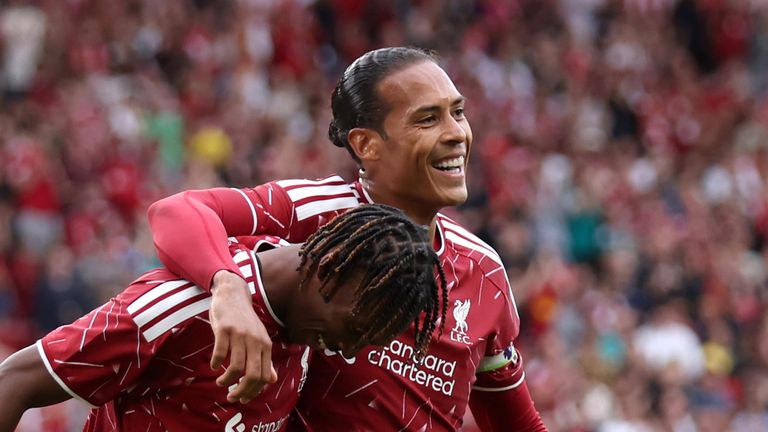
Future Outlook and Managerial Strategy
The current leadership at Liverpool, led by manager Arne Slot, has maintained a professional stance regarding the captain’s situation. The strategy appears to be one of "wait and see," ensuring that the focus remains entirely on the upcoming fixture schedule. The congested calendar, featuring both domestic league challenges and Champions League commitments, necessitates that all players remain fully committed to the immediate goals.
If the club and Van Dijk do decide to part ways at the end of the season, the farewell will undoubtedly be one of the most significant in the club’s history. Van Dijk acknowledged the emotional weight of such a prospect, stating, "It’s been an incredible journey, almost 10 years this summer… if it’s getting extended, we’ll see. If not, then I’m going to say goodbyes in the summer."
This admission confirms that the possibility of an exit is very much on the table, setting the stage for what will be a closely watched saga in the coming months.
Analysis of Defensive Consistency
While the focus is often on the individual, the defensive partnership with Jacquet serves as a microcosm of Liverpool’s broader defensive philosophy. The ability to integrate youth while maintaining high standards is the hallmark of a successful club. Van Dijk’s emphasis on "complementing each other’s flaws" highlights the tactical maturity required to succeed in a system that demands a high defensive line and constant pressure.
The partnership also serves as an insurance policy for the club. Should Van Dijk move on, the foundation of a new defensive pairing is already being laid. The success of this transition, however, depends on the consistency of the younger players and their ability to internalize the lessons provided by the current captain.
Conclusion: The Road Ahead
As the winter months approach, the discourse surrounding Virgil van Dijk’s future will inevitably intensify. However, his current approach—prioritizing the "now" over the "later"—remains his most effective tool. Whether his path leads to a renewed contract at Anfield or a new chapter elsewhere, his impact on Liverpool Football Club is already firmly etched in the history of the sport.
For now, the focus shifts back to the pitch. The upcoming matches against Manchester United and European opponents will be the true indicators of whether this season—and potentially this era—can conclude with further silverware. Fans and analysts alike will be watching not just for the results, but for the continued leadership of a captain who remains, even in times of transition, the heart of the Liverpool defense.